Root-zone mulching
Apply a 5–8 cm deep mulch ring of composted bark or wood chips out to the dripline, keeping it 5–8 cm away from the stems to stabilize soil moisture, protect shallow roots, and reduce summer stress.

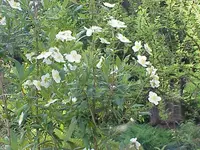
Bush anemone (Carpenteria californica) is an evergreen shrub native to chaparral habitats in California. It forms a rounded, dense shape with glossy, narrow leaves. In late spring to early summer, it produces clusters of large white flowers with golden centers and a light fragrance, giving a clean, ornamental look. Growth is generally slow to moderate, and older plants become nicely woody and structured. The species prefers sun to light shade, with well-drained soil and moderate moisture. Once established, it shows good drought tolerance, which makes it easier to care for bush anemone in suitable climates.

Care Difficulty
Moderate Care

Light Preference
Full Sun

Water Requirements
Moderate Water

Temperature Preference
Warm Climate

Hardiness Zone
7–9

Soil Texture
Sandy, Loamy, Organic-rich

Soil pH
Slightly acidic (6.5–7.0), Neutral (7.0)

Soil Drainage
Well-drained

Fertilization
Minimal (feed rarely)
Scan your plant to receive care tips personalized for your specific plant
Available on iOS and Android
Carpenteria californica prefers bright conditions that balance strong light with protection from harsh extremes.
This shrub prefers evenly moist but not soggy soil, especially while establishing.
This species grows best in mild, Mediterranean-style climates with moderate temperatures.
This shrub handles a wide humidity range and usually does not need special humidity management outdoors.
Carpenteria californica prefers freely draining, moderately fertile mineral soil with some organic matter.
This species can be grown in containers for several years if provided with ample root space and sharp drainage.
Carpenteria californica is a light feeder that benefits from modest nutrition in poor or depleted soils.
Pruning Carpenteria californica helps maintain a compact shape and encourages flowering wood.
This shrub is usually grown in the ground, so focus on thoughtful planting and minimal transplanting.
Carpenteria californica is commonly propagated from semi-ripe cuttings and sometimes from seed by patient growers.
This shrub is moderately hardy but benefits from some winter attention in colder regions.

Plant Health Check
Not sure what's wrong with your plant? Check your plant's health inside the app.
This species occurs naturally only in a small area of the Sierra Nevada foothills of California, making it a narrow regional endemic with a very restricted wild range.
It is the only species in the genus Carpenteria, so any loss of its wild populations would mean the extinction of the entire genus.
In suitable climates it can flower from late spring well into summer, producing repeated flushes of large, fragrant white blossoms that resemble single roses or large mock orange flowers.

Wild populations of this species are considered rare in nature, yet the plant is relatively common in cultivation, so garden-grown material is being used in conservation and selection work to help secure its long-term survival.
Lack of flowers usually comes from too much shade, heavy or waterlogged soil, or pruning at the wrong time, which removes flower buds. Light, well-drained soil and minimal pruning after flowering support better blooming when growing bush anemone.
Keep your plants happy and healthy with plant identification, disease detection, and easy care guidance.