Encourage Dense Habit
Lightly pinch back soft new growth after flowering to keep plants compact and encourage a fuller, more wind-resistant shrub.

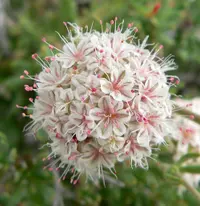
California buckwheat (Eriogonum fasciculatum) is a drought-adapted, evergreen shrub native to dry slopes and coastal scrub of California and the southwestern United States. It forms low, mounded to sprawling bushes with small gray-green leaves and clusters of tiny white to pink flowers that age to rust tones.
This species is valued in water-wise and habitat gardens because it is long-lived, highly heat tolerant, and attracts many pollinators. It suits gardeners looking to care for california buckwheat with minimal irrigation and pruning.
It thrives in full sun, lean or rocky soil, and fast drainage, and it generally dislikes heavy, consistently wet conditions.

Care Difficulty
Easy Care

Light Preference
Full Sun

Water Requirements
Low Water

Temperature Preference
Warm Climate

Hardiness Zone
7–10

Soil Texture
Sandy, Loamy, Rocky

Soil pH
Slightly acidic (6.5–7.0), Slightly alkaline (7.0–7.5)

Soil Drainage
Well-drained

Fertilization
Minimal (feed rarely)
Scan your plant to receive care tips personalized for your specific plant
Available on iOS and Android
This drought-adapted shrub thrives in strong sun typical of dry, open sites.
This species is highly drought tolerant and prefers infrequent, deep watering once established.
This native shrub is adapted to warm, dry climates with mild winters and hot summers.
This drought-adapted shrub tolerates very low humidity and rarely needs special moisture management.
This shrub thrives in very lean, sharply drained, often rocky soils.
This species can be grown in containers if the setup prioritizes rapid drainage and root aeration.
This drought-adapted shrub needs minimal feeding, so focus on maintaining lean, well-drained soil for california buckwheat.
Eriogonum fasciculatum benefits from periodic light pruning to keep the shrub compact and flowering well.
This native shrub is usually grown in the ground, so focus on careful transplanting rather than frequent repotting.
New Eriogonum fasciculatum plants are most often raised from seed, with cuttings used less commonly.
This species is quite cold hardy in much of its range and usually needs little special winter care in the ground.

Plant Health Check
Not sure what's wrong with your plant? Check your plant's health inside the app.
California buckwheat flowers for a long season, often from late spring into fall, providing one of the most consistent native nectar and pollen sources for bees, butterflies, and other insects in dry California habitats.
Its tiny seeds accumulate in the soil over years and can germinate after disturbance, which helps this shrub rapidly reestablish on eroded or burned slopes in its native chaparral and coastal sage scrub.
The dense, fibrous root system binds shallow, rocky soils, so this species is used in habitat restoration and erosion control on dry hillsides and road cuts in Mediterranean‑climate regions.

Genetic and morphological variation across its wide range has led botanists to recognize several subspecies within Eriogonum fasciculatum, each adapted to specific microclimates and soil types, making it an important model for studying local adaptation in California shrublands.
This species is highly attractive to native bees, honey bees, butterflies, and other beneficial insects. Dense flower clusters provide abundant nectar and pollen over a long season, making it valuable for pollinator gardens and habitat restoration plantings.
Keep your plants happy and healthy with plant identification, disease detection, and easy care guidance.