Wind-hardening seedlings
Expose young plants to gentle outdoor wind for 1–2 hours per day over 7–10 days before planting out to build stronger stems and reduce transplant shock when growing smooth sourplum.

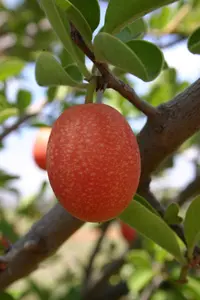
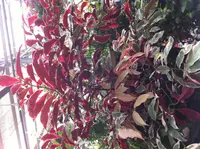
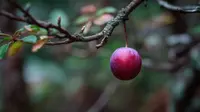
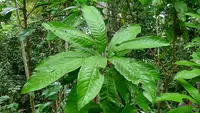
Smooth sourplum, Ximenia caffra, is a small, thorny shrub or tree known for its oval, often bluish-green leaves and bright orange-red, plum-like fruits. It typically forms a dense, branching canopy and can be grown as a hedge or specimen plant in suitable climates.
This species is native to savannas and dry woodlands of sub-Saharan Africa, so it is naturally adapted to heat, sun, and seasonal drought. It is moderately slow-growing and somewhat tolerant of poor, sandy soils, but dislikes waterlogged conditions.
For those who want to care for smooth sourplum, it generally prefers full sun, well-drained soil, and occasional deep watering once established, making it manageable for patient growers in warm regions.

Care Difficulty
Moderate Care

Light Preference
Full Sun

Water Requirements
Low Water

Temperature Preference
Tropical / Frost Sensitive

Hardiness Zone
10–12

Soil Texture
Sandy, Loamy, Rocky

Soil pH
Acidic (5.5–6.5), Slightly acidic (6.5–7.0)

Soil Drainage
Well-drained

Fertilization
Minimal (feed rarely)
Scan your plant to receive care tips personalized for your specific plant
Available on iOS and Android
This sun-loving shrub needs strong light to fruit and flower well.
This drought-tolerant shrub prefers deep, infrequent watering once established.
This plant thrives in warm, frost-free conditions typical of subtropical and tropical regions.
This species tolerates a wide humidity range and usually does not need special humidity management.
This drought-adapted shrub prefers lean, well-drained mineral soil rather than rich, moisture-retentive substrates.
This shrub can be grown in containers if the pot is chosen to manage its deep, spreading root system and eventual size.
This drought-tolerant shrub needs modest feeding, especially when grown in containers or poor soils.
Pruning Ximenia caffra focuses on safety, structure, and light penetration rather than heavy shaping.
This species is usually grown in the ground, so transplanting young plants correctly is more important than frequent repotting.
Raising new plants is usually done from seed, with vegetative methods used less often.
Ximenia caffra prefers warm climates and can suffer damage in areas with hard freezes.

Plant Health Check
Not sure what's wrong with your plant? Check your plant's health inside the app.
The kernels inside the sourplum seeds contain an oil once used locally for lamps, soap making, and as a drying oil in traditional crafts, although the raw kernels are not eaten due to toxicity concerns.
This shrub often serves as a host plant for African mistletoes, which tap into its branches for water and nutrients, making it an important structural species in savanna plant communities.
The bright red, sour fruits are eaten by many birds and mammals, which then disperse the seeds, so natural populations often establish along animal pathways and resting spots.

In parts of southern Africa, the flexible, thorny branches of this shrub are traditionally woven into living fences around homesteads and fields, providing both security and a seasonal fruit source in the same structure.
Growth is moderate. In suitable warm, sunny conditions with well-drained soil, this shrub often adds about 20–40 cm per year. Poor soil fertility, drought stress, or cold conditions will slow extension growth and canopy development.
Keep your plants happy and healthy with plant identification, disease detection, and easy care guidance.