Encourage Bushy Shape
Pinch out the very tips of young stems every 4–6 weeks to promote dense branching and richer color on the new foliage, rather than allowing the plant to grow tall and sparse.


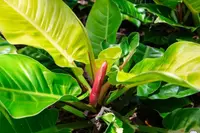
Chinese croton (Excoecaria cochinchinensis) is a tropical evergreen shrub grown mainly for its colorful foliage rather than flowers. It usually has glossy green leaves on top with rich red or purple undersides, creating strong contrast in indoor light.
In nature it occurs in warm, humid regions of Southeast Asia, often in shaded forest edges. As a houseplant it stays compact and responds well to pruning, which helps maintain a dense shape.
This species prefers bright, indirect light, evenly moist but not waterlogged soil, and stable warmth. With these conditions, it is relatively straightforward to care for Chinese croton for most home growers.

Care Difficulty
Moderate Care

Light Preference
Bright Indirect Light

Water Requirements
Keep Soil Moist

Temperature Preference
Tropical / Frost Sensitive

Hardiness Zone
10–11

Soil Texture
Loamy, Organic-rich

Soil pH
Acidic (5.5–6.5), Slightly acidic (6.5–7.0)

Soil Drainage
Moist but well-drained

Fertilization
Light (every 4–6 weeks)
Scan your plant to receive care tips personalized for your specific plant
Available on iOS and Android
This shrub prefers bright, filtered light that mimics an understory tropical habitat.
Excoecaria cochinchinensis prefers evenly moist but not saturated soil.
This species comes from warm, frost-free regions and needs consistently mild temperatures.
This species favors moderately humid air and reacts if conditions are too dry.
This plant prefers a loose, moisture-retentive but fast-draining substrate.
This species is well suited to container culture when root space and drainage are managed carefully.
This foliage shrub responds well to modest, consistent feeding during the warm growing season.
Pruning helps maintain compact, colorful growth on Excoecaria cochinchinensis and keeps stems from becoming leggy.
This species grows moderately in containers and benefits from occasional repotting to refresh soil and manage root crowding.
New plants are most reliably produced from stem cuttings taken during the warm growing season.
This tropical shrub is frost sensitive and needs protection in regions with cool winters.

Plant Health Check
Not sure what's wrong with your plant? Check your plant's health inside the app.
This species has glossy green upper leaf surfaces and deep red to purple undersides, which help capture and use light efficiently in shaded understory habitats by reflecting red light back through the leaf tissue.
The plant produces a white, milky sap that can irritate skin and especially eyes; this latex is characteristic of the spurge family Euphorbiaceae and likely evolved as a defense against herbivores.
Excoecaria cochinchinensis is dioecious, meaning individual plants are either male or female, so both sexes must be present and flowering at the same time for viable seed production.

In parts of tropical and subtropical Asia, this shrub has been widely adopted as a dense ornamental hedge and foliage plant, valued more for the contrasting red and green foliage than for its small, inconspicuous flowers, which has contributed to its spread far beyond its native range.
Yellowing leaves usually result from overwatering, poor drainage, or sudden temperature changes. Check the root zone for sogginess, improve drainage, remove affected leaves, and allow the topsoil to dry slightly more between waterings to stabilize growth.
Keep your plants happy and healthy with plant identification, disease detection, and easy care guidance.