Scarlet Banana Care (Musa coccinea)

Scarlet Banana

About Scarlet Banana

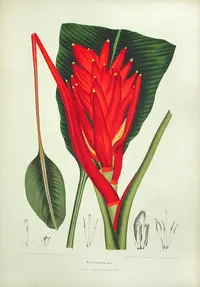
Scarlet banana, Musa coccinea, is a compact ornamental banana valued for its vivid red flower bracts that resemble small, upright torches. It usually stays much smaller than fruiting bananas, which makes it suitable for containers and sheltered patios in warm climates.

This species comes from tropical regions of Southeast Asia, where it grows in humid, partially shaded forest edges. It prefers bright, filtered light, consistently moist but well-drained soil, and protection from cold or strong wind.

Its need for warmth, regular moisture, and higher humidity makes it moderate in difficulty for beginners, especially indoors. Learning how to care for Scarlet Banana mostly involves keeping conditions stable and avoiding temperature and moisture extremes.

Main Plant Requirements

Care Difficulty

Moderate Care

Light Preference

Partial Sun

Water Requirements

Keep Soil Moist

Temperature Preference

Tropical / Frost Sensitive

Hardiness Zone

10–11

Soil Texture

Loamy, Organic-rich

Soil pH

Acidic (5.5–6.5), Slightly acidic (6.5–7.0)

Soil Drainage

Moist but well-drained

Fertilization

Moderate (every 2–4 weeks)

Get Personalized Care Plan

Scan your plant to receive care tips personalized for your specific plant

Available on iOS and Android

How to Care for the Scarlet Banana

This tropical species needs bright, warm conditions with protection from harsh midday sun.

  • Provide 4–6 hours of morning sun with light afternoon shade or filtered light through thin curtains or canopy foliage.
  • Plant Scarlet Banana where it receives high, bright light; deep shade leads to weak, stretched growth and fewer or smaller blooms.
  • In hot summers, shield from strong sun between 11 a.m.–3 p.m. to prevent leaf scorch, especially in exposed sites or against reflective walls.

This banana prefers evenly moist but not waterlogged soil throughout the growing season.

  • Water when the top 3–5 cm of soil feels dry, soaking the root zone thoroughly and letting excess drain away.
  • Use rich, well‑draining soil; poor drainage or standing water causes yellowing leaves, soft pseudostems, and root rot in Musa coccinea.
  • In cooler months, reduce frequency as growth slows; crisp leaf edges and curling indicate underwatering, while limp, yellowing foliage suggests excess moisture.

This species thrives in warm, frost‑free conditions with stable temperatures.

  • Aim for 70–85°F (21–29°C) during active growth for best foliage and flowering performance.
  • Protect from cold; growth slows below 60°F (16°C), tissue damage occurs near 40°F (4°C), and frost can kill leaves or the entire plant.
  • In hotter climates with temperatures above 95°F (35°C), provide extra shade and soil moisture to limit heat stress and leaf scorch.

This species prefers high humidity to keep foliage lush and reduce leaf edge browning.

  • Aim for 60–80% humidity; it tolerates brief dips to 40–50% but leaves may crisp at the margins.
  • Watch for rolled, dry-edged, or dull leaves as signs of humidity stress in Scarlet Banana.
  • Increase humidity with grouped plants, a nearby humidifier, or a wide pebble tray that allows evaporation without soaking the pot base.

This plant needs airy, moisture-retentive but fast-draining soil to support rapid growth and prevent root problems.

  • Use a loose, organic-rich loamy mix such as 2 parts peat or coco coir, 1 part compost, and 1 part perlite or bark to boost aeration.
  • Ensure water drains through quickly and the mix never stays waterlogged, which can trigger root rot in Musa coccinea.
  • Target slightly acidic to neutral pH around 6.0–7.0 for best nutrient availability and stable growth.
  • Avoid heavy clay, unamended garden soil, or dense mixes that compact and reduce oxygen around the roots.

This species adapts well to container growing when the pot supports its fast, top-heavy growth habit.

  • Choose a wide, heavy pot to counterbalance the tall pseudostems and reduce tipping in wind or on balconies.
  • Select slightly porous materials like unglazed ceramic if extra moisture loss is needed in humid or rainy climates.
  • Provide a deep container that allows thick, spreading roots to anchor firmly without circling tightly near the surface.

Musa coccinea responds well to moderate, consistent feeding during its active growing season.

  • Use a balanced liquid fertilizer (for example, 10-10-10 NPK) at 1/2 strength every 2–4 weeks in spring and summer.
  • Alternatively, apply a slow-release granular fertilizer at the start of the growing season following label rates.
  • Stop or greatly reduce feeding in fall and winter, when growth slows and roots absorb fewer nutrients.
  • In containers, occasional light top-dressing with compost supports healthy, sustained flowering in Scarlet Banana.

Pruning Musa coccinea focuses on removing old growth to maintain a clean, compact clump and encourage fresh shoots.

  • Carry out main pruning in late winter or early spring before strong new growth starts.
  • Cut out dead, damaged, or diseased leaves and flower stalks at the base with clean, sharp pruners.
  • Thin crowded stems to improve air flow and light penetration, which supports healthier foliage and blooms.
  • Remove spent flowering stems to direct energy into new pseudostems and potential future inflorescences.

Container-grown Musa coccinea benefits from occasional repotting to support vigorous root and shoot growth.

  • Check for roots circling the pot, emerging from drainage holes, or slowing top growth as signs it needs a larger container.
  • Plan to move it to a pot 1–2 in wider every 2–3 years in late spring, once nights stay consistently warm.
  • Water deeply the day before repotting, then slide the root ball out gently and loosen outer roots without tearing heavily.
  • Replant at the same soil level in a well-draining, rich mix, water thoroughly, and keep shaded for several days to limit transplant shock.

Musa coccinea is most reliably propagated by division of basal suckers rather than from seed.

  • Divide off well-formed suckers with their own roots in late spring or early summer when growth is active.
  • Use a sharp, clean knife or spade to separate the offset from the main clump, keeping a solid root portion attached.
  • Plant divisions into a moist, well-draining mix, keeping the crown just above the soil surface.
  • Maintain warm temperatures (70–80°F), bright indirect light, and steadily moist soil until new growth confirms establishment.

Musa coccinea is frost-tender and needs careful winter management in most temperate climates.

  • In regions below USDA zone 10, grow Musa coccinea in containers and move indoors before temperatures drop near 40°F.
  • Provide a bright, cool indoor spot, reduce watering, and avoid feeding through winter dormancy.
  • In mild climates, mulch the root zone 5–10 cm deep to insulate rhizomes from short cool spells.
  • Remove or trim frost-damaged leaves in late winter, once the risk of freezing has passed.

Care Tips

Sturdy pot choice

Select a wide, heavy container with a low center of gravity to prevent tipping as the plant develops tall flowering stalks and large leaves, especially if placed outdoors in windy areas.

Support flower stalks

Install discreet bamboo stakes or a small plant ring when the inflorescences start to elongate, tying loosely with soft ties so the heavy bracts stay upright and do not kink at the base.

Leaf sanitation routine

Wipe both sides of the leaves every 2–4 weeks with a damp, soft cloth to remove dust, improve light capture, and make early detection of spider mites, scale, or mealybugs much easier.

Controlled offset removal

Once offsets reach about 20–30 cm tall with several leaves, sever them cleanly with a disinfected knife and pot separately, which maintains airflow around the mother plant and provides vigorous divisions for expanding a collection or sharing.

Seasonal relocation strategy

In mild climates, move container plants outdoors to bright, sheltered shade during warm months for stronger growth, then return them indoors before night temperatures drop below about 55°F to avoid stress and maintain continuity when growing Scarlet Banana.

Common Pests and Diseases

Banana aphids

This pest feeds on young leaves and flower stalks, causing leaf curling, distortion, and sticky honeydew that encourages sooty mold. Heavy infestations can weaken the plant and reduce flowering.

Solution

Rinse colonies off with a firm stream of water, then treat remaining insects with insecticidal soap or a light horticultural oil, repeating every 5–7 days until control is achieved. Reduce excess nitrogen fertilization and remove heavily infested or deformed leaves to limit population buildup when caring for Scarlet Banana.

Banana weevils

This pest bores into the pseudostem and lower leaf bases, causing wilting, reduced vigor, and in severe cases stem collapse. Symptoms include tunneling in the lower stem and weak, stunted growth despite adequate water and nutrients.

Solution

Cut and inspect any declining stems; remove and destroy heavily infested pseudostems and plant debris to break the life cycle. Use clean, pest-free planting stock, keep the base of the clump free of rotting material, and in severe cases apply a targeted soil or stem treatment labeled for banana weevils, following local regulations.

Spider mites

These insects thrive in warm, dry indoor air and cause fine stippling, bronzing, and eventual yellowing of the foliage, often with delicate webbing between leaf ribs. Symptoms include slow, general decline and dull, dusty-looking leaves.

Solution

Increase humidity around the plant, then wash both sides of the leaves with lukewarm water and a mild soap solution. For persistent infestations, apply insecticidal soap or horticultural oil to all leaf surfaces, repeating weekly until new growth appears clean.

Panama disease (Fusarium wilt)

This disease is caused by the soil-borne fungus Fusarium oxysporum f. sp. cubense and leads to yellowing and wilting of older leaves, often starting on one side of the plant. Symptoms include brown vascular streaks in the pseudostem when cut and eventual plant collapse.

Solution

Remove and destroy affected plants including as much of the root system as possible, and do not replant bananas in the same soil. Use only disease-free stock, keep soil well drained, and avoid moving contaminated soil, tools, or pots between plants.

Banana leaf spot (Sigatoka)

This disease produces elongated brown to black spots with yellow halos on leaves, which can merge and cause large dead areas and premature leaf death. Symptoms include reduced photosynthesis, poor vigor, and fewer or weaker flowers.

Solution

Promptly remove and dispose of heavily spotted or dead leaves to reduce spore sources, and avoid overhead watering that keeps foliage wet. Improve spacing and air movement around plants, and in outdoor plantings consider using an appropriate fungicide program if the disease recurs regularly and local regulations allow it.

Interesting Facts

Specialized bird pollination

Scarlet banana flowers are adapted for pollination by small nectar-feeding birds in their native Southeast Asian range, with upright, rigid bracts that provide perches and bright scarlet coloration that strongly attracts avian pollinators.

Unusual upright inflorescence

Unlike most ornamental bananas, which have hanging flower clusters, this species produces a compact, candle-like inflorescence that stands upright for many months, making the showy red bracts more visible and accessible to pollinators.

True banana relative

Although grown mainly as an ornamental, this plant is a true wild banana species within the genus Musa, closely related to edible bananas but producing small, inedible fruits filled with hard seeds that function mainly for reproduction rather than consumption.

Botan icon

Did you know?

In its native habitats, the long-lasting red bracts of this species can remain decorative on the plant for several months even as successive rows of yellow tubular flowers open and fade, allowing a single inflorescence to support multiple overlapping flowering cycles for visiting birds and insects.

FAQs about Scarlet Banana

Lack of flowering often comes from insufficient light, too cool temperatures, or a young plant not yet mature. Nutrient imbalance or a pot that is too small can also reduce bloom production in this species.

Grow Healthy Plants with Botan Care

Keep your plants happy and healthy with plant identification, disease detection, and easy care guidance.

Botan plant care app — identify plants on mobile

Explore More Plants