spreading airplant Care (Tillandsia utriculata)

Also known as: giant airplant, giant wild pine
spreading airplant

About spreading airplant

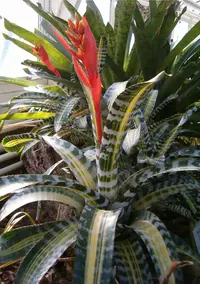
The spreading airplant, Tillandsia utriculata, is a large epiphytic bromeliad that anchors to trees rather than growing in soil. It forms a wide rosette of stiff, arching gray-green leaves and a tall, showy flower spike.

In nature it occurs in warm, humid regions of the southeastern United States, the Caribbean, Mexico, and Central America. It collects water and nutrients in its leaf bases and from the air, which makes care for spreading airplant fairly simple in the right environment.

The species prefers bright, filtered light, regular moisture on its leaves, and good air movement, making it suitable for mounting on bark, wood, or other decorative supports indoors.

Main Plant Requirements

Care Difficulty

Moderate Care

Light Preference

Partial Sun

Water Requirements

Low Water

Temperature Preference

Tropical / Frost Sensitive

Hardiness Zone

10–11

Soil Texture

Rocky, Organic-rich

Soil pH

Acidic (5.5–6.5)

Soil Drainage

Well-drained

Fertilization

Minimal (feed rarely)

Get Personalized Care Plan

Scan your plant to receive care tips personalized for your specific plant

Available on iOS and Android

How to Care for the spreading airplant

This epiphytic bromeliad prefers bright, non-scorching light that mimics open tree canopies.

  • Provide 4–6 hours of bright, filtered light daily; early morning sun with dappled or bright shade afterward suits spreading airplant well.
  • Tolerates light partial shade, but persistent shade leads to elongated, weak growth and dull, floppy leaves.
  • In hot summers, protect from intense midday and late-afternoon sun to prevent leaf scorching; increase light exposure slightly in winter when sun intensity is lower.

This air plant absorbs water mainly through its leaves and needs thorough wetting followed by complete drying.

  • Outdoors in warm weather, soak or hose the foliage until dripping, then let it dry fully within 4 hours; repeat when leaves feel crisp or curl slightly at the tips.
  • Reduce watering during cool or very humid periods; increase during hot, dry, or windy spells when evaporation is faster.
  • Signs of overwatering include limp, browning leaf bases and rot smell; underwatering shows as severe leaf curling and slow recovery after soaking.

This species thrives in warm, frost-free conditions similar to subtropical climates.

  • Ideal growth occurs at 70–85°F (21–29°C); short peaks up to 95°F (35°C) are tolerated if humidity and airflow are good.
  • Avoid temperatures below 45°F (7°C); brief dips to 40°F (4°C) may be survived but can damage leaf tissue and slow recovery.
  • The plant is not frost tolerant; protect from freezing nights and from enclosed, stagnant heat above 95°F (35°C) by ensuring shade and ventilation.

This epiphytic air plant prefers moderately humid air but adapts to typical indoor levels.

  • Aim for 40–60% humidity; brief dips lower are tolerated if air circulation is strong.
  • Dry air stress shows as curling, rigid leaves and slow rehydration after misting.
  • For spreading airplant indoor care, use frequent light misting, a nearby pebble tray, or grouping plants to slightly raise humidity without creating stagnant air.

Tillandsia utriculata does not grow in conventional potting soil and instead needs an airy, soil-free mounting medium.

  • Attach plants to cork, hardwood, or rock using wire or plant-safe glue, allowing air to reach all sides of the base.
  • If placing in a container, fill it loosely with chunky orchid bark, lava rock, or large perlite so water drains away in minutes.
  • Keep the base above any retained moisture to prevent rot, never burying it in peat, compost, or standard potting mixes.
  • Use neutral to slightly acidic, mineral-rich hardscape materials and rinse them first to remove dust that could clog leaf surfaces.

This species can be displayed in containers if the vessel is treated as a holder, not as traditional potting space.

  • Choose wide, heavy containers or bowls to counterbalance tall, top-heavy rosettes and prevent tipping.
  • Elevate the plant on a mesh, stone, or bark piece inside the container so any residual water drains below the base.
  • Avoid deep, narrow pots that trap humid air around the base, which increases the risk of rot after soaking or rinsing.

This air plant benefits from light, diluted feeding during active growth but does not need heavy fertilization.

  • Use a balanced water‑soluble NPK fertilizer formulated for orchids or bromeliads, diluted to 1⁄4–1⁄2 strength.
  • Mist the foliage with fertilizer solution every 4–6 weeks in spring and summer for healthy spreading airplant growth.
  • Skip feeding in late fall and winter when growth slows, especially in cooler indoor conditions.
  • Rinse with plain water between feedings to avoid salt buildup on leaves and in the central tank.

Pruning needs for Tillandsia utriculata are minimal and focus on hygiene rather than shaping.

  • Trim only dead or brown leaf tips using clean, sharp scissors, cutting just into healthy green tissue.
  • Remove spent flower stalks once fully dry to keep the plant tidy and reduce risk of rot.
  • Gently twist away clearly dead outer leaves, supporting the plant base to avoid damage.
  • Disinfect tools with alcohol before and after use to limit fungal and bacterial spread.

This epiphytic bromeliad is usually mounted rather than potted, so transplanting focuses on remounting or repositioning plants.

  • Consider remounting when the plant outgrows its support, feels unstable, or offsets crowd the mounting surface.
  • Best timing is spring to early summer, when warm temperatures and brighter light support quick recovery.
  • Typical frequency is every 3–5 years, or sooner if the mount decays or airflow around the base is reduced.
  • During transplanting, gently detach roots, secure onto new bark or a slatted mount, then mist lightly for 1–2 weeks to limit stress.

Propagation of this large air plant is possible through offsets and seeds but is relatively slow.

  • Divide offsets once the pup reaches about 1⁄3–1⁄2 the size of the mother plant, usually after flowering.
  • Carry out division in warm months with good air movement and bright, indirect light to support establishment.
  • Twist pups away gently at the base, keeping some roots attached if present, and mount on bark or wire mesh.
  • Seed propagation needs fine, moist but airy media, high humidity, and patience, as seedlings grow very slowly.

This species is frost sensitive and needs protection in regions with cold winters.

  • Keep outdoor plants above 40°F; prolonged exposure near freezing can damage foliage and meristems.
  • In cold climates, grow on removable mounts so plants can be moved indoors before first frost.
  • Indoors, place in bright, cool rooms with good air circulation and maintain normal misting, allowing leaves to dry fully between waterings.
  • Avoid heavy overhead watering in cold conditions, which increases rot risk in the central water tank.

Care Tips

Mounting strategy

Anchor plants on sturdy, rot-resistant material such as cork bark, hardwood, or plastic-coated wire mesh, and secure the base gently with nylon fishing line so the heavy rosette cannot topple as the plant gains size and weight.


Outdoor rainfall use

In warm frost-free climates, grow plants outdoors in bright shade during rainy seasons so they receive frequent, natural overhead rinsing that removes dust and reduces scale and mealybug pressure.

Airflow optimization

Position plants where natural air movement or a low-speed fan can pass freely around all sides of the rosette, which helps the leaf bases dry quickly and greatly lowers the risk of rot in the central tank.

Tank hygiene check

If the leaf bases hold water, tip the plant gently every 1–2 weeks to remove stagnant water and debris, then refill with fresh water to limit mosquito larvae, algae, and bacterial buildup.

Secure offsets early

When large pups appear, fasten them to their support early with soft ties or fishing line so their increasing weight does not lever the mother plant loose from mounts or hanging hardware while you are caring for spreading airplant.

Common Pests and Diseases

Southern pine beetle

This pest is a bark beetle that can mass‑attack host pine trees and indirectly kill attached spreading airplants by destroying the host canopy. Symptoms include rapid browning and collapse of many airplants on a single infested tree as light, humidity, and bark stability change suddenly.

Solution

There is no direct treatment on the airplant; management focuses on monitoring and promptly removing or treating heavily infested host trees according to local forestry guidance. To conserve plants, collect healthy Tillandsia utriculata from doomed trees (where legal and permitted) and reattach them to stable, uninfested hosts or mount them in a controlled garden setting with bright filtered light and good airflow.

Mexican bromeliad weevil

This pest is a specialist snout beetle whose larvae tunnel inside bromeliad bases and can kill large Tillandsia utriculata rosettes. Symptoms include wilting, a loosening plant base, foul odor, and dark, mushy tissues with small feeding galleries.

Solution

Once larvae are deep inside the plant, removal is difficult, so early detection is important; discard and destroy severely infested plants to prevent spread. Inspect bases regularly for soft spots and frass, isolate any suspect plants, and in outdoor collections reduce risk by limiting dense clusters and removing heavily infested wild bromeliads nearby in cooperation with local land managers.

Scale insects

These insects attach to leaves and sheaths, sucking sap and weakening the plant over time. Symptoms include small, raised bumps, sticky honeydew, and sooty mold growing on the sugary residue.

Solution

For light infestations, physically remove scales with a cotton swab dipped in isopropyl alcohol and rinse the plant thoroughly with water. Improve air circulation, keep the plant in bright light appropriate for Tillandsia utriculata care, and repeat inspections weekly; for persistent problems, use a labeled horticultural soap or oil spray applied outside of strong sun.

Sooty mold

This disease is a group of dark, superficial fungi that grow on honeydew left by sap‑feeding insects on the leaves. Symptoms include black, powdery or velvety coating that reduces light reaching the leaf surface and can slow growth.

Solution

Control of the underlying insects such as scale or aphids is the primary step; once honeydew production stops, gently wash foliage with lukewarm water and a mild, dilute soap solution, then rinse well. Ensure good airflow and adequate light so leaves dry quickly after misting or rain, which also reduces new fungal growth.

Interesting Facts

Tank-forming giant bromeliad

This species can form a large central water tank that holds several liters of rainwater, making it one of the biggest tank bromeliads native to the southeastern United States.

Specialist insect nursery

Its water-filled leaf bases often host larvae of specialized mosquitoes and other aquatic invertebrates that depend on these natural tanks for their full life cycle.

Wind-dispersed parachute seeds

After flowering, it produces large capsules packed with silky, tufted seeds that are carried long distances by wind, helping it colonize new tree branches and exposed rock.

Botan icon

Did you know?

In parts of Florida, very large individuals of this species have been documented supporting entire miniature aquatic ecosystems in a single plant tank, including mosquito larvae, midges, tiny crustaceans, and microbial communities that process organic debris from the forest canopy.

FAQs about spreading airplant

Blooming is triggered by maturity, strong light, and stable warmth. If conditions are too dim, cool, or dry, it may stay vegetative. Also avoid heavy fertilizer and do not keep it constantly wet, which can stress the plant.

Grow Healthy Plants with Botan Care

Keep your plants happy and healthy with plant identification, disease detection, and easy care guidance.


Botan plant care app — identify plants on mobile

Explore More Plants