Vriesea gigantea Care

Vriesea gigantea

About Vriesea gigantea

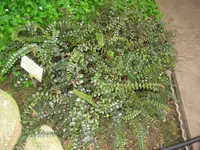
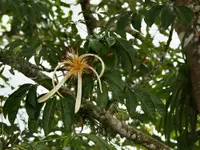
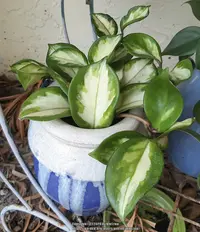
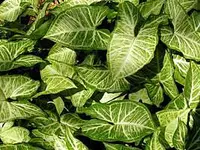
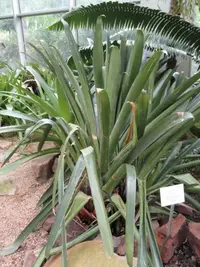
Vriesea gigantea is a large bromeliad from the Atlantic rainforests of Brazil, grown mainly as an ornamental foliage and flowering plant. It forms a broad rosette of stiff, arching leaves that often show mottled or banded patterns, with a tall, colorful flower spike rising from the center. As an epiphyte in nature, it usually grows on trees rather than in deep soil, which influences its need for air around the roots and moderate moisture. It prefers bright, filtered light, stable warmth, and a free-draining, airy mix, which makes it manageable indoors if those basics are met. Understanding these natural traits helps owners care for Vriesea gigantea with less effort and more predictable results.

Main Plant Requirements

Care Difficulty

Moderate Care

Light Preference

Bright Indirect Light

Water Requirements

Moderate Water

Temperature Preference

Tropical / Frost Sensitive

Hardiness Zone

11–12

Soil Texture

Sandy, Loamy, Organic-rich

Soil pH

Acidic (5.5–6.5)

Soil Drainage

Well-drained

Fertilization

Light (every 4–6 weeks)

Get Personalized Care Plan

Scan your plant to receive care tips personalized for your specific plant

Available on iOS and Android

How to Care for the Vriesea gigantea

This bromeliad prefers bright, filtered light that mimics dappled forest canopy conditions.

  • Provide 6–8 hours of bright, indirect light each day; morning sun is acceptable, but shield from harsh midday and afternoon sun to prevent leaf scorch and bleaching.
  • In hotter climates, grow Vriesea gigantea where it receives light shade at midday, such as under a tree canopy, shade cloth, or on an east-facing porch.
  • In winter, move plants to a brighter position or closer to a window, as low light slows growth and produces elongated, pale foliage.

Watering should keep the central cup filled and the root zone lightly moist but never saturated.

  • Keep the central tank 1/2–3/4 full with fresh, non-salty water, flushing it every 1–2 weeks to avoid stagnation and mosquito larvae.
  • Let the top 2–3 cm of any potting mix dry before watering the roots again; use a free-draining mix so excess water runs out quickly and roots do not sit in water.
  • In cooler months, reduce watering frequency and allow slightly more drying; drooping or curling leaves indicate thirst, while limp, brown bases suggest overwatering.

This species prefers warm, stable conditions similar to a humid subtropical or tropical climate.

  • Aim for 65–80°F (18–27°C) for best growth; short peaks up to 85°F (29°C) are tolerated if humidity is moderate and the plant is shaded from intense sun.
  • Protect from cold; growth slows below 60°F (16°C), and tissue damage often occurs if exposed to temperatures near 40°F (4°C).
  • Never expose plants to frost or freezing; move containers or offsets to a protected area before nights drop below 45°F (7°C), as repeated chills weaken the rosette.

This bromeliad prefers consistently moist air to keep its foliage and central tank healthy.

  • Aim for 50–70% humidity, as very dry indoor air slows growth and can damage leaf tips.
  • Brown, curling edges and dull, stiff leaves indicate humidity stress rather than underwatering.
  • Increase humidity with a nearby humidifier, grouped plants, or a pebble tray kept below (not touching) the pot base.

Use a loose, airy mix that drains quickly but holds light, even moisture around the roots and central tank.

  • Combine roughly 40% fine orchid bark, 30% peat or coco coir, and 30% perlite to create a fibrous, organic-rich, fast-draining substrate.
  • Aim for slightly acidic to neutral pH around 5.5–7.0, which supports nutrient availability for Vriesea gigantea roots.
  • Ensure the mix feels springy rather than compact; large air spaces around roots reduce rot risk and allow gas exchange.
  • Avoid heavy garden soil, pure peat, or mixes that stay waterlogged, as these quickly cause basal rot in the rosette.

This species is well suited to container growing when the pot supports its shallow roots and top-heavy rosette.

  • Choose a squat, wide pot so the relatively shallow root system stabilizes the broad foliage rosette.
  • Use a heavier material such as ceramic or clay if the plant tends to lean or becomes top-heavy as the rosette enlarges.
  • Leave a small dry gap between the pot rim and leaf bases so collected water does not sit against the crown and cause rot.

This bromeliad benefits from modest, carefully diluted feeding during active growth.

  • Use a balanced liquid fertilizer (around 10-10-10 or 20-20-20) at 1/4–1/2 strength for Vriesea gigantea.
  • Feed every 4–6 weeks in spring and summer, pouring solution into the central cup and lightly over the mix.
  • Avoid heavy, slow-release pellets in the pot, which can burn fine roots.
  • Stop feeding in fall and winter, when growth slows, to prevent soft, weak tissue.

This plant needs only light, hygiene-focused pruning to stay tidy and healthy.

  • In late winter or early spring, remove dead, brown, or rotten leaves at the base of Vriesea gigantea.
  • Snip spent flower spikes at the base with clean, sharp scissors or pruners once they fade completely.
  • Trim damaged leaf tips back to green tissue, following the natural leaf shape.
  • Avoid heavy thinning, as bromeliads do not resprout from a cut central rosette.

This bromeliad is usually repotted infrequently, mainly to refresh mix or manage offsets.

  • Repot when roots circle the pot, mix breaks down, or the plant becomes top-heavy and unstable.
  • Aim to repot every 2–3 years in spring, using a very airy bromeliad or orchid-style mix.
  • Handle roots gently, keeping them mostly intact, and keep the central cup upright to avoid waterlogging the crown.
  • After repotting Vriesea gigantea, keep it slightly drier and shaded for 1–2 weeks to reduce transplant stress.

Propagation is most successful by removing and rooting offsets from the mother plant.

  • Wait until pups reach about 1/3–1/2 the height of the parent Vriesea gigantea before division.
  • Divide in late spring or early summer, when warmth and light favor new root growth.
  • Gently separate pups with a sterile knife, keeping some roots attached if possible.
  • Set pups in a very airy mix, keep warm (70–80°F), bright, and slightly moist until established.

This tropical species needs warm, frost-free conditions and controlled moisture in winter.

  • Move containers indoors before temperatures drop below 50°F, as Vriesea gigantea is not frost tolerant.
  • Place in bright, indirect light away from cold drafts, heaters, and vents.
  • Water sparingly, keeping the mix just lightly moist and the central cup only partially filled.
  • Avoid cold, wet conditions around the root zone to reduce rot risk.

Care Tips

Tank water management

Every 4–6 weeks, completely flush the central leaf tank with room-temperature water and then refill it, which helps prevent salt buildup, mosquito larvae, and fungal issues when caring for Vriesea gigantea.

Offset selection timing

Wait until pups reach about 1/3–1/2 the size of the mother and show several roots before detaching them, which greatly improves survival and establishment in a new pot.

Secure vertical growth

If the rosette leans or the flower spike becomes top-heavy, stabilize the plant by wedging it with inert materials like orchid bark or stones rather than burying the stem deeper, which can cause rot.

Rotate for even symmetry

Turn the pot 90° every 2–3 weeks so the rosette develops a balanced form and the leaves do not permanently arc toward a single light source.

Post-bloom sanitation

After the bloom fades and pups are well formed, cut the mother rosette low at the base with a sterile blade and remove decaying leaf tissue to reduce the risk of fungal growth and pests around the offsets.

Common Pests and Diseases

Scale insects

This pest attaches to the leaf bases and undersides, sucking sap and causing yellowing, stunted growth, and sticky honeydew that can lead to sooty mold. Symptoms include small brown, tan, or translucent bumps that do not move when touched.

Solution

Isolate the plant, then wipe leaves and leaf axils with a cotton pad dipped in diluted isopropyl alcohol or insecticidal soap, repeating weekly until no new scales appear. Improve air movement around the rosette and avoid excess nitrogen fertilization, which can encourage outbreaks when growing Vriesea gigantea indoors.

Mealybugs

These insects hide in the central tank, leaf bases, and root zone, feeding on plant sap and causing distortion, chlorosis, and sticky honeydew. Symptoms include white, cottony clusters in tight leaf folds and around the base of the rosette.

Solution

Flush the tank and leaf bases with a gentle stream of lukewarm water, then treat hidden areas with insecticidal soap or a systemic insecticide labeled for bromeliads if the infestation is heavy. Quarantine infested plants and inspect all nearby bromeliads, repeating treatments every 7–10 days until no mealybugs are visible.

Tank water rot

This disease develops when stagnant water remains in the central cup under low light or cool conditions, leading to soft, collapsing tissue at the leaf bases and foul odor. Symptoms include browning and mushiness starting from the rosette center outward.

Solution

Empty and rinse the central cup, trim out all soft or rotten tissue, and keep the tank dry for several days while maintaining light moisture in the potting mix. After recovery, refill the cup lightly and refresh tank water every 5–7 days, especially in cooler rooms, to prevent prolonged stagnation as part of routine Vriesea gigantea care instructions.

Leaf spot fungi

This disease appears on older or shaded leaves that stay wet for long periods, producing tan to dark brown spots with possible yellow halos along the blade. Symptoms include coalescing lesions that can cause sections of the leaf to die back prematurely.

Solution

Remove and discard affected leaves, avoid overhead watering, and keep foliage dry, especially in the evening. Increase air circulation and only water into the potting mix or central cup, and if spots continue to spread, apply a mild copper or chlorothalonil fungicide labeled for ornamental foliage plants according to directions.

Bromeliad rust mites

These microscopic pests feed inside leaf axils and on young tissue, causing rough, bronzed, or dull patches on the upper leaf surfaces and loss of the typical glossy sheen. Symptoms include distorted new leaves and fine russet discoloration that does not wipe off.

Solution

Remove and dispose of heavily damaged leaves and improve humidity and airflow, as very dry stagnant air favors mite buildup. Treat with a miticide labeled for ornamental use or apply repeated applications of horticultural oil, ensuring good coverage into leaf bases while keeping the plant out of direct hot sun during treatment.

Interesting Facts

Atlantic forest epiphyte

This species is native to Brazil’s Atlantic forest, where it grows as an epiphyte high on tree branches, anchored by roots that mainly serve to hold it in place rather than to absorb soil nutrients.

Huge natural water tank

Its broad, overlapping rosette leaves form a central tank that can hold a substantial volume of rainwater, creating a small aquatic habitat used by insects, frogs, and other organisms in its native ecosystem.

Long-lived leaf rosette

The foliage rosette can persist for several years before flowering, storing resources in its thick leaves to support a single large inflorescence, after which the mother rosette gradually declines while side shoots develop around it.

FAQs about Vriesea gigantea

This species usually flowers only once when mature, often after several years. Lack of bloom is usually due to immaturity, low light, or stress. Stable warmth, bright filtered light, and consistent moisture help trigger flowering.

Grow Healthy Plants with Botan Care

Keep your plants happy and healthy with plant identification, disease detection, and easy care guidance.

Botan plant care app — identify plants on mobile

Explore More Plants