Stake Young Trunks
Install a sturdy stake next to young plants and loosely tie the main stem in 2–3 places with soft ties to keep the trunk upright and straight while it lignifies and gains strength.

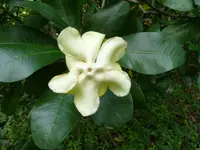
Wild frangipani (Voacanga thouarsii) is a tropical evergreen tree or large shrub from East Africa and Madagascar. It is grown mainly as an ornamental plant in warm climates.
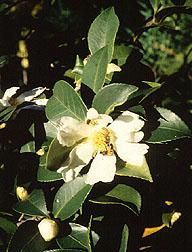
The plant has glossy, elongated leaves and clusters of creamy white, often fragrant flowers, followed by paired, knobbly seed pods. It develops a sturdy trunk and a rounded crown when mature.
Wild frangipani prefers warm temperatures, bright light, and well-drained soil, so it is not well suited to cold or very dry landscapes. In suitable conditions it is moderately easy to manage, but its size and tropical needs mean it is best for experienced growers who want to learn how to care for Wild Frangipani.

Care Difficulty
Moderate Care

Light Preference
Partial Sun

Water Requirements
Moderate Water

Temperature Preference
Tropical / Frost Sensitive

Hardiness Zone
11–12

Soil Texture
Sandy, Loamy, Organic-rich

Soil pH
Acidic (5.5–6.5), Slightly acidic (6.5–7.0)

Soil Drainage
Moist but well-drained

Fertilization
Minimal (feed rarely)
Scan your plant to receive care tips personalized for your specific plant
Available on iOS and Android
Voacanga thouarsii prefers bright, warm conditions that mimic an open, tropical forest edge.
This species prefers evenly moist but not saturated soil, with short dry intervals between waterings.
This tropical tree grows best in consistently warm, frost-free conditions.
This species prefers fairly humid air but copes with typical indoor levels if other conditions are stable.
Voacanga thouarsii prefers a loose, well‑aerated, organically enriched growing medium that drains quickly yet holds some moisture.
This tree can be grown in large containers when provided with stable support and controlled moisture around the roots.
Voacanga thouarsii benefits from light, controlled feeding rather than heavy fertilization.
Pruning Voacanga thouarsii is mainly performed to maintain structure and remove unhealthy wood.
This species is more often grown in the ground, but container plants and young trees benefit from careful transplanting.
Voacanga thouarsii is typically propagated from seeds and semi-hardwood cuttings under warm, controlled conditions.
Voacanga thouarsii is frost-sensitive and needs protection in regions with cold winters.

Plant Health Check
Not sure what's wrong with your plant? Check your plant's health inside the app.
This species produces a white latex rich in indole alkaloids, which makes the sap toxic and bitter and likely serves as a chemical defense against herbivores.
Its paired, horn-like follicles can be up to several tens of centimeters long and contain many flattened seeds embedded in fibrous pulp, a structure adapted to protect seeds until they are fully mature.
The tree naturally occurs along forest margins and in secondary lowland rainforest in tropical Africa, where it benefits from high light compared with closed-canopy interior forest.

The seeds of this species have been collected and used industrially as a commercial source of certain indole alkaloids that serve as starting materials for the semi-synthesis of more complex pharmaceutical compounds.
All parts of this species contain toxic alkaloids. Ingestion can cause nausea, vomiting, diarrhea, and neurological symptoms. Milky sap may irritate skin and eyes. Keep away from children, pets, and food crops, and wear gloves when pruning.
Keep your plants happy and healthy with plant identification, disease detection, and easy care guidance.