Early trunk training
Install a sturdy stake when the plant is still under 60–80 cm tall and loosely tie the main stem at 15–20 cm intervals to encourage a straight, wind-resistant trunk that can later support heavy pods.

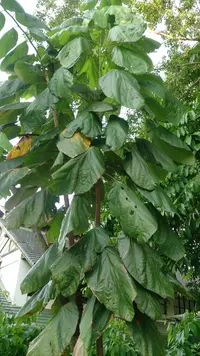
Theobroma bicolor, often called mocambo or white cacao, is a small to medium tropical tree related to the cacao plant. It forms a rounded crown with large, thin leaves and produces ribbed pods with pale, edible seeds and sweet pulp.
This species occurs naturally in lowland rainforests of Central and South America, usually in warm, humid habitats. It prefers bright, filtered light, consistent moisture, and rich, well-drained soil.
The plant can be challenging outside tropical climates because it dislikes cold, dry air, and irregular watering. Indoor growers who care for theobroma need stable warmth, humidity, and protection from drafts to keep Theobroma bicolor healthy over time.

Care Difficulty
Hard Care

Light Preference
Partial Shade

Water Requirements
Keep Soil Moist

Temperature Preference
Tropical / Frost Sensitive

Hardiness Zone
11–12

Soil Texture
Loamy, Silty, Organic-rich

Soil pH
Acidic (5.5–6.5), Slightly acidic (6.5–7.0)

Soil Drainage
Moist but well-drained

Fertilization
Light (every 4–6 weeks)
Scan your plant to receive care tips personalized for your specific plant
Available on iOS and Android
This tropical canopy tree needs bright, gentle light that mimics filtered forest sun.
This species prefers consistently moist, well‑drained soil without long dry spells or standing water.
This lowland tropical tree thrives in stable warmth and is highly sensitive to cold and frost.
This species needs consistently high humidity to grow well and avoid leaf damage.
This tree prefers deep, loose, organic-rich soil that drains freely but never dries out completely.
This species can be grown in large containers when given enough root space and stable moisture.
This nutrient-hungry tropical tree benefits from steady, moderate feeding under cultivation.
Pruning helps manage size and structure while maintaining healthy canopy development in Theobroma bicolor.
This species is usually started in containers, then transplanted to a permanent site once sturdy enough.
Propagation of Theobroma bicolor is usually done from fresh seed and requires warm, stable conditions.
This low-frost-tolerance tropical tree needs careful winter management outside true frost-free climates.

Plant Health Check
Not sure what's wrong with your plant? Check your plant's health inside the app.
The fruits develop thick, pale yellow to almost white pulp around the seeds, which is sweet, fibrous, and eaten fresh or used in drinks by Indigenous communities in its native range.
The seeds can be fermented and roasted in a way similar to cacao, but they are less aromatic and fattier, which is why this species has never become a major commercial chocolate source.
This tree naturally grows in lowland, often seasonally flooded forests of Central and South America, showing good tolerance to periodic soil waterlogging that would stress many other tree crops.

Archaeobotanical and ethnobotanical studies indicate that Indigenous peoples of the Amazon, such as the Ticuna and Uitoto, have cultivated and managed this species for centuries as a traditional fruit and shade tree, making it one of the region’s long-standing semi-domesticated crops.
Growth is moderate. Young trees often add 30–60 cm per year in warm, frost-free climates, slowing as they age. Container-grown specimens grow more slowly, especially if root-bound or kept in cooler conditions with limited fertility.
Keep your plants happy and healthy with plant identification, disease detection, and easy care guidance.