Giant Banksia Care (Banksia grandis)

Also known as: Bull Banksia
Giant Banksia

About Giant Banksia

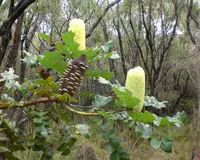
Giant banksia (Banksia grandis) is a long-lived shrub or small tree from southwestern Australia, known for its large, serrated leaves and tall, cylindrical flower spikes. In the wild it grows in nutrient-poor, sandy soils and dry, open woodlands, showing strong adaptation to low-fertility conditions.

Its striking flowers and woody cones attract birds and other pollinators, making it popular among native plant enthusiasts. Growth can be slow and it can be sensitive to root disturbance, which makes it less suited to frequent repotting or heavy pruning.

Those who care for Giant Banksia need free-draining, low-phosphorus soil, plenty of sun, and careful watering that avoids waterlogged conditions.

Main Plant Requirements

Care Difficulty

Hard Care

Light Preference

Full Sun

Water Requirements

Low Water

Temperature Preference

Warm Climate

Hardiness Zone

9–11

Soil Texture

Sandy, Loamy, Rocky

Soil pH

Strongly acidic (4.5–5.5), Acidic (5.5–6.5)

Soil Drainage

Well-drained

Fertilization

Minimal (feed rarely)

Get Personalized Care Plan

Scan your plant to receive care tips personalized for your specific plant

Available on iOS and Android

How to Care for the Giant Banksia

This species prefers bright, open conditions similar to its native coastal woodlands.

  • Provide 6–8 hours of direct sun daily; morning and midday sun are ideal, with some protection from harsh late-afternoon summer sun in very hot regions.
  • Young or recently transplanted Giant Banksia benefits from light afternoon shade or filtered light for the first 1–2 summers to reduce leaf scorch.
  • In cooler or cloudy climates, choose the sunniest south- or west-facing spot available, as prolonged low light leads to weak growth and sparse flowering.

Banksia grandis is drought-tolerant once established and dislikes consistently wet soil.

  • Allow the top 5–8 cm of soil to dry before watering; in sandy, fast-draining ground, this may mean deep watering every 7–14 days in the first summer.
  • Reduce watering sharply in cool or wet seasons and avoid supplemental water if natural rainfall already keeps the soil slightly moist but not saturated.
  • Watch for yellowing, soft leaves or blackened roots as signs of overwatering, and for curling or crisp leaf edges plus very light soil as indicators of underwatering.

This plant prefers mild, dry-summer climates with minimal frost.

  • Ideal growth occurs around 60–80°F (16–27°C), with best establishment in areas that avoid hot, humid summers and waterlogged soils.
  • Mature plants can tolerate brief drops to about 28–30°F (-2 to -1°C), but repeated hard frosts below this can damage new growth and flowers.
  • Heat tolerance is high up to about 95°F (35°C) if soil is well drained; during extremes above this, young plants benefit from mulch and some afternoon shade.

Banksia grandis prefers dry to moderately dry air and rarely needs extra humidity in typical indoor or outdoor conditions.

  • Target 30–50% humidity, similar to most heated homes or dry outdoor climates.
  • The plant tolerates brief dips below 30%, but combined heat and very low humidity can crisp new leaf tips.
  • If air is extremely dry and hot, move the plant away from direct hot drafts and reduce reflected heat from nearby surfaces.

Banksia grandis needs very free-draining, low-nutrient soil to avoid root and collar rot.

  • Use a sandy, mineral-based mix, such as 60–70% coarse sand or fine gravel blended with low-phosphorus native potting mix.
  • Aim for slightly acidic to neutral pH around 5.5–7.0, avoiding high-lime or strongly alkaline substrates.
  • Keep organic matter low; add only small amounts of well-aged, low-phosphorus compost to avoid nutrient stress and root damage.
  • Improve aeration by incorporating coarse particles (pumice, coarse perlite, scoria) and never allowing the mix to become compacted or waterlogged.

This species can be grown in containers for several years, mainly in mild outdoor climates, but requires careful management of root space and stability.

  • Choose a deep, heavy pot to anchor the eventually tall, woody plant and reduce tipping in wind.
  • Select a mineral-based mix that drains so quickly you must water more often, preventing chronic moisture around the lignotuber and roots.
  • Elevate the container on feet or bricks so drainage holes never sit directly in collected runoff or saucer water.

Banksia grandis evolved in nutrient-poor soils and needs only very light feeding in cultivation.

  • Use low-phosphorus, slow-release native plant fertilizer or well-aged, low-nutrient compost rather than rich balanced NPK products.
  • Feed once at the start of the growing season, then again mid-season only if growth is weak.
  • Apply at half the label rate, keeping granules or compost off the trunk and main stem.
  • Avoid feeding in winter or when growth is dormant to reduce root stress and salt buildup.

Banksia grandis responds well to light, deliberate pruning aimed at maintaining structure and health.

  • Carry out main pruning in late winter to early spring before vigorous new growth starts.
  • Remove dead, diseased, crossing, or inward-growing branches to improve airflow and reduce disease risk.
  • Shorten overly long shoots to shape the canopy, encouraging denser branching without cutting into old bare wood.
  • Use clean, sharp bypass pruners or a pruning saw, making smooth cuts just above a bud or branch junction.

This species is usually grown in the ground, so focus on careful transplanting rather than frequent repotting.

  • Transplant young plants in late winter to early spring, when conditions are mild and soil is moist but not waterlogged.
  • Look for circling roots, poor drainage, or stalled growth in containers as signs the plant has outgrown its pot.
  • Move up only 1 pot size, teasing out circling roots gently and using a very free-draining, low-phosphorus mix.
  • Water thoroughly after transplanting, then keep soil just moist and shaded for 1–2 weeks to limit transplant shock.

Propagation of Banksia grandis is usually done from seed and requires patience and specific conditions.

  • Collect mature cones, then extract and clean seeds before sowing to reduce fungal problems.
  • Sow seeds in late winter to early spring in a very free-draining, low-phosphorus mix kept at 60–70°F.
  • Provide bright light, steady moisture without waterlogging, and good airflow to support germination.
  • Rooting semi-hardwood cuttings is possible but slow and unreliable, needing bottom heat and consistent humidity.

Banksia grandis prefers mild, frost-free winters and needs protection in colder climates.

  • In ground, add a 5–8 cm layer of coarse mulch around the root zone, keeping it away from the trunk.
  • In areas below about 25–28°F, shelter young plants with breathable frost cloth on the coldest nights.
  • Grow Banksia grandis in containers in cool regions and move under cover or indoors before hard frosts.

Care Tips

Seedling fire mimicry

For higher seed germination, lightly scarify the woody seed capsules and provide brief dry heat (about 100–120°F for 1–2 hours) before sowing to mimic the post-fire conditions this species experiences in habitat.

Phosphorus-safe inputs

When improving sandy soil, use low-phosphorus native plant blends and coarse mineral amendments like gritty sand or fine gravel, and avoid general-purpose fertilizers that exceed about 1–2% P on the label to prevent root toxicity.

Wind-hardening young plants

Grow young plants in a spot with increasing air movement over several weeks or use a box fan on low for 30–60 minutes a day so stems and root systems strengthen before they face full coastal or open-site winds.

Root-zone protection

Keep a 10–15 cm radius around the trunk free of mulch and competing plants, and place any mulch layer only on the outer root zone to reduce collar rot and allow good oxygen flow to the lignotuber and crown roots.

Salt and spray management

In exposed coastal gardens, use a low, open windbreak or other hardy shrubs on the windward side so the foliage receives filtered, not direct, salt spray, which supports long-term success when growing Giant Banksia.

Common Pests and Diseases

Banksia boring moth

This pest lives as a larva inside branches and stems, where it tunnels through the wood and causes dieback of shoots. Symptoms include sudden wilting or death of individual branches, frass (sawdust-like material), and hollow stems.

Solution

Prune out and destroy affected stems well below visible damage, sterilizing tools between cuts, and dispose of prunings away from other plants. Reduce plant stress through correct watering and avoid wounding stems, and in gardens with repeated issues consider monitoring for fresh frass and physically removing larvae during pruning as part of long-term Banksia grandis care.

Scale insects

These insects attach to leaves and stems, appearing as small bumps that excrete honeydew and can cause yellowing, leaf drop, and general decline. This pest is often more severe on plants under drought or nutrient stress.

Solution

Wipe or gently scrub small infestations from stems and leaves with a damp cloth or soft brush, using a mild soapy water solution. For larger infestations, apply a light horticultural oil spray labeled for woody ornamentals, targeting the undersides of leaves and stems and repeating as needed while also improving plant vigor with correct sun and watering.

Phytophthora dieback

This disease is caused by soil-borne water molds that attack roots and lower stems, leading to poor growth, leaf yellowing, and progressive branch dieback. Symptoms include sudden collapse of previously healthy plants, especially in poorly drained or frequently wet soils.

Solution

Avoid overwatering and ensure excellent drainage, ideally planting on mounded or sloped sites and keeping irrigation off the root crown. Remove and destroy severely affected plants, avoid moving contaminated soil, disinfect tools and footwear, and in high-risk areas consider using phosphite (phosphonate) treatments under local guidelines to help protect remaining plants.

Botrytis blight

This disease develops in cool, humid conditions and attacks flowers, cones, and sometimes young foliage, producing brown lesions and grey, fuzzy mold. Symptoms include browned flower spikes and premature drop of affected parts.

Solution

Improve air circulation around the plant by avoiding overcrowding, removing dense surrounding growth, and watering early in the day to keep foliage dry. Promptly prune and dispose of infected flowers and stems, sterilizing tools between cuts, and in persistently humid climates consider preventative use of a labeled fungicide during peak flowering if the plant has a history of severe blight.

Leaf spot

This disease causes tan to dark brown spots on leaves, sometimes with a purple margin, which can merge into larger dead patches under prolonged wet conditions. Symptoms include cosmetic damage and, in severe cases, partial defoliation of stressed plants.

Solution

Remove and discard heavily spotted leaves and fallen debris from around the plant to reduce fungal spores, and avoid overhead watering that keeps foliage wet for long periods. Improve sunlight and airflow, and if the problem recurs yearly, apply a suitable copper-based or other labeled fungicide at the first appearance of new spots, following product directions carefully.

Interesting Facts

Fire-adapted woody cones

This species forms large woody seed cones (follicles) that often remain closed until exposed to the heat or smoke of bushfire, an adaptation that allows seed release into a nutrient-rich ash bed.

Massive saw-toothed leaves

It develops very large, stiff, deeply serrated leaves that can reach around 45 cm long, giving the tree a distinctive coarse texture and helping reduce herbivore damage.

Nectar-rich flower spikes

Its tall cylindrical flower spikes produce abundant nectar that supports native birds, mammals, and insects in southwestern Western Australia, especially during drier periods when other nectar sources are limited.

Botan icon

Did you know?

Banksia grandis was one of the Australian plants first illustrated and scientifically described from material collected on Captain James Cook’s late-18th-century voyages, making it historically important in early European botanical exploration of Australia.

FAQs about Giant Banksia

Growth is generally slow to moderate. Young plants may add 10–30 cm per year, depending on climate, drainage, and nutrition. In poor or hot inland conditions, growth slows noticeably, so patience is essential when growing Giant Banksia.

Grow Healthy Plants with Botan Care

Keep your plants happy and healthy with plant identification, disease detection, and easy care guidance.

Botan plant care app — identify plants on mobile

Explore More Plants