Protect Wet Roots
Install the tree slightly raised on a low mound in poorly drained sites so the root flare stays just above surrounding grade and does not sit in standing water after heavy rain.

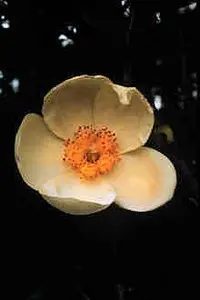
Loblolly bay, Gordonia lasianthus, is an evergreen tree native to the southeastern United States, especially wet coastal plains and swampy forests. It forms a narrow, upright crown with glossy, dark green leaves and showy white flowers that resemble single camellias. Flowers often appear in warm months and can provide extended visual interest. The plant prefers consistently moist, acidic soil and does not tolerate long dry spells or heavy drought. It is considered moderately challenging for beginners because it resents root disturbance and needs stable moisture and suitable soil conditions. Understanding how to care for loblolly bay in a humid, mild climate greatly improves long-term success.

Care Difficulty
Moderate Care

Light Preference
Partial Sun

Water Requirements
Keep Soil Moist

Temperature Preference
Warm Climate

Hardiness Zone
7–9

Soil Texture
Sandy, Loamy, Organic-rich

Soil pH
Strongly acidic (4.5–5.5), Acidic (5.5–6.5)

Soil Drainage
Moist but well-drained

Fertilization
Minimal (feed rarely)
Scan your plant to receive care tips personalized for your specific plant
Available on iOS and Android
This evergreen tree prefers bright, gentle light that mimics its native woodland edge habitat.
This species thrives in consistently moist, acidic, well-drained soil and does poorly if allowed to dry out completely.
This tree prefers mild, humid climates with warm summers and frost-free or only lightly frosty winters.
This species prefers consistently moist air but adapts to typical outdoor humidity in mild climates.
Gordonia lasianthus grows best in consistently moist, acidic, well-aerated soil with strong drainage.
This species can be grown in large containers outdoors, but only with careful attention to stability and moisture management.
This native tree usually needs minimal feeding, but light fertilization supports healthy growth in poorer soils when caring for loblolly bay.
Gordonia lasianthus benefits from light, thoughtful pruning to maintain structure and flower display.
This species is usually planted in the ground, so focus on careful transplanting rather than frequent repotting.
Gordonia lasianthus is slow and somewhat challenging to propagate, so it is not commonly multiplied at home.
This evergreen is moderately cold hardy in mild climates but needs attention in areas with hard freezes.

Plant Health Check
Not sure what's wrong with your plant? Check your plant's health inside the app.
This species is one of the few broadleaf evergreens that naturally dominates acidic, waterlogged coastal plain habitats in the southeastern US, forming nearly pure stands in some bays and pond margins.
Gordonia lasianthus belongs to the Theaceae, the same family as the tea plant Camellia sinensis, and shares features such as thick, glossy leaves and large, white, camellia-like flowers rich in pollen for insects.
Unlike many temperate trees that flower in early spring, this species produces large, fragrant white flowers through summer into early fall, providing a late-season nectar and pollen source for bees and other pollinators.

Fossil evidence and biogeographic studies suggest that close relatives of Gordonia once had a much wider distribution, but Gordonia lasianthus is now the only Gordonia species native to North America, making it a relict representative of an ancient lineage in the tea family.
Lack of flowering often comes from insufficient light, nutrient-poor or very alkaline soil, or stress from recent transplanting or pruning. Ensure steady moisture, acidic soil, and avoid heavy pruning of branch tips just before the flowering season.
Keep your plants happy and healthy with plant identification, disease detection, and easy care guidance.