Stinking Juniper Care (Juniperus foetidissima)

Also known as: foetid juniper
Stinking Juniper

About Stinking Juniper

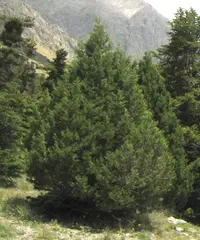
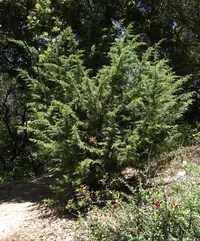
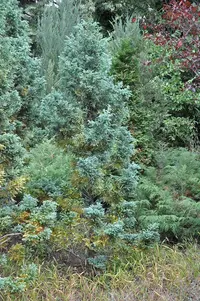
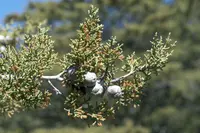
Stinking juniper, Juniperus foetidissima, is a long-lived coniferous tree or large shrub, valued mainly for its resilience and dense, aromatic foliage. It typically forms a tall, columnar to irregular crown with bluish-green scale-like leaves and small, berry-like cones.

This species is native to dry, rocky mountains in parts of southeastern Europe and western Asia, where it tolerates wind, poor soils, and seasonal drought. These traits make it relatively low-maintenance once established, provided it receives full sun and well-drained soil.

Gardeners who want to care for Stinking Juniper should focus on giving it enough light, space to develop its shape, and protection from waterlogged conditions.


Main Plant Requirements

Care Difficulty

Easy Care

Light Preference

Full Sun

Water Requirements

Low Water

Temperature Preference

Cold Hardy

Hardiness Zone

5–8

Soil Texture

Sandy, Loamy, Rocky

Soil pH

Slightly acidic (6.5–7.0), Slightly alkaline (7.0–7.5)

Soil Drainage

Well-drained

Fertilization

Minimal (feed rarely)

Get Personalized Care Plan

Scan your plant to receive care tips personalized for your specific plant

Available on iOS and Android

How to Care for the Stinking Juniper

This high-altitude juniper thrives in strong light and is best placed in open, sunny positions outdoors.

  • Provide full sun for 6–8 hours daily; 4–5 hours is the minimum for dense foliage and compact growth in Stinking Juniper.
  • Tolerates light partial shade, especially with morning sun and light afternoon shade in hotter regions with intense summer sun.
  • In deep shade, foliage becomes thin and leggy; in very exposed, reflected afternoon sun, young plants may show browning on the south or west side.

This species is strongly drought tolerant once established and prefers drier soil conditions.

  • In the ground, allow the top 5–8 cm of soil to dry before deep watering; in most climates this means infrequent but thorough watering during dry spells.
  • Use sharply drained, gritty or sandy soil so water does not pool around the roots; avoid low-lying sites where water collects.
  • Overwatering Juniperus foetidissima leads to yellowing, soft foliage and twig dieback, while underwatering first shows as dull, slightly bronzed leaf tips.

This cold-hardy conifer tolerates a wide temperature range but grows best in moderate conditions.

  • Optimal growth occurs around 60–75°F (16–24°C), with good performance in typical outdoor seasonal swings.
  • Established plants tolerate down to about -10°F (-23°C) or slightly lower, but young plants benefit from protection from severe, drying winter winds.
  • Handles summer heat up to about 95°F (35°C) if soil is well drained and roots are mulched; prolonged extreme heat plus drought can cause tip browning.

This species tolerates low humidity well and rarely needs humidity adjustment indoors.

  • Aim for 30–50% humidity; typical centrally heated homes suit Stinking Juniper without special measures.
  • Dry indoor air is usually acceptable, but prolonged levels below 25% can cause browning of the youngest needle tips.
  • If air is extremely dry, group plants together and keep them away from heat vents to reduce further moisture loss.

Juniperus foetidissima prefers mineral, sharply drained soil that mimics rocky, dry habitats.

  • Use a gritty mix such as 50–60% sandy loam with 40–50% mineral components like coarse sand, fine gravel, or pumice.
  • Aim for slightly acidic to neutral pH around 6.0–7.5, avoiding strongly acidic or alkaline extremes that restrict nutrient uptake.
  • Improve aeration by incorporating 10–20% pine bark fines, which create stable pores for air and root growth.
  • Avoid heavy, compacted, or water-retentive mixes rich in peat or clay, which promote root rot and poor anchoring.

This species can be grown in containers if the pot and substrate are managed for stability and rapid drainage.

  • Choose a deep, heavy pot to counterbalance the tree’s eventual height and wind catch, reducing tipping risk outdoors.
  • Ensure multiple large drainage holes and elevate the pot slightly so water leaves the base freely after irrigation.
  • Use a tall, narrow container shape to encourage a strong taproot-like structure while limiting excessive lateral root circling.

This drought-tolerant conifer needs minimal feeding, especially when planted in the ground on poor, rocky soils.

  • For container-grown Stinking Juniper, use a balanced slow-release fertilizer (around 10-10-10) once in early spring.
  • Apply at half the label rate to avoid excessive, weak growth and salt buildup.
  • Skip feeding in late fall and winter, when growth is naturally slow or dormant.
  • Compost or well-rotted leaf mold can be used as a light top-dressing, kept away from the trunk.

Juniperus foetidissima responds well to light, targeted pruning to maintain structure and remove problem wood.

  • Best time is late winter to early spring, before new growth starts.
  • Use clean, sharp bypass pruners to remove dead, diseased, or storm-damaged branches.
  • Thin crowded interior shoots slightly to improve airflow while keeping the natural form.
  • Avoid cutting back into old, brown wood, as junipers rarely reshoot from bare sections.

This species is usually grown in the ground, so focus on careful transplanting rather than frequent repotting.

  • Transplant in late winter or early spring, while the plant is still dormant and soil is workable.
  • Look for signs such as circling roots, very slow growth, or the root ball drying quickly in containers.
  • Move only every several years, stepping up 1 pot size or to a permanent site with well-drained soil.
  • Minimize root stress by watering deeply before and after planting and by keeping the original root ball intact.

Propagation of Juniperus foetidissima is possible but slow, so patience and stable conditions are important.

  • Semi-hardwood cuttings taken in late summer to early autumn are the most practical method.
  • Use 8–12 cm heel cuttings, dip in rooting hormone, and place in a sharply drained, slightly moist medium.
  • Maintain bright, indirect light, high humidity, and temperatures around 65–70°F for several months.
  • Seed propagation is possible but needs prolonged cold stratification and often gives variable offspring.

This juniper is cold hardy and usually needs little winter care once established in the landscape.

  • In very cold or exposed sites, apply a 5–8 cm mulch layer around the root zone, not touching the trunk.
  • Young or container plants benefit from a windbreak to limit desiccation by freezing winds.
  • Move containers to a sheltered, unheated area where roots stay cold but not continuously waterlogged.

Care Tips

Wind exposure planning

Site the plant where it receives steady air movement but is shielded from the strongest prevailing winter winds, using buildings or larger evergreens as a windbreak to reduce desiccation and branch breakage in exposed locations.

Single-leader training

During the first 3–5 years, select one strong central leader and remove or shorten competing upright shoots in late winter so the tree develops a stable, columnar structure that better resists snow and wind load.

Snow load management

In regions with heavy, wet snow, gently knock accumulated snow from branches with a soft broom, always pushing upward from below the branch to prevent splitting and structural damage.

Soil salinity monitoring

If the plant grows near roads or pathways treated with de-icing salt, periodically check for browning on the road-facing side and, after winter, flush the soil with deep watering to leach accumulated salts below the root zone.

Targeted pest scouting

From spring through late summer, inspect interior branches every 3–4 weeks for scale insects and spider mites, and if found, prune out localized infestations and dispose of the material off-site before considering any chemical control when caring for Stinking Juniper.

Common Pests and Diseases

Cedar-apple rust

This disease causes bright orange to reddish-brown galls on twigs that later produce gelatinous, horn-like projections in wet weather. Symptoms include distorted new growth and gradual weakening of affected branches.

Solution

Prune out and discard galls during dry weather, cutting several cm below visible swellings, and clean tools afterward. Where possible, remove or distance susceptible apple and crabapple trees, and in high-risk areas use a labeled protective fungicide on junipers in early spring according to Juniperus foetidissima care instructions and local extension guidance.

Juniper tip blight

This disease causes browning and death of young shoot tips, usually starting at the base of the plant and moving upward, with tiny black fruiting bodies visible on dead needles and stems. Symptoms include sparse foliage, dieback of small branches, and reduced vigor.

Solution

Cut out and discard infected tips and branches back into healthy wood, improving air flow by thinning crowded interior stems. Avoid overhead watering, reduce stress through proper site conditions, and apply a suitable fungicide at budbreak and after periods of prolonged wet weather if tip blight recurs regularly.

Phomopsis twig blight

This disease mainly affects young shoots, causing them to turn dull green, then reddish-brown, often with a clear line between healthy and dead tissue. Symptoms include scattered dead tips throughout the canopy, especially after cool, wet spring weather.

Solution

Remove and discard blighted twigs as soon as they are noticed, and keep mulch and weeds from crowding lower branches to improve drying. Avoid frequent light irrigation on foliage, and in nursery or landscape settings with repeated issues use a registered fungicide during spring flush following label directions.

Juniper scale

These insects appear as tiny, gray to white oval bumps on needles and stems and feed by sucking sap, which leads to yellowing foliage and dieback on heavily infested plants. This pest can weaken trees over time and increase susceptibility to other stressors.

Solution

Inspect branches closely and prune out heavily infested sections, then dispose of prunings. For remaining populations, wash foliage with a strong but controlled stream of water, encourage natural predators such as lady beetles, and, if needed, target the crawler stage in late spring with a labeled horticultural oil or insect growth regulator.

Spider mites

These insects are actually tiny arachnids that feed on needles, causing a dusty or stippled appearance and sometimes fine webbing on inner branches. Symptoms include dull, off-color foliage that may bronze and drop prematurely in hot, dry conditions.

Solution

Rinse foliage thoroughly with water, focusing on inner and lower branches, and repeat during hot, dry spells to reduce mite numbers and dust. For persistent infestations, use horticultural oil or insecticidal soap labeled for conifers, applied to all needle surfaces, and reduce nearby dust and drought stress to make the plant less favorable to mites.

Interesting Facts

Strong resinous odor

When crushed or bruised, the foliage and wood release a very strong resinous smell, which is the reason for the species name foetidissima, meaning very foul-smelling.

Eastern Mediterranean native

This species is naturally distributed from the Balkans through Turkey and the eastern Mediterranean into western Asia, where it often occupies rocky, dry mountain slopes and cliffs.

Massive, long‑lived trees

In favorable mountain habitats, this conifer can form large, dense crowns on stout trunks and is known to live for several centuries, making it one of the more imposing junipers in its native range.

Botan icon

Did you know?

Wood from this species has traditionally been valued in parts of its native range for durable carpentry and construction, because it is dense, fine-grained, and resistant to decay and insect damage.

FAQs about Stinking Juniper

Growth is generally slow to moderate. Young plants often add about 10–20 cm of height per year under good conditions. Poor soil, drought stress, heavy shade, or compacted ground can reduce extension growth significantly.

Grow Healthy Plants with Botan Care

Keep your plants happy and healthy with plant identification, disease detection, and easy care guidance.

Botan plant care app — identify plants on mobile

Explore More Plants