Shelter From Wind
Site plants where they are screened from strong, drying winds, or use a temporary windbreak in exposed gardens to prevent branch dieback and needle scorch on young trees.

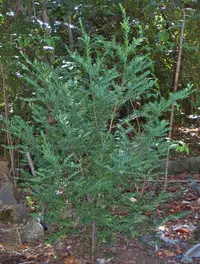
Chilean plum-yew (Prumnopitys andina) is an evergreen conifer grown mainly for its fine, yew-like foliage and attractive dark purple, plum-shaped seed cones. It forms a slow-growing, upright tree or large shrub, usually with dense, layered branches and a refined, architectural look.
This species is native to the temperate forests of central Chile and adjacent Argentina, where it grows on cool, moist mountain slopes. It tends to be long-lived but slow to establish, which can make it a bit challenging for impatient gardeners.
Once settled, it is generally resilient if given sheltered conditions, reasonably moist but well-drained soil, and protection from extreme heat or drought. Gardeners who learn how to care for Chilean plum-yew often value it as a distinctive, long-term specimen.

Care Difficulty
Moderate Care

Light Preference
Partial Shade

Water Requirements
Moderate Water

Temperature Preference
Cool Climate

Hardiness Zone
7–9

Soil Texture
Loamy, Sandy, Organic-rich

Soil pH
Acidic (5.5–6.5), Slightly acidic (6.5–7.0)

Soil Drainage
Moist but well-drained

Fertilization
Minimal (feed rarely)
Scan your plant to receive care tips personalized for your specific plant
Available on iOS and Android
This slow-growing conifer prefers cool, bright conditions with protection from harsh afternoon sun.
This species prefers evenly moist, cool soil and does not tolerate prolonged drought or waterlogging.
This cool-temperate conifer handles cold winters but dislikes extreme heat and drying conditions.
This conifer tolerates a wide range of humidity and usually does not need special humidity control outdoors.
Prumnopitys andina prefers cool, evenly moist, well‑drained soil with a slightly acidic reaction.
This species can be grown in large containers when young, provided the container setup manages moisture and root depth carefully.
This slow-growing conifer from Chile needs only light, infrequent feeding in most garden soils.
Prumnopitys andina needs minimal pruning and is best left to develop its natural, narrow form.
This species is usually grown as a landscape tree, so focus on careful transplanting of young container plants.
Propagation of Prumnopitys andina is slow and technically demanding, so most home growers rely on nursery plants.
This evergreen is fairly cold hardy, but young or container-grown plants benefit from basic winter protection in colder regions.

Plant Health Check
Not sure what's wrong with your plant? Check your plant's health inside the app.
This conifer is naturally restricted to a limited area of the Andes in central Chile, where it grows on steep, rocky slopes and in ravines between roughly 1,000–2,000 m elevation.
It is dioecious, meaning individual trees are either male or female, with male plants producing small pollen cones and female plants producing fleshy, drupe-like seed cones that resemble olives or small plums when ripe.
The species is listed as Endangered on the IUCN Red List due to habitat loss, overgrazing, and historical logging, and surviving populations are now highly fragmented in the wild.

The seeds of this species are an important seasonal food source for the endangered Chilean long-haired mouse, Abrothrix longipilis, which helps disperse the seeds by carrying and caching them away from the parent tree.
This species is an evergreen conifer, keeping foliage year-round in suitable climates. Older inner needles may shed gradually, but the plant does not have a full dormant leaf-drop period like deciduous trees.
Keep your plants happy and healthy with plant identification, disease detection, and easy care guidance.