Protect Central Leader
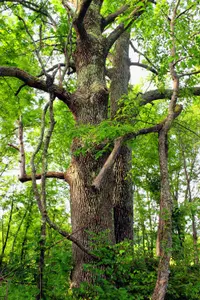
In the first 5–7 years, avoid topping and stake only if necessary so a single, straight central leader develops, which improves long-term structure and storm resistance.

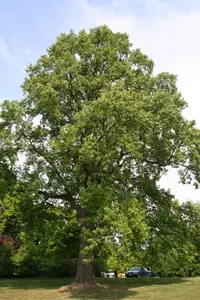
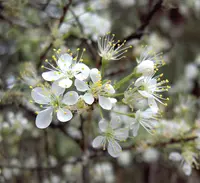
Tulip poplar, Liriodendron tulipifera, is a fast-growing deciduous tree native to eastern North America. It is widely used as a landscape and shade tree. The tree develops a tall, straight trunk with a narrow, upright crown when young, broadening with age. Its leaves are distinctive, with a tulip-like shape, and the spring flowers are greenish-yellow with orange markings. Bark and branch structure remain relatively clean and formal-looking, which suits urban and suburban settings. It prefers full sun, evenly moist but well-drained soil, and space to develop its large root system. Understanding how to care for tulip poplar early on helps avoid future structural and size problems.

Care Difficulty
Moderate Care

Light Preference
Full Sun

Water Requirements
Regular Water

Temperature Preference
Cold Hardy

Hardiness Zone
4–9

Soil Texture
Loamy, Clay, Organic-rich

Soil pH
Acidic (5.5–6.5), Slightly acidic (6.5–7.0)

Soil Drainage
Moist but well-drained

Fertilization
Minimal (feed rarely)
Scan your plant to receive care tips personalized for your specific plant
Available on iOS and Android
This large deciduous tree needs abundant direct light to develop a strong, balanced crown.
This species prefers evenly moist, deep soil, especially while young and establishing roots.
This temperate-climate tree is adapted to cold winters and warm summers with distinct seasons.
This species tolerates a wide humidity range and does not usually need special humidity management outdoors.
Liriodendron tulipifera prefers deep, moist, well-aerated mineral soils with steady drainage.
This large, fast-growing tree is generally unsuited to long-term container culture and is best planted in open ground.
This fast-growing native tree usually needs minimal feeding in ordinary garden soil.
Liriodendron tulipifera generally needs only light structural pruning to stay healthy and stable.
This species is rarely kept long-term in containers and is usually transplanted to its final site when young.
Propagation of Liriodendron tulipifera is usually done from seed and is relatively slow for home growers.
Mature trees are cold hardy in much of the US and usually need no special winter care.

Plant Health Check
Not sure what's wrong with your plant? Check your plant's health inside the app.
The leaves have a distinctive four-lobed outline that looks as if the tip has been cut off, which helps distinguish this species from other large deciduous trees in eastern North America.
Its spring flowers provide nectar important for pollinators such as tulip tree specialist bees in the genus Andrena, which depend heavily on this species in parts of its range.
In suitable conditions it grows rapidly into a very tall, straight-trunked tree, making it a major component of mature hardwood forests in the eastern United States.

In the eastern United States, this species can reach over 190 ft in old-growth forests, making it one of the tallest native hardwood trees in North America and a benchmark species for studying maximum tree height in temperate broadleaf forests.
This species is considered fast-growing, often adding 30–60 cm or more in height per year under good conditions. Growth is quickest in deep, moist, well-drained soil and slows in compacted or drought-prone sites.
Keep your plants happy and healthy with plant identification, disease detection, and easy care guidance.