Damson Care (Prunus insititia)

Also known as: damson plum
Damson

About Damson

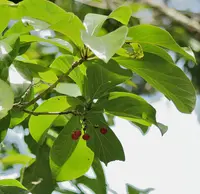
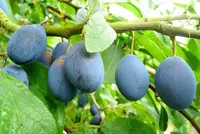
Damson (Prunus insititia) is a small, hardy plum tree grown mainly for its tart, flavorful fruits used in preserves, baking, and cooking. It typically forms a compact tree with dense branching and small white spring blossoms followed by oval, dark blue to purple fruits.

This species is thought to originate from Europe and western Asia and is now common in traditional orchards and home gardens in temperate climates. It is valued for reliability, good cold tolerance, and relatively low maintenance, which makes it straightforward to care for Damson in suitable outdoor conditions.

Prunus insititia generally prefers full sun, moderately moist but well-drained soil, and benefits from a site sheltered from strong winds.

Main Plant Requirements

Care Difficulty

Moderate Care

Light Preference

Full Sun

Water Requirements

Moderate Water

Temperature Preference

Cold Hardy

Hardiness Zone

4–8

Soil Texture

Sandy, Loamy, Clay

Soil pH

Acidic (5.5–6.5), Slightly acidic (6.5–7.0)

Soil Drainage

Moist but well-drained

Fertilization

Minimal (feed rarely)

Get Personalized Care Plan

Scan your plant to receive care tips personalized for your specific plant

Available on iOS and Android

How to Care for the Damson

Prunus insititia needs full sun for strong flowering and fruiting but tolerates some partial shade.

  • Provide 6–8 hours of direct sun daily, with morning sun and light afternoon shade ideal in hot summer regions.
  • Allow light dappled shade in the afternoon for young trees to reduce leaf scorch and water stress, especially in the first 2–3 years.
  • Monitor canopy density over time; prune lightly if lower branches become shaded for most of the day, which can reduce Damson fruit production.

Prunus insititia prefers evenly moist, well-drained soil rather than frequent shallow watering.

  • Water when the top 4–6 cm of soil feels dry, applying a slow, deep soak to wet the root zone 20–30 cm down.
  • Reduce watering in autumn and winter once leaves drop, but avoid letting the soil stay bone dry for more than a few days in drought.
  • Watch for yellowing leaves and soft, soggy soil as signs of overwatering, and for wilting, small fruit drop, and dry cracked soil as signs of underwatering.

This hardy plum tolerates cold winters but grows and fruits best in moderate temperatures.

  • Aim for active growth in 60–80°F (16–27°C), which supports good flowering, leaf development, and fruit sizing.
  • Mature trees often survive down to about -10°F (-23°C), but young trees benefit from protection from hard freezes and drying winter winds.
  • During heat above 90°F (32°C), use mulch and deep watering to limit heat stress and sunscald, especially on exposed trunks and newly planted trees.

Prunus insititia handles a wide humidity range and rarely needs special humidity management outdoors.

This species grows best in moderately moist, well-structured mineral soil with strong drainage.

  • Use a deep, loamy soil with a mix of clay, silt, and sand to support anchoring roots and steady moisture.
  • Aim for slightly acidic to neutral pH, around 6.0–7.5, to support nutrient availability and healthy growth.
  • Incorporate 20–30% well-rotted compost to improve structure, water retention, and nutrient supply without becoming heavy.
  • Avoid compacted, waterlogged, or very shallow soils; add coarse sand or fine gravel if drainage is consistently slow.

This species can be grown in large containers for some years, especially dwarf or semi-dwarf forms.

  • Choose a heavy, wide-based pot to prevent tipping as the top growth becomes taller and fruit load increases.
  • Use a deep container to allow strong taproot and structural roots to develop without circling tightly.
  • Select a slightly porous material like thick terracotta only if you can compensate for faster drying with more frequent irrigation.

Prunus insititia benefits from moderate feeding on poorer soils but often crops well on reasonably fertile ground without heavy inputs.

  • Apply a balanced granular fertilizer (around 10-10-10) or well-rotted compost once in early spring as growth begins.
  • Use 1/2-strength liquid balanced feed for container-grown Damson trees every 4–6 weeks during the growing season.
  • Water before and after applying fertilizer to limit root burn and improve nutrient uptake.
  • Stop feeding by late summer and avoid fertilizing during winter dormancy to prevent soft, frost-prone growth.

Prunus insititia responds well to light, structured pruning that maintains an open, productive canopy.

  • Carry out main pruning in late winter or very early spring, when the tree is dormant and structure is easy to see.
  • Remove dead, diseased, crossing, or inward-growing branches with clean, sharp bypass pruners or a pruning saw.
  • Thin crowded shoots to improve light and air movement, which supports flowering, fruiting, and reduced disease risk.
  • Shorten overly long branches to maintain size and shape, cutting to an outward-facing bud or side shoot.

This species is usually grown in the ground, so management focuses on careful transplanting rather than frequent repotting.

  • Transplant young trees in late fall or early spring when dormant, choosing a sunny, well-drained site with enough space for mature size.
  • Look for signs such as circling roots or stunted growth in container specimens as indicators that a larger container or ground planting is needed.
  • Lift with a generous root ball, keep roots shaded and moist, and replant at the same soil depth, firming soil gently around the roots.
  • Water thoroughly after transplanting and maintain consistent moisture for the first growing season to reduce transplant shock and support establishment.

Prunus insititia is typically propagated by grafting named cultivars onto suitable rootstocks, with some use of seeds or suckers.

  • Collect scion wood in late winter and graft onto compatible plum rootstock in early spring under cool, dry conditions.
  • Sow seeds in fall outdoors or use cold stratification at 35–40°F for 3–4 months before spring sowing to break dormancy.
  • Dig up rooted suckers in late winter, ensuring each has its own roots, and replant promptly in prepared soil.
  • Keep newly propagated plants evenly moist, weed-free, and sheltered from strong wind while roots establish.

Prunus insititia is generally cold hardy in temperate climates and usually needs minimal winter intervention once established.

  • In late fall, apply a 5–8 cm mulch layer around the root zone, keeping it a few cm away from the trunk to limit rot.
  • Young or newly planted trees benefit from a breathable trunk guard to reduce sunscald and rodent damage in winter.
  • Move container-grown trees to a sheltered, unheated but frost-free or slightly warmer spot where roots are less exposed to extreme freezes.

Care Tips

Establish strong framework

In the first 3–4 years, select 3–5 well-spaced main branches and remove steep, crossing, or competing shoots in late winter to build a stable framework that supports heavy fruit loads without limb breakage.

Use fruit thinning

After natural fruit drop, thin clusters so fruits are spaced about 5–8 cm apart along the branch to reduce branch stress, improve fruit size and flavor, and lower the risk of biennial bearing.

Mulch for root health

Apply a 5–8 cm layer of coarse organic mulch in a wide ring under the canopy, keeping it 5–10 cm away from the trunk, to moderate soil temperature, conserve moisture, and reduce weed competition around the root zone.

Monitor for borer damage

Inspect trunks and main branches 2–3 times per year for small sawdust-like frass and gumming, then prune out and destroy affected wood promptly to limit borer spread in the orchard.

Rotate copper treatments

In regions with frequent spring rain, alternate approved copper sprays with other labeled fungicides at key stages such as bud-swell and petal-fall to manage bacterial canker and blossom diseases more effectively when growing Damson.

Common Pests and Diseases

Damson gall mite

This pest causes rough, blistered, or wart-like galls on young shoots, buds, and sometimes leaves, leading to distorted growth and reduced fruiting. Symptoms include clustered swellings that can persist for several seasons if not managed.

Solution

Prune out and destroy heavily galled shoots during dormancy to remove overwintering mites, and keep tools clean between cuts. For severe infestations, use a targeted sulfur or lime-sulfur spray at bud swell according to local extension guidance, and support overall tree vigor with good watering and balanced fertilization.

Damson hop aphid

These insects feed on the underside of leaves and on young shoots, causing leaf curl, sticky honeydew, and reduced fruit size or quality. This pest can build up quickly on damson plums, especially in warm, still conditions.

Solution

Spray affected shoots with a strong stream of water to dislodge colonies and remove heavily infested tips by pruning. Introduce or conserve beneficial insects such as lady beetles, and if needed use a horticultural soap or light horticultural oil, applied thoroughly to the underside of leaves while avoiding high-temperature periods.

Silver leaf

This disease, caused by the fungus Chondrostereum purpureum, leads to leaves taking on a distinct silvery sheen and can cause branch dieback over time. Infection usually occurs through fresh pruning cuts, especially in cool, wet conditions.

Solution

Prune only in dry weather and preferably in late spring or summer, removing and destroying affected branches well below the symptomatic wood. Seal large pruning cuts if local guidance recommends it, disinfect tools between cuts, and avoid heavy pruning that leaves large, vulnerable wounds.

Bacterial canker

This disease produces sunken, gummy cankers on trunks and branches, along with dieback of shoots and sometimes blossom death. Symptoms include amber gum exuding from cracks and dark, water-soaked bark patches that may girdle branches.

Solution

Cut out infected twigs and branches during dry weather, making pruning cuts 15–20 cm below visible symptoms and immediately destroying the removed material. Improve tree vigor by reducing stress, avoid pruning in late fall and winter when infection risk is higher, and choose well-drained sites with good air circulation to reduce moisture around the canopy.

Pocket plum

This disease, caused by Taphrina pruni, leads to elongated, hollow, and seedless fruits that become distorted and often covered in a whitish bloom. Symptoms include many misshapen damsons that eventually shrivel and fall early, reducing the usable crop.

Solution

Remove and destroy affected fruits as soon as they are seen to reduce the source of spores for the next season. Prune for good airflow, avoid overhead irrigation on the canopy during bloom, and in regions where it is a recurring issue, follow local extension guidance on timing a suitable fungicidal spray at bud break as part of broader Prunus insititia care.

Interesting Facts

Old European crop

This species has been cultivated in Europe since at least medieval times as a hardy plum used for preserves, drying, and country wines, especially in Britain and Central Europe.

Natural hedgerow colonizer

Wild and semi-wild damson trees frequently appear in old hedgerows and field margins, where birds disperse the seeds and the plant tolerates relatively poor, heavy soils compared with many other domesticated plums.

Distinctive fruit chemistry

The small oval fruits have notably high acidity and tannin levels compared with dessert plums, which explains their sharp taste when fresh but strong flavor and deep color in cooked products and jams.

Botan icon

Did you know?

Historical records and place names across the UK, such as Damson Dene in Cumbria, indicate that this species was once so widely grown for fruit and dye that it left a long-lasting mark on local landscapes and culture.

FAQs about Damson

The fruit is fully edible when ripe and is commonly used for jams, preserves, chutneys, and baking. It is very tart eaten fresh, so most people cook it with sugar. Avoid eating the large seeds.

Grow Healthy Plants with Botan Care

Keep your plants happy and healthy with plant identification, disease detection, and easy care guidance.

Botan plant care app — identify plants on mobile

Explore More Plants