Plantain Care (Musa × paradisiaca)

Also known as: French plantain
Plantain

About Plantain

Plantain, Musa × paradisiaca, is a large herbaceous plant in the banana group, grown for its starchy, cooking-type fruits. It forms a pseudostem of tightly packed leaf bases and broad, tropical-looking leaves that create a lush canopy.

This species is native to Southeast Asia but is now widely cultivated in tropical and subtropical regions around the world. It grows best in warm, humid conditions with bright light, evenly moist soil, and good drainage.

Its rapid growth and high water and nutrient demand mean it can be moderately challenging in cooler or dry climates. Understanding how to care for Plantain helps keep it healthy and productive over time.

Main Plant Requirements

Care Difficulty

Moderate Care

Light Preference

Full Sun

Water Requirements

Keep Soil Moist

Temperature Preference

Tropical / Frost Sensitive

Hardiness Zone

9–12

Soil Texture

Loamy, Sandy, Organic-rich

Soil pH

Acidic (5.5–6.5), Slightly acidic (6.5–7.0)

Soil Drainage

Moist but well-drained

Fertilization

Heavy (weekly, diluted)

Get Personalized Care Plan

Scan your plant to receive care tips personalized for your specific plant

Available on iOS and Android

How to Care for the Plantain

This tropical plant needs abundant light to produce strong leaves and fruit.

  • Provide 6–8 hours of direct sun daily, ideally with gentle morning sun and some light afternoon shade in hot climates.
  • In hotter, low-latitude regions, use filtered light or 30–40% shade cloth during harsh afternoon sun to reduce leaf scorch on Plantain.
  • In cooler or cloudy seasons, choose the brightest, least obstructed spot; pale, elongated leaves and slow growth indicate insufficient light.

This species prefers consistently moist but never waterlogged soil.

  • Water when the top 3–5 cm of soil feels dry, soaking deeply so moisture reaches the full root zone, then let excess drain away.
  • In warm active growth, expect more frequent watering; reduce frequency in cooler months while still preventing the root ball from fully drying out.
  • Yellowing, limp leaves with soggy soil suggest overwatering, while curling, crispy edges and very dry soil indicate Musa × paradisiaca needs water sooner.

This tropical plant performs best in warm, frost-free conditions.

  • Optimal growth occurs around 75–90°F (24–32°C); growth slows noticeably below 65°F (18°C).
  • Protect from cold; tissue damage occurs around 32°F (0°C), and the plant may die back if exposed to hard frost for several hours.
  • Healthy plants tolerate short heat spikes up to about 100°F (38°C) if soil moisture is steady and leaves are not exposed to hot, drying winds.

This species prefers warm, humid air and reacts quickly to very dry conditions.

  • Aim for 60–70% humidity to support large, healthy leaves and steady growth.
  • Tolerates short dips to 40–50% but prolonged dry air causes brown, crispy leaf edges and tip dieback.
  • Increase humidity with grouped plants, a wide pebble tray under the pot, or a room humidifier placed nearby but not blowing directly on the foliage.

Musa × paradisiaca needs deep, well-aerated, moisture-retentive yet fast-draining soil to support vigorous root and shoot growth.

  • Use a loamy, organic-rich mix such as 50% composted bark or compost, 30% coco coir or peat, and 20% perlite or coarse sand for structure and drainage.
  • Aim for slightly acidic to neutral pH around 6.0–7.0 to keep nutrients available and avoid leaf yellowing from imbalance.
  • Improve aeration by incorporating chunky materials like pine bark fines and perlite instead of relying on very fine, compacting media.
  • Avoid heavy clay, waterlogged sites, or pots that stay soggy, which promote root rot and weak, pale foliage.

This species is suitable for container growing if the pot supports its fast, top-heavy growth.

  • Choose a wide, heavy container to prevent tipping as stems and leaves gain height and catch wind.
  • Select a pot depth that allows a broad, spreading root system rather than a tall, narrow column that dries unevenly.
  • Ensure large, unobstructed drainage holes so excess water exits within seconds, preventing anaerobic pockets around the roots.

Musa × paradisiaca responds well to consistent nutrition in warm months, especially in containers.

  • Use a balanced liquid fertilizer (around 10-10-10 or 20-20-20) at 1/2 strength every 2–3 weeks during active growth.
  • Apply slow-release granules or rich compost in spring to support sustained leaf and fruit development in Plantain.
  • Feed lightly or stop fertilizing in late fall and winter when growth slows or plants are cool-stored.
  • Water before and after feeding to avoid root burn and ensure even distribution of nutrients.

Pruning Musa × paradisiaca focuses on removing spent or weak growth to keep the clump vigorous.

  • Best timing is during warm active growth, after frosts are no longer expected.
  • Cut out dead, yellowing, or torn leaves at the base with clean, sharp pruners to reduce disease risk.
  • Remove weak, crowded, or poorly placed suckers, leaving a few strong ones to shape the mat and maintain production.
  • After fruiting, cut the spent pseudostem to ground level to direct energy into new shoots.

Container-grown Musa × paradisiaca and young outdoor plants benefit from timely repotting or transplanting to sustain fast growth.

  • Plan repotting or transplanting in mid to late spring once soil and air are consistently warm.
  • Look for roots circling the pot, rising from drainage holes, or markedly slowed growth as cues to move up a size.
  • Repot every 1–2 years into a container 5–8 cm wider, using rich, free-draining mix and firm but not compacted backfill.
  • Water thoroughly after moving, keep shaded and wind-sheltered for 5–7 days, and avoid heavy feeding until new growth resumes.

Musa × paradisiaca is commonly propagated by division of suckers rather than seed.

  • Choose firm, well-formed suckers with 3–4 leaves and a clear connection to the mother corm.
  • Best season for division is late spring to early summer when soil is warm and growth is active.
  • Cut the sucker away with a clean, sharp spade or knife, taking a portion of corm and attached roots.
  • Plant into moist, well-drained soil, provide bright filtered light, high humidity, and steady warmth of 70–80°F for reliable establishment.

In most temperate climates Musa × paradisiaca needs active winter protection, especially young or container plants.

  • The plant is very frost-sensitive; growth is damaged near 32°F and stems can die at harder freezes.
  • In the ground, apply a 7–15 cm mulch layer around the root zone to insulate the corm.
  • Cut back damaged pseudostems after freeze, then wrap remaining stems in breathable insulation where winters are mild.
  • Move pots indoors or to a heated greenhouse before frost, keep soil slightly moist, and provide as much light as possible.

Care Tips

Windbreak support

In windy areas, plant near a solid fence or install sturdy stakes and soft ties around the pseudostems to reduce wind snap and tearing of the large leaves.

Propping heavy bunches

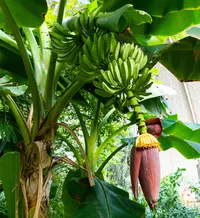
As fruit develops and bunches gain weight, place a strong wooden or metal prop under the main fruiting stem at a slight angle to prevent the pseudostem from bending or collapsing.

Sucker selection

Regularly remove weak, narrow “sword” suckers and leave only 1–2 strong, well-spaced shoots with broad bases so the mat focuses energy on producing large, high-quality bunches.

Mulch for root stability

Apply a 5–10 cm layer of coarse organic mulch around, but not touching, the pseudostems to keep surface roots cool, reduce erosion, and buffer soil moisture during hot, dry spells.

Cold-event preparation

Ahead of forecast cold snaps below 40°F, wrap the pseudostem with breathable frost cloth or burlap and add extra mulch at the base to protect the growing point and support long-term growing Plantain in marginal climates.

Common Pests and Diseases

Banana weevil

This pest bores into the corm and lower pseudostem, weakening the plant and reducing vigor. Symptoms include yellowing leaves, stunting, and plants that topple easily due to damaged tissues at the base.

Solution

Remove and destroy heavily infested plants and any old corms or plant debris around the base, as these harbor adults and larvae. Use clean, healthy planting material, keep the area free of decaying pseudostems, and where allowed, apply a targeted soil or corm treatment labeled for banana weevils around the base, following all local regulations and label instructions.

Banana aphids

These insects cluster on young leaves and pseudostems, sucking sap and causing curling, distortion, and sticky honeydew that can lead to sooty mold. This pest also acts as a vector for banana bunchy top virus in regions where the virus is present.

Solution

Wash colonies off with a strong but controlled stream of water and prune out heavily infested suckers or leaves. Encourage natural predators like lady beetles, avoid excessive nitrogen fertilization, and if needed, use insecticidal soap or horticultural oil, making sure to coat the undersides of leaves and repeat as necessary.

Panama disease (Fusarium wilt)

This disease causes progressive yellowing of older leaves, wilting, and eventual plant collapse, often with brown discoloration in the vascular tissue when the pseudostem is cut. Symptoms include leaves that turn yellow, then brown and hang down along the pseudostem.

Solution

Remove and destroy infected plants, including as much of the root and corm system as possible, and avoid moving soil or tools from infected to healthy areas. Use only disease-free planting material, improve drainage, and do not replant Musa × paradisiaca in heavily infested soil; instead, shift production to clean ground or use containers with sterile substrate for Musa × paradisiaca plant care in small-scale settings.

Black Sigatoka

This disease affects leaves, causing dark streaks that expand into brown to black leaf spots with yellow halos, reducing green leaf area and photosynthesis. Severe infections lead to premature leaf death and poor fruit quality or yield.

Solution

Remove and discard heavily spotted, older leaves to reduce spore load and improve air circulation around the plant. Avoid overhead watering that keeps foliage wet for long periods, ensure good spacing, and where permitted, apply an appropriate fungicide labeled for banana leaf spot, rotating products to slow resistance development.

Banana bunchy top virus

This disease leads to severe stunting, narrow upright leaves, and a characteristic rosette or bunchy appearance at the top of the plant. Symptoms include dark green streaks or dots along the leaf veins and petioles, and affected plants usually fail to fruit properly.

Solution

Promptly remove and destroy infected plants including corms to reduce the virus source and monitor nearby plants closely. Use certified virus-free planting stock, control banana aphids that spread the virus, and avoid moving suckers, tools, or soil from areas with known infection to clean sites.

Interesting Facts

Hybrid with sterile seeds

Musa × paradisiaca is a cultivated hybrid between the wild species Musa acuminata and Musa balbisiana, and it is functionally seedless, so it is propagated almost entirely by vegetative suckers or tissue culture rather than by true seeds.

Starchy, not sweet

Unlike dessert bananas, the fruit of Musa × paradisiaca is rich in starch and relatively low in simple sugars at maturity, which is why it is usually cooked by boiling, frying, or baking instead of being eaten raw.

Polyploid crop lineage

Most Musa × paradisiaca plants are triploid, meaning they have three sets of chromosomes, a condition that contributes to seed sterility and uniform fruit quality across clonal plantings.

Botan icon

Did you know?

Historical and linguistic evidence suggests that Musa × paradisiaca was domesticated independently in several regions of Southeast Asia and later spread to Africa and the Americas, becoming a staple food crop in tropical agricultural systems on multiple continents.

FAQs about Plantain

Brown leaf edges usually come from low humidity, underwatering, salt buildup, or strong wind scorch. Check soil moisture, increase humidity, and flush the pot occasionally. Trim only the dead parts; green tissue still supports photosynthesis.

Grow Healthy Plants with Botan Care

Keep your plants happy and healthy with plant identification, disease detection, and easy care guidance.


Botan plant care app — identify plants on mobile

Explore More Plants