Early form training
Select a single strong leader and 3–5 well-spaced scaffold branches in the first 2–3 years, removing competing shoots gradually to build a stable framework that can carry heavy fruit clusters later.

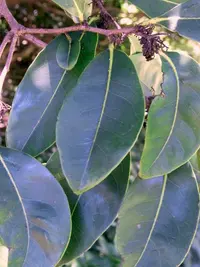
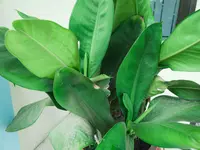
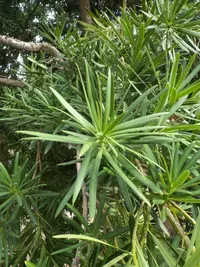
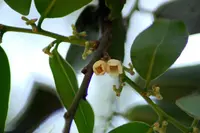
Clustered persimmon, Diospyros fasciculosa, is a tropical evergreen tree from the ebony family, naturally found in rainforests of northern Australia and parts of Southeast Asia. It typically forms a medium to large tree with dense, glossy foliage and clusters of small, rounded fruits.
In cultivation it is mainly suited to warm, humid climates and larger gardens or landscape settings rather than small containers. The species prefers consistently moist, well-drained soil and protection from severe cold or prolonged drought.
Because of its size and climate needs, it is best for growers who already understand how to care for Clustered Persimmon in subtropical or tropical conditions.

Care Difficulty
Moderate Care

Light Preference
Partial Shade

Water Requirements
Regular Water

Temperature Preference
Tropical / Frost Sensitive

Hardiness Zone
11–12

Soil Texture
Loamy, Sandy, Organic-rich

Soil pH
Acidic (5.5–6.5), Slightly acidic (6.5–7.0)

Soil Drainage
Moist but well-drained

Fertilization
Minimal (feed rarely)
Scan your plant to receive care tips personalized for your specific plant
Available on iOS and Android
This evergreen rainforest tree prefers bright, filtered light with protection from harsh midday sun.
This species prefers evenly moist, well-drained soil and does not tolerate prolonged drought or waterlogging.
This tropical tree grows best in consistently warm, frost-free conditions.
This species prefers moderately humid air but copes with typical indoor levels if not kept too warm.
This tree grows best in deep, moisture-retentive yet fast-draining soil with stable structure.
This species can be grown in large containers when size and stability are managed carefully.
This rainforest tree benefits from light, balanced feeding in cultivation, although wild Clustered Persimmon often grows well in undisturbed soil without added fertilizer.
Pruning Diospyros fasciculosa is mainly done to maintain structure and remove problem wood rather than to control size heavily.
This species is usually grown in the ground, so guidance focuses on careful transplanting of young trees rather than frequent repotting.
Propagation of Diospyros fasciculosa is mainly done by seed, with vegetative methods used less often and requiring more skill.
This tropical species is not frost tolerant and needs thoughtful winter care in regions with cool or cold seasons.

Plant Health Check
Not sure what's wrong with your plant? Check your plant's health inside the app.
This species is a tall evergreen rainforest tree native to northeastern Australia and New Guinea, commonly reaching the mid to upper canopy rather than staying as an understory shrub.
The common name clustered persimmon comes from the way its small orange fruits develop in tight groups along the branches instead of singly or in pairs.
Its fleshy fruits are eaten by various rainforest birds, which then disperse the seeds and help maintain natural regeneration of the species in its native habitat.
This species is a slow to moderate grower, often adding 20–40 cm per year once established. It develops into a medium-sized tree with a single trunk, dense crown, and upright, non-climbing habit.
Keep your plants happy and healthy with plant identification, disease detection, and easy care guidance.