


Rotate For Balance
Turn the pot 90° every 1–2 weeks so stems receive light from different angles, which keeps the cane-like growth upright and reduces leaning toward windows.

Dieffenbachia parlatorei is a tropical evergreen from South America, grown mainly as an indoor foliage plant. It belongs to the aroid family, known for lush, decorative leaves.
This species typically forms upright canes with broad, patterned leaves that give a dense, architectural look. It is usually kept as a medium to large houseplant rather than a small tabletop plant.
In nature it grows in warm, humid forest shade, so it prefers bright, filtered light and evenly moist, well‑drained soil indoors. Once its needs are understood, how to care for Dieffenbachia parlatorei is straightforward for most household growers.

Care Difficulty
Moderate Care

Light Preference
Partial Shade

Water Requirements
Moderate Water

Temperature Preference
Tropical / Frost Sensitive

Hardiness Zone
Unknown

Soil Texture
Loamy, Organic-rich

Soil pH
Acidic (5.5–6.5)

Soil Drainage
Moist but well-drained

Fertilization
Light (every 4–6 weeks)
Scan your plant to receive care tips personalized for your specific plant
Available on iOS and Android
This species prefers bright, filtered light that mimics a forest understory.
Watering should keep the root zone evenly moist but never saturated.
Stable, warm conditions support steady growth and reduce stress.
This species prefers consistently moderate to high humidity for stable foliage health.
This plant benefits from a loose, airy, and slightly acidic to neutral potting medium that drains quickly.
This species is well suited to container growing for easy placement and moisture control.
Nutrient inputs support steady growth but should stay moderate for Dieffenbachia parlatorei.
Pruning helps maintain safe size and a healthy canopy on Dieffenbachia parlatorei.
Container-grown plants need occasional root space adjustments, while established landscape specimens of D. parlatorei are moved rarely.
Multiplication of Dieffenbachia parlatorei is most practical through vegetative methods under warm, stable conditions.
Cold tolerance depends on local climate, so winter management aims to protect sensitive roots and stems.

Plant Health Check
Not sure what's wrong with your plant? Check your plant's health inside the app.
This species is naturally distributed in montane forests of northwestern Argentina, especially in humid, mid-elevation habitats rather than lowland tropical rainforest typical for many other Dieffenbachia species.
Compared with many tropical relatives, it occurs in regions that regularly experience cooler seasonal temperatures, which suggests a slightly higher tolerance to short cool spells than strictly lowland Dieffenbachia.
Its natural range is relatively restricted within Argentina, so habitat loss through forest clearing and land-use change may have a stronger impact on its wild populations than on more widespread Dieffenbachia species.
Brown tips or margins usually come from chronic underwatering, low humidity, or fertilizer salts building up in the potting mix. Check soil moisture, raise humidity slightly, flush the soil occasionally, and avoid strong drafts from heaters or air conditioning.
Keep your plants happy and healthy with plant identification, disease detection, and easy care guidance.

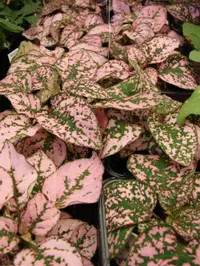 POPULAR
Polka Dot Plant
Hypoestes phyllostachya
Codonanthe devosiana
Codonanthe devosiana

Croton
Codiaeum variegatum 'Petra'
Goeppertia picturata 'Argentea'
Goeppertia picturata 'Argentea'
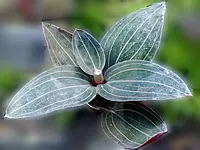 POPULAR
Jewel Orchid
Ludisia discolor

Manila palm
Adonidia merrillii
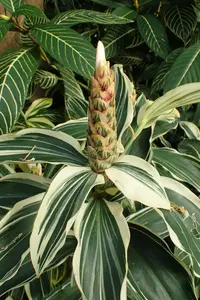
Costus arabicus
Costus arabicus
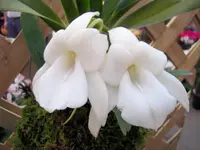
Angraecum magdalenae
Angraecum magdalenae