Oncidium baueri Care

Oncidium baueri

About Oncidium baueri

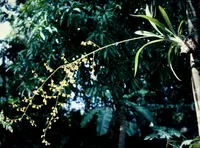
Oncidium baueri is a large, epiphytic orchid that typically grows on trees, forming clumps of pseudobulbs with long, arching leaves. It produces tall flowering spikes densely covered with many small, yellow to brown patterned blooms. Native to tropical regions of South America, it thrives in warm, bright, and humid forest conditions. Its vigorous growth and need for stable humidity mean it is moderately challenging for beginners. Understanding how to care for Oncidium baueri involves providing strong indirect light, good air movement, and a fast-draining orchid substrate that dries slightly between waterings.


Main Plant Requirements

Care Difficulty

Moderate Care

Light Preference

Partial Shade

Water Requirements

Moderate Water

Temperature Preference

Tropical / Frost Sensitive

Hardiness Zone

11–12

Soil Texture

Sandy, Organic-rich

Soil pH

Acidic (5.5–6.5)

Soil Drainage

Well-drained

Fertilization

Light (every 4–6 weeks)

Get Personalized Care Plan

Scan your plant to receive care tips personalized for your specific plant

Available on iOS and Android

How to Care for the Oncidium baueri

This orchid prefers bright, filtered light that mimics high, dappled canopy conditions in nature.

  • Provide 6–8 hours of bright, indirect light daily, such as under shade cloth or beneath lightly filtered greenhouse glazing.
  • Allow gentle morning sun but protect from strong midday and afternoon sun to prevent leaf scorch, yellow patches, and dehydration of pseudobulbs.
  • Tolerates light partial shade, but if new growths are weak or flowering declines, gradually increase light intensity over 1–2 weeks.

Watering should keep roots moist but never stagnant, with brief drying between waterings.

  • Irrigate thoroughly, then allow the top 2–3 cm of the medium or bark to dry before watering again, using this feel test rather than a fixed calendar schedule.
  • Reduce watering in cooler months or during slower growth, extending the dry interval, but avoid letting pseudobulbs shrivel deeply, which signals underwatering.
  • Use a very free-draining orchid mix and containers with drainage holes to prevent root rot, mushy roots, and sour odors from chronic overwatering.

This species prefers intermediate to warm conditions with stable, frost-free temperatures.

  • Aim for daytime temperatures of 70–80°F (21–27°C) and nights around 60–65°F (16–18°C) for steady growth and flowering.
  • Protect from cold; growth slows below 55°F (13°C) and tissue damage can occur near 40°F (4°C), especially on young shoots and roots.
  • In hot spells above 85–90°F (29–32°C), increase air movement, shade, and humidity to prevent heat stress, leaf tip burn, and bud blast.

This orchid benefits from moderate humidity but adapts to typical indoor levels if monitored closely.

  • Aim for 50–70% humidity, using a hygrometer to avoid levels staying below 40% for long periods.
  • Tolerates brief dry air, but persistent low humidity causes wrinkled pseudobulbs and crispy leaf tips.
  • Increase humidity with a pebble tray or grouped plants, ensuring leaves dry quickly and are not constantly wet.

This species prefers a loose, airy orchid medium that dries slightly between waterings.
  • Use a mix of medium bark, perlite, and a little sphagnum moss to keep the root zone open and well aerated.
  • Ensure very rapid drainage; water should flow through the pot within seconds, without any soggy, compacted layer.
  • Keep pH slightly acidic to neutral (about 5.5–7.0), which suits most orchid bark-based mixes used in pots.
  • Avoid dense potting soil, fine peat, or garden soil, which hold water around the roots and promote rot in Oncidium baueri.

This orchid is well suited to container growing when drainage and stability are carefully managed.

  • Choose a pot just large enough for the root mass so the mix dries evenly and does not stay wet in unused spaces.
  • Use a stable, heavier pot if the tall flower spikes make the plant top-heavy and prone to tipping.
  • Select containers with multiple side and bottom holes to improve airflow around roots and speed moisture loss after watering.

Fertilization supports vigorous growth and flowering but should stay light and controlled for Oncidium baueri.

  • Use a balanced orchid fertilizer (around 20-20-20) at 1/4–1/2 strength, formulated for epiphytic orchids.
  • Feed every 2–3 weeks during active growth in spring and summer on already-moist media.
  • In fall and winter, reduce feeding to monthly or pause if growth slows noticeably.
  • Avoid organic compost in the pot; use well-drained orchid bark and flush with plain water monthly to prevent salt buildup.

Pruning focuses on tidiness and flower spike management rather than reshaping this orchid.

  • After blooms fade, cut spent flower spikes back to the base with sterilized scissors or pruners.
  • Remove only dead, shriveled pseudobulbs and yellow or damaged leaves to limit disease spread.
  • Avoid cutting healthy green pseudobulbs, since they store water and nutrients for future growth.
  • Prune at the end of a flowering cycle, then allow new growths to mature undisturbed.

Repotting keeps roots healthy by refreshing the airy orchid mix and preventing suffocation.

  • Plan to repot every 2–3 years, or when roots circle the pot, media breaks down, or growth slows.
  • Choose late winter to early spring, just before active growth, for minimal stress on Oncidium baueri.
  • Gently remove old mix, keep healthy roots intact, trim only dead, mushy roots with sterile tools.
  • Replant in a snug pot with fresh medium-grade bark, water lightly, and keep shaded and slightly drier for 7–10 days.

Propagation is usually done by division, using mature clumps with several healthy pseudobulbs.

  • Divide in late winter or early spring when repotting, after flowering has finished.
  • Select sections with at least 3–4 firm pseudobulbs and a good root system for each division.
  • Dust cut surfaces with powdered fungicide or cinnamon, then pot in fresh orchid bark.
  • Maintain bright, indirect light, 65–80°F, and slightly higher humidity to encourage new root growth.

Winter care focuses on temperature management and maintaining adequate light indoors.

  • This tropical orchid is frost-sensitive and should stay above 55°F, ideally 60–70°F in winter.
  • Move container plants indoors before night temperatures drop below 55°F.
  • Place near a bright window, away from cold drafts, heaters, and very dry air.
  • Reduce watering slightly, allowing the mix to approach dryness while avoiding complete desiccation.

Care Tips

Adjustable mounting

Mount the orchid on cork or hardwood bark with a thin layer of sphagnum and secure with soft plant ties so roots can attach firmly while still allowing you to adjust or reposition the plant as the clump expands over several years.

Airflow management

Place a small, quiet fan several feet away on a low setting to keep gentle air moving around the foliage and pseudobulbs, which reduces fungal problems and helps leaves dry quickly after misting or watering.

Pseudobulb monitoring

Check pseudobulbs regularly for firmness and shape; slightly pleated leaves or wrinkling bulbs usually indicate a need to adjust watering frequency or humidity rather than adding more fertilizer.

Humidity tray setup

Use a wide tray filled with water and inert gravel under, not touching, the pot to create a localized humidity zone around the plant without soaking the roots or increasing the risk of rot.

Bloom spike support

Once a flower spike reaches 15–20 cm, stake it with a slim orchid stake and soft clips, gently guiding it upward to prevent snapping under the weight of the large, branching inflorescence when growing Oncidium baueri.

Common Pests and Diseases

Spider mites

This pest often appears on Oncidium under warm, dry, low‑airflow conditions and causes fine stippling, dull leaves, and webbing on the undersides. Symptoms include slowed growth and premature yellowing or leaf drop if the infestation is heavy.

Solution

Rinse foliage thoroughly with a strong but gentle stream of lukewarm water, including leaf undersides, then increase humidity and airflow around the plant. For persistent mites, use repeated applications of insecticidal soap or horticultural oil every 5–7 days, keeping the product off open flowers as much as possible.

Scale insects

These insects attach along pseudobulbs, leaf midribs, and flower spikes as small, fixed bumps and feed on sap, often leaving sticky honeydew and sooty mold. Symptoms include weakened growth, shriveled pseudobulbs, and reduced flowering over time.

Solution

Manually remove visible scale with a cotton swab dipped in 70% isopropyl alcohol, then wash the plant with lukewarm water. Follow with 2–3 treatments of horticultural oil or insecticidal soap at 7–10 day intervals and isolate the plant from other orchids during treatment.

Mealybugs

This pest hides in leaf axils, among roots, and between pseudobulbs, forming white cottony masses and sucking sap. Symptoms include distorted new growth, sticky residue, and increased risk of fungal spotting on leaves and flower spikes.

Solution

Inspect all plant crevices and dab visible mealybugs with 70% isopropyl alcohol, then rinse the plant and pot surface thoroughly. Repeat inspections weekly and, if needed, apply insecticidal soap or systemic insect control labeled for orchids, avoiding oversaturation of the medium to protect the roots when trying to grow Oncidium baueri.

Bacterial brown spot

This disease causes water‑soaked, translucent patches on leaves that quickly turn brown and sunken, often starting at leaf tips or margins. Symptoms include rapid lesion expansion in warm, wet conditions and a foul smell from advanced spots.

Solution

Immediately remove affected leaf sections with a sterile blade, cutting well into healthy tissue, and discard all debris. Keep foliage dry, improve air movement, avoid overhead watering, and consider a copper‑based bactericide labeled for orchids, applied according to instructions while protecting roots and avoiding repeated heavy use.

Leaf and flower anthracnose

This disease produces small tan to dark brown spots with possible yellow halos on leaves and sometimes pitted lesions on flowers, spreading more quickly in high humidity and stagnant air. Symptoms include blemished blooms, tip dieback, and premature leaf aging.

Solution

Prune out spotted leaves and spent flower spikes, sterilizing tools between cuts, and dispose of infected material away from other orchids. Reduce humidity around 50–60%, increase air circulation, avoid water sitting on leaves or flowers, and, if spread continues, use a fungicide labeled for anthracnose on orchids in spaced, limited treatments.

Interesting Facts

Gigantic branching inflorescences

Mature plants can produce highly branched flower spikes that can exceed 1 m in height, carrying hundreds of small yellow-brown flowers in a loose, cloud-like spray.

Large pseudobulb storage

This species develops notably robust, egg-shaped pseudobulbs that store water and nutrients, allowing it to tolerate short dry periods in its native habitats of Brazil and neighboring regions.

Bee pollination strategy

The bright yellow segments of the flowers, especially the lip, mimic the appearance of rewarding blossoms and help attract bee pollinators that transfer pollen between the plants.

Botan icon

Did you know?

Oncidium baueri is considered one of the largest species in its genus, forming impressive clumps over time and producing some of the most voluminous floral displays within the oncidium group when grown under optimal conditions.

FAQs about Oncidium baueri

Lack of flowering usually comes from insufficient light, weak root health, or inadequate temperature fluctuation between day and night. Ensure mature pseudobulbs, moderate feeding, and a slight dry rest after growth to support consistent bloom formation.

Grow Healthy Plants with Botan Care

Keep your plants happy and healthy with plant identification, disease detection, and easy care guidance.

Botan plant care app — identify plants on mobile

Explore More Plants