Javanese glorybower Care (Clerodendrum speciosissimum)

Also known as: Java Glorybower, Butecherechar
Javanese glorybower

About Javanese glorybower

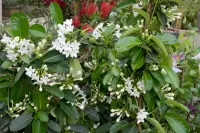
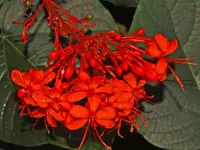
Javanese glorybower (Clerodendrum speciosissimum) is a tropical flowering shrub grown for its showy clusters of bright red, tubular blooms and large, heart-shaped leaves. It usually forms a bushy, upright plant that can be trained as a small shrub or kept pruned as a compact container specimen.

This species is native to Indonesia and other parts of tropical Southeast Asia, where it grows in warm, humid, partially shaded habitats. It is moderately demanding and can be fussy outside tropical or subtropical climates, so successful care for Javanese glorybower depends on stable warmth, good light, and consistent moisture.

It prefers bright, indirect light, evenly moist but well-drained soil, and shelter from cold drafts or dry air.

Main Plant Requirements

Care Difficulty

Moderate Care

Light Preference

Partial Sun

Water Requirements

Regular Water

Temperature Preference

Tropical / Frost Sensitive

Hardiness Zone

10–11

Soil Texture

Loamy, Sandy, Organic-rich

Soil pH

Acidic (5.5–6.5), Slightly acidic (6.5–7.0)

Soil Drainage

Moist but well-drained

Fertilization

Moderate (every 2–4 weeks)

Get Personalized Care Plan

Scan your plant to receive care tips personalized for your specific plant

Available on iOS and Android

How to Care for the Javanese glorybower

This species prefers bright, gentle light to support strong flowering and healthy foliage.

  • Provide 4–6 hours of morning sun or bright, filtered light daily; afternoon shade helps prevent leaf scorch, especially in hotter regions.
  • Tolerates light partial shade, but Javanese glorybower produces fewer flowers and longer, weaker stems if grown in less than 3–4 hours of bright light.
  • In summer, protect from harsh midday sun with dappled shade; in cooler seasons, position where it receives maximum light without frost exposure.

This plant prefers evenly moist, not saturated, soil during active growth.

  • Water when the top 3–5 cm of soil feels dry, allowing deeper soil to stay slightly moist; adjust frequency based on weather and soil type rather than the calendar.
  • Use a well-drained, humus-rich soil so excess water can run off; persistent puddling, yellowing leaves, or soft stems indicate overwatering and poor aeration.
  • In spring and summer, expect to water more often during flowering; in cooler months, reduce watering as growth slows, watching for wilting or crispy leaf edges as signs of underwatering.

This tropical species thrives in consistently warm, frost-free conditions.

  • Aim for 65–80°F (18–27°C) as the main growing range, which supports active growth and flowering without stressing the plant.
  • Avoid temperatures below 50°F (10°C); brief dips may cause leaf drop, and true frost can kill stems or the entire Clerodendrum speciosissimum plant.
  • In hot spells above 90°F (32°C), provide extra shade and soil moisture; in cooler seasons, protect from cold winds and sudden night temperature swings.

This species prefers moderately high air humidity to support lush growth and flowering.

  • Aim for 50–70% humidity; it tolerates brief dips lower but prolonged very dry air weakens growth.
  • Watch for crisp leaf edges, curling, and slowed bud development as signs of humidity stress in Javanese glorybower.
  • Increase humidity with a pebble tray under the pot, grouping plants, or using a small room humidifier rather than frequent misting.

Clerodendrum speciosissimum grows best in moist, airy, organic-rich soil that drains quickly.

  • Use a loose, loamy mix such as 2 parts peat or coco coir, 1 part compost, and 1 part perlite or fine bark for structure.
  • Ensure rapid drainage so water flows through in seconds, leaving soil evenly moist but never waterlogged, to protect oxygen around roots.
  • Keep pH slightly acidic to neutral, around 6.0–7.0, which supports nutrient availability and balanced growth.
  • Avoid heavy clay, compacted mixes, or pure garden soil in pots, which reduce aeration and increase root-rot risk; lighten them with perlite or bark.

This species is well suited to container growing when the pot supports its vigorous, upright growth.

  • Choose a broad, weighty container to counterbalance the tall, top-heavy stems and reduce tipping in wind or when watered heavily.
  • Select a pot size that allows a 3–5 cm margin of soil around the root ball to hold moisture without staying saturated.
  • Use a container material that matches your climate; terracotta helps excess moisture evaporate, while thick plastic retains water longer in hot, dry sites.

This species responds well to moderate feeding during its active growing season.

  • Use a balanced liquid fertilizer (for example 10-10-10) at 1/2 strength every 2–4 weeks in spring and summer for Javanese glorybower.
  • Alternatively, apply a slow-release granular fertilizer at the start of spring, following label rates.
  • Supplement with a thin layer of compost over the root zone, keeping it away from stems.
  • Stop feeding in late fall and winter to avoid weak, overstretched growth.

Thoughtful pruning keeps Clerodendrum speciosissimum compact, well-branched, and floriferous.

  • Plan main pruning at the end of winter or very early spring before strong new growth starts.
  • Remove any dead, diseased, damaged, or crossing stems using clean, sharp bypass pruners.
  • Shorten long, leggy shoots to encourage bushier side branches and more flowering wood.
  • Lightly pinch soft tips during the growing season to maintain size and dense foliage.

Container-grown plants benefit from periodic repotting to maintain root health and vigorous growth.

  • Check for roots circling the pot, pushing through drainage holes, or slowing top growth as cues to repot.
  • Aim to repot every 2–3 years in late winter or early spring before strong new shoots emerge.
  • Choose a pot 1–2 in wider with good drainage and use a rich, well-drained peat-free mix.
  • Water thoroughly after repotting, keep in bright but indirect light for 7–10 days, and avoid heavy feeding until new growth appears.

This plant is commonly propagated from softwood or semi-ripe cuttings for reliable cloning of desired forms.

  • Take 8–12 cm softwood or semi-ripe stem cuttings in late spring or summer with at least 2–3 nodes.
  • Remove lower leaves, optionally dip the cut base in rooting hormone, and insert into a moist, free-draining mix.
  • Maintain high humidity with a clear cover, bright indirect light, and warmth around 70–80°F.
  • For seed, sow fresh seed in a warm propagator, keeping the medium evenly moist but not waterlogged.

This tropical shrub is frost-tender and needs thoughtful winter care in most temperate climates.

  • In USDA zones colder than 10, grow in containers and move indoors before temperatures drop below 50°F.
  • Provide a bright, cool indoor spot in winter and reduce watering to keep the soil just lightly moist.
  • In very mild climates, mulch the root zone 5–8 cm deep to buffer brief cool spells.

Care Tips

Provide sturdy staking

Install a robust stake or trellis at planting time and loosely tie new shoots as they elongate so the tall, top-heavy stems do not snap in wind or under the weight of flowers.

Pinch for bushiness

Pinch out soft stem tips on young plants 2–3 times in spring to encourage multiple flowering branches and a more compact framework instead of a few lanky canes.

Seasonal hard cutback

In frost-free climates, cut the plant back hard at the end of winter to 20–40 cm and remove thin, crowded stems, which renews vigorous growth and improves flowering the following season.

Root barrier management

In the ground, limit spread by installing a vertical root barrier or growing in a large buried container, as the plant can sucker and form thickets under favorable conditions.

Prevent pest build-up

During warm, humid weather inspect the undersides of leaves weekly for whiteflies and spider mites, and if found, immediately remove heavily infested foliage and apply horticultural soap to keep caring for Javanese glorybower more manageable over the season.

Common Pests and Diseases

Spider mites

This pest often appears on stressed plants kept in warm, dry air and causes fine stippling, bronzing, and webbing on the undersides of leaves.

Solution

Rinse foliage thoroughly with a strong but gentle stream of water, then raise humidity and isolate the plant; for heavier infestations, use insecticidal soap or a horticultural oil, repeating applications every 5–7 days until new growth appears clean.

Whiteflies

These insects gather on the undersides of leaves, fly up in small clouds when disturbed, and cause yellowing, leaf drop, and sticky honeydew on foliage and nearby surfaces.

Solution

Remove heavily infested leaves, then use yellow sticky traps to reduce adults and treat the foliage with insecticidal soap or neem oil, ensuring good coverage of leaf undersides and repeating at intervals until populations decline.

Scale insects

This pest appears as small, dome-shaped brown or tan bumps along stems and leaf veins, often accompanied by honeydew and sooty mold on leaves and nearby surfaces.

Solution

Manually scrape or wipe off visible scale with a cotton swab dipped in isopropyl alcohol, then treat the plant with horticultural oil, paying special attention to stems and leaf bases to smother remaining juveniles.

Leaf spot

This disease causes irregular brown or black lesions on leaves, sometimes with yellow halos, and can lead to premature leaf drop in humid, crowded conditions.

Solution

Remove and discard affected leaves, improve air circulation around the plant, avoid wetting foliage when watering, and, if spread continues, apply a copper-based or other labeled ornamental fungicide according to Clerodendrum speciosissimum care instructions.

Powdery mildew

This disease produces white, powdery patches on upper leaf surfaces and young shoots, leading to distorted growth and reduced flowering in shaded, stagnant air conditions.

Solution

Increase light and airflow, space plants so leaves dry quickly, remove heavily affected leaves, and treat remaining foliage with a sulfur-based or potassium bicarbonate fungicide labeled for ornamental plants, applying at the first sign of symptoms.

Interesting Facts

Origins in eastern Java

This species is believed to be native to eastern Java and nearby islands in Indonesia, where it grows in warm, humid lowland habitats rather than in deep forest shade.

Bracts outshine flowers

The vivid scarlet display comes mainly from large, persistent bracts (modified leaves) that surround the shorter-lived tubular flowers, extending the visual impact and attraction for pollinators.

Potential to naturalize

In some tropical and subtropical regions outside its native range, this plant has escaped cultivation and can naturalize along roadsides and disturbed sites, indicating a capacity for vigorous growth in suitable climates.

Botan icon

Did you know?

The species name speciosissimum means very showy or most splendid in Latin, reflecting how early botanists regarded its dense clusters of bright red bracts and flowers as among the most ornamental within the genus.

FAQs about Javanese glorybower

Poor flowering usually comes from insufficient light, heavy pruning at the wrong time, or low nutrients. Avoid cutting new shoots before the flowering season, feed with a balanced fertilizer, and keep the plant consistently vigorous to support bud formation.

Grow Healthy Plants with Botan Care

Keep your plants happy and healthy with plant identification, disease detection, and easy care guidance.

Botan plant care app — identify plants on mobile

Explore More Plants