Domingoa purpurea Care

Domingoa purpurea

About Domingoa purpurea

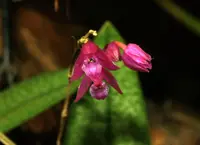
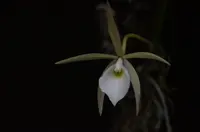
Domingoa purpurea is a small, epiphytic orchid that typically grows on trees rather than in soil. It forms compact clumps of narrow pseudobulbs and grass-like leaves. In season it produces delicate sprays of purple to magenta flowers that give the plant its ornamental value.

This species is native to Central America, where it inhabits warm, humid forests at mid to higher elevations. It is considered moderately challenging, as it needs stable warmth, good air movement, and consistent moisture without staying soggy. Understanding how to care for Domingoa purpurea starts with providing bright, filtered light and an airy orchid substrate that lets the roots dry slightly between waterings.

Main Plant Requirements

Care Difficulty

Hard Care

Light Preference

Partial Shade

Water Requirements

Regular Water

Temperature Preference

Tropical / Frost Sensitive

Hardiness Zone

11–13

Soil Texture

Sandy, Rocky, Organic-rich

Soil pH

Acidic (5.5–6.5)

Soil Drainage

Moist but well-drained

Fertilization

Light (every 4–6 weeks)

Get Personalized Care Plan

Scan your plant to receive care tips personalized for your specific plant

Available on iOS and Android

How to Care for the Domingoa purpurea

This orchid prefers bright, filtered light similar to bright forest shade.

  • Provide 6–8 hours of bright, indirect light each day, such as dappled sun under shade cloth or a tree canopy.
  • Allow gentle morning sun but protect Domingoa purpurea from strong midday and afternoon sun to avoid leaf scorch and yellow, leathery foliage.
  • In summer, shift plants to slightly shadier positions; in winter, move to brighter spots to compensate for lower light intensity and shorter days.

This species prefers evenly moist but never waterlogged conditions.

  • Water when the top 2–3 cm of the mix feels dry, using thorough soakings that allow excess to drain completely from the pot or mount.
  • Reduce watering slightly in cooler months, allowing the medium to dry a little deeper, but avoid letting roots stay dry and brittle for more than a day or two.
  • Watch for limp, wrinkled pseudobulbs as a sign of underwatering, and for blackened, mushy roots or sour odor as indicators of overwatering and poor drainage.

This orchid thrives in intermediate to warm conditions with stable temperatures.

  • Aim for 65–80°F (18–27°C) during active growth, with a slight drop at night to support healthy metabolism and flowering.
  • Protect from cold below 50°F (10°C), as prolonged exposure near this limit can stunt growth, and brief dips below 40°F (4°C) may cause serious damage.
  • Tolerates short heat spikes up to about 90°F (32°C) if humidity is high and air moves freely, but increase shade and watering frequency during very hot, dry periods.

This epiphytic orchid prefers moderately high humidity to support healthy leaves and roots.

  • Aim for 50–70% humidity, using a hygrometer to track levels near the plant.
  • It tolerates short periods around 40%, but prolonged dry air leads to wrinkled pseudobulbs and crisp leaf tips.
  • Increase humidity with a pebble tray or nearby humidifier, avoiding misting that leaves water sitting in leaf bases.

This species grows best in a very open, airy medium rather than dense mineral soil.

  • Use a fine to medium orchid mix with mostly pine bark plus some sphagnum moss and perlite for structure and moisture balance.
  • Ensure rapid drainage so water runs through within seconds, preventing roots from sitting in a soggy mass.
  • Keep the mix slightly acidic, roughly pH 5.5–6.5, which supports nutrient uptake for Domingoa purpurea.
  • Avoid compact peat-heavy or garden soil that collapses around the roots and restricts aeration.

This orchid is well suited to container growing, including small pots or mounted culture with a basket liner.

  • Choose a small, snug pot that just fits the root mass, which keeps the coarse mix from staying wet for too long.
  • Use a slotted or net pot to allow side airflow, helping the roots dry evenly after watering.
  • Select a heavier pot material or add weight if the plant becomes top-heavy so the container stays stable when the medium is dry.

This orchid benefits from light, consistent feeding during active growth.

  • Use a balanced orchid fertilizer (around 20-20-20) diluted to 1/4–1/2 strength with every 2nd–3rd watering in spring–summer.
  • Apply only to moist media to avoid root burn, and flush the pot with plain water monthly to remove salt buildup.
  • Reduce feeding to once every 4–6 weeks in fall–winter, or pause if Domingoa purpurea is resting with minimal growth.
  • Avoid heavy compost or rich slow-release pellets, which can damage fine roots and degrade airy orchid media.

Pruning needs are minimal and focus on hygiene and flowering performance.

  • In late winter or just after blooming, remove spent flower spikes by cutting them back to the base with clean, sharp scissors.
  • Trim dead, yellow, or damaged leaves and pseudobulbs, leaving any firm green tissue intact to support energy storage.
  • Thin out crowded, shriveled pseudobulbs to improve air movement around the plant and reduce fungal issues.
  • Always disinfect cutting tools before and between plants to lower the risk of spreading disease on Domingoa purpurea.

This orchid prefers a snug pot but needs fresh, airy media to stay healthy.

  • Plan to repot every 2–3 years, or when roots circle tightly, media breaks down, or growth slows despite good care.
  • Choose late winter to early spring, just before new root growth, to help the plant re-establish quickly.
  • Gently tease roots free, remove rotted or mushy sections, and place the plant in a slightly larger pot with fresh fine bark mix.
  • Keep the plant shaded and slightly drier for 7–10 days after repotting to limit root stress, then resume normal watering.

Propagation is usually done by careful division rather than by seed.

  • Divide mature clumps in late winter or early spring, when new growths and roots are just starting.
  • Lift the plant from its pot and separate sections with at least 3–4 healthy pseudobulbs and active roots per division.
  • Use a sterile knife or scissors, dust cut surfaces with powdered fungicide or cinnamon, and pot divisions in fresh orchid bark.
  • Maintain bright, filtered light, high humidity (60–70%), and gentle air movement to support rooting and establishment.

Domingoa purpurea is a warmth-loving orchid that dislikes frost and cold drafts.

  • Keep winter temperatures above 55°F; ideal indoor night temperatures are 58–65°F with slightly warmer days.
  • Move container plants indoors or into a greenhouse before outdoor temperatures drop near 50°F.
  • Provide bright, indirect light and slightly drier media in winter, avoiding water sitting in leaf bases or on cool roots.
  • Use an insulating cachepot or place the pot away from cold windows and vents to prevent temperature shock.

Care Tips

Mounting technique

Mount plants on cork or hardwood with a thin, even layer of long-fiber sphagnum around the roots, then secure gently with nylon fishing line or soft plant ties so roots can grip without being strangled as they thicken.

Air movement management

Provide gentle, continuous air circulation with a small fan set on low and not aimed directly at the plant to reduce fungal problems while preventing rapid moisture loss from the roots and pseudobulbs.

Hydration monitoring

Check pseudobulbs weekly for firmness and slight sheen; adjust your watering frequency if they begin to wrinkle noticeably, as this signals sustained water stress rather than a brief dry period.

Seasonal rest adjustment

In late autumn, slightly reduce watering and stop high-nitrogen feed if light and day length drop, then resume stronger feeding and more frequent watering as new roots and growth tips appear in spring.

Quarantine and inspection

When introducing a new plant, keep it isolated for 2–3 weeks and inspect leaf undersides, sheaths, and root zone under bright light so any scale, mites, or snails are detected before caring for Domingoa purpurea alongside other orchids.

Common Pests and Diseases

Scale insects

This pest feeds on sap along pseudobulbs and leaf bases, often appearing on the undersides of leaves and in tight crevices of mounted plants. Symptoms include sticky honeydew, sooty mold growth, and yellowing or stunted foliage.

Solution

Remove visible insects with a cotton swab dipped in isopropyl alcohol and gently clean affected areas, then rinse the plant thoroughly. Improve air movement around mounts, avoid overfertilizing, and repeat spot treatments every 7–10 days until no new scale appears; for heavy infestations, use a horticultural oil labeled for orchids at the mildest effective rate.

Spider mites

These insects thrive in the warm, dry conditions often used for mounted orchids, causing pale stippling, dull leaves, and fine webbing on the undersides. This pest is more common on plants grown indoors with low humidity and limited air circulation.

Solution

Shower the plant with lukewarm water, paying special attention to leaf undersides and the bases of pseudobulbs, and increase humidity to around 50–70% while keeping air moving. For persistent colonies, apply an insecticidal soap or a miticide specifically labeled for use on orchids, repeating at 5–7 day intervals to break the life cycle.

Mealybugs

This pest hides in the leaf axils, at the base of pseudobulbs, and in the roots of mounted plants, appearing as white cottony clumps. Symptoms include distorted new growth, yellowing, and slow decline due to sap loss.

Solution

Inspect all crevices and roots, remove visible mealybugs with alcohol-dipped cotton swabs, and rinse the plant and mount thoroughly. Isolate affected plants, reduce excess nitrogen feeding, and use an insecticidal soap or systemic product labeled for orchids if populations recur, checking weekly until no new insects appear.

Bacterial soft rot

This disease causes rapidly spreading, water-soaked, foul-smelling patches on leaves or pseudobulbs, which can collapse tissue in a short time, especially in hot, still air. Symptoms include translucent lesions that turn brown and mushy, often starting at a wound or water-sitting point.

Solution

Immediately cut away all affected tissue with a sterile blade, keeping 1–2 cm into healthy tissue, and discard contaminated material. Dust cut surfaces with cinnamon or a bactericide labeled for orchids, improve airflow, keep water off leaves, and avoid overhead watering during warm nights as part of Domingoa purpurea care instructions.

Anthracnose leaf spot

This disease appears as small, sunken, dark brown to black spots that may merge into larger patches on older leaves, especially under high humidity with poor air circulation. Symptoms include yellow halos around spots and gradual leaf weakening.

Solution

Remove and discard heavily spotted leaves, then improve spacing and airflow around plants and allow foliage to dry quickly after watering. Reduce overhead misting, avoid water sitting on leaves, and, if new spots continue to appear, apply a fungicide labeled for anthracnose on orchids, following the lowest effective rate and interval on the label.

Interesting Facts

Miniature epiphytic habit

This species is a small epiphytic orchid that naturally grows attached to tree branches, anchoring with fine roots rather than rooting in soil.

Sequential flower display

Its many purple flowers open successively along the inflorescence, so a single spike can stay attractive for a long period as new buds continue to open.

Warm, bright native range

It is native to warm, seasonally dry forests of Central America and the Caribbean, where it experiences strong light filtered through tree canopies and pronounced differences between wet and dry seasons.

FAQs about Domingoa purpurea

This orchid usually blooms in late winter to spring, sometimes again later under stable conditions. Short flower spikes carry clusters of small purple blossoms. Good light and regular feeding encourage more frequent and reliable flowering.

Grow Healthy Plants with Botan Care

Keep your plants happy and healthy with plant identification, disease detection, and easy care guidance.

Botan plant care app — identify plants on mobile

Explore More Plants