Cotyledon woodii Care

Cotyledon woodii

About Cotyledon woodii

Cotyledon woodii is a small succulent shrub known for its fleshy, paddle-shaped leaves and compact, branching growth. It stores water in its leaves and stems, which supports good drought tolerance. Native to arid regions of southern Africa, it is adapted to bright light, low humidity, and well-drained, rocky soils. In cultivation, Cotyledon woodii suits sunny windowsills or dry, bright indoor spaces where overwatering can be avoided. Its slow to moderate growth and minimal pruning needs make it suitable for growers with some succulent experience. Understanding how to care for Cotyledon woodii mainly involves managing light and moisture to prevent rot while keeping the plant firm and plump.

Main Plant Requirements

Care Difficulty

Easy Care

Light Preference

Full Sun

Water Requirements

Low Water

Temperature Preference

Tropical / Frost Sensitive

Hardiness Zone

10–11

Soil Texture

Sandy, Loamy, Rocky

Soil pH

Slightly acidic (6.5–7.0), Neutral (7.0)

Soil Drainage

Well-drained

Fertilization

Minimal (feed rarely)

Get Personalized Care Plan

Scan your plant to receive care tips personalized for your specific plant

Available on iOS and Android

How to Care for the Cotyledon woodii

This succulent favors bright, dry conditions with strong but not extreme sun exposure.

  • Provide 4–6 hours of direct morning sun plus bright indirect light for the rest of the day; east- or southeast-facing aspects work well for Cotyledon woodii.
  • Allow light, shifting shade in hot climates, especially from 12–4 p.m., to reduce leaf scorch and faded, yellowed foliage.
  • Watch stems: long, pale, stretched growth indicates too little light; brown, crispy patches show excessive sun, particularly in summer.

This drought-tolerant succulent prefers deep but infrequent watering with thorough drying in between.

  • Water only when the top 3–5 cm of soil are completely dry, letting water drain fully from the root zone each time.
  • In spring and summer growth, expect more frequent watering; in autumn and winter, reduce significantly and allow the soil to stay dry longer.
  • Signs of excess water include soft, translucent, or mushy leaves and a sour soil smell, while severe wrinkling or limp, folding leaves suggest underwatering.

This plant thrives in warm, dry conditions and is sensitive to prolonged cold or frost.

  • Ideal growth occurs around 65–80°F (18–27°C), with steady warmth supporting compact, healthy foliage.
  • Protect from temperatures below 40°F (4°C); brief dips to 35°F (2°C) may be tolerated, but repeated or hard frosts can kill tissues.
  • In hot periods above 90°F (32°C), provide light shade and good airflow to limit heat stress, sun scorch, and rapid moisture loss from the potting mix.

This succulent handles typical indoor humidity well and rarely needs special adjustments.

  • Prefers relatively dry air around 30–50% and stays healthy in most heated or air-conditioned homes.
  • Tolerates very dry air but extreme dryness with high heat may cause leaf wrinkling and dull, shriveled foliage edges.
  • If air is extremely dry and leaves pucker, place the pot near other plants or a pebble tray rather than misting.

This species needs a fast-draining, airy mix that mimics rocky, sandy ground.

  • Use a gritty, sandy mix such as 50–70% cactus blend combined with mineral materials like pumice, perlite, or coarse sand.
  • Aim for slightly acidic to neutral pH around 6.0–7.0, which supports stable nutrient uptake for Cotyledon woodii.
  • Ensure the structure is loose and crumbly so water drains in seconds, not minutes, and roots receive ample oxygen.
  • Avoid peat-heavy, compact, or water-retentive mixes that stay wet for more than 1–2 days, as this encourages root rot.

This species is well suited to container growing both indoors and outdoors in mild climates.

  • Choose a shallow, wide pot to match its spreading habit and keep the root zone from holding excess moisture in deep soil columns.
  • Select unglazed terracotta if extra evaporation is needed, or glazed ceramic in very dry homes to slow moisture loss slightly.
  • Elevate the pot on feet or a stand so drainage holes stay clear and water cannot pool under the container after watering.

This slow-growing succulent needs only light feeding to stay healthy in containers.

  • Use a balanced liquid fertilizer (around 10-10-10) diluted to 25–50% strength for Cotyledon woodii during active growth.
  • Feed once every 4–6 weeks in spring and summer, on moist soil to avoid root burn.
  • Skip compost-heavy mixes; choose cactus or succulent fertilizer or a low-nitrogen formula instead.
  • Stop feeding in fall and winter when growth slows, to prevent weak, stretched tissue.

Pruning is mainly used to keep this succulent compact and remove any unhealthy tissue.

  • Carry out light pruning in late winter or early spring before new growth on Cotyledon woodii starts.
  • Use clean, sharp scissors or pruning snips to trim dead, damaged, or shriveled stems and leaves.
  • Shorten overly long or leggy stems to encourage branching and a denser, more balanced shape.
  • Avoid heavy cuts into thick, healthy stems; remove growth in small sections and monitor the plant’s response.

Container-grown plants benefit from occasional repotting into fresh, well-drained mix.

  • Check for roots circling the pot, emerging from drainage holes, or unexplained slow growth as signs Cotyledon woodii needs repotting.
  • Repot every 2–3 years in late winter or early spring, just before the main growing season.
  • Choose a shallow container with drainage and a gritty cactus or succulent mix to prevent waterlogging.
  • Gently loosen the root ball, remove some old soil, and water lightly after potting to limit transplant shock.

This species is commonly propagated from stem cuttings for consistent new plants.

  • Take healthy, non-flowering stem cuttings from Cotyledon woodii in late spring or early summer.
  • Allow cut ends to dry and callus for 1–2 days to reduce the risk of rot.
  • Insert cuttings into a dry, well-drained cactus mix and keep in bright, indirect light.
  • Mist or lightly water when the mix is almost dry, maintaining warmth (70–75°F) until roots form.

This succulent is not frost hardy and needs protection in regions with cold winters.

  • Move outdoor containers of Cotyledon woodii indoors before temperatures drop below 40°F.
  • Overwinter in a bright, cool room with good airflow and minimal direct heat sources nearby.
  • Water sparingly, letting the mix dry almost completely between waterings to prevent cold-related root rot.
  • In mild climates, site plants under deep eaves or a porch roof to limit exposure to cold rain.

Care Tips

Rotate pot regularly

Turn the pot 90° every 2–3 weeks so stems receive light from different angles, which keeps growth more even and reduces bald patches on one side of the plant.

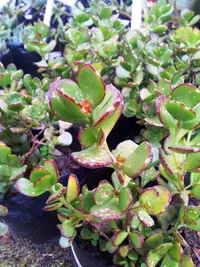
Support trailing stems

Guide long stems over a low hoop, trellis, or the rim of a taller pot to prevent kinking at the soil line and to keep the plant’s weight distributed more evenly.

Use top-dressing grit

Add a 0.5–1 cm layer of horticultural grit or coarse sand on the soil surface to keep leaves dry at the base and reduce the risk of stem rot where they rest on the mix.

Quarantine new plants

Keep new succulents at least 1–2 m away from established plants for 2–3 weeks and check weekly for mealybugs or scale before placing them nearby, which helps protect a mature specimen.

Seasonal growth check

At the start and end of the main growing season, inspect stems for sections that are thin, shriveled, or leafless and trim these back to a firm, plump node to stimulate denser new growth when growing Cotyledon woodii.

Common Pests and Diseases

Mealybugs

These insects feed on leaf and stem sap, often hiding in leaf axils and between crowded succulent leaves. Symptoms include white cottony clusters, sticky honeydew, and gradual yellowing or distortion of new growth.

Solution

Remove visible clusters with a cotton swab dipped in 70% isopropyl alcohol, then rinse the plant with a gentle shower and let it dry in bright light. For persistent infestations, repeat alcohol swabs weekly and use a neem oil or insecticidal soap spray, ensuring good coverage in crevices while keeping the soil as dry as the plant tolerates.

Soft scale

This pest appears as small, dome-shaped brown or tan bumps on stems and leaf undersides and does not move when touched. Symptoms include sticky honeydew, black sooty mold on surfaces, and reduced vigor in the plant.

Solution

Gently scrape or wipe off individual scales with a fingernail or soft cloth and 70% isopropyl alcohol, then wash the plant with lukewarm water. Follow up with 2–3 treatments of horticultural oil or insecticidal soap at 7–10 day intervals, and reduce excess nitrogen fertilization that encourages soft growth and pest buildup.

Aphids

These insects cluster on tender shoot tips and flower stalks, sucking sap and causing curling, distortion, or stunted new growth. Sticky honeydew and the presence of ants around the plant are common signs.

Solution

Rinse the plant under a firm but gentle stream of water to dislodge most aphids, shielding the soil to avoid waterlogging. If needed, apply insecticidal soap or neem oil to all soft tissue and repeat every 5–7 days until no new aphids are seen, while avoiding overfertilizing which stimulates lush, aphid-prone growth.

Edema

This disorder occurs when roots absorb water faster than leaves can transpire it, especially in cool, low-light indoor conditions. Symptoms include small corky, blister-like spots on leaves that may turn brown and rough but do not spread like a typical infection.

Solution

Allow the potting mix to dry more thoroughly between waterings, especially in cooler seasons, and provide brighter light and good airflow. Avoid sudden shifts from very dry to very wet soil and use a fast-draining succulent mix to balance moisture uptake when growing Cotyledon woodii indoors.

Fungal leaf spots

This disease develops in conditions of high humidity and poor airflow, particularly when water sits on the fleshy leaves. Symptoms include small brown or tan spots that may have darker margins and can coalesce, causing patches of damaged tissue.

Solution

Remove and discard affected leaves, then improve light, airflow, and watering practices so leaves dry quickly after getting wet. If spotting continues, apply a copper-based or sulfur-based fungicide labeled for succulents, and avoid overhead watering or prolonged misting to limit reinfection.

Interesting Facts

Namaqualand cliff specialist

This species is naturally restricted to arid rocky slopes and cliffs in Namaqualand and the Richtersveld of South Africa, where it grows in crevices with extremely fast-draining, often quartz-rich soils.

Thick chalky bloom

Its grey-green leaves are covered with a bluish, chalky wax layer called epicuticular wax, which reflects intense sunlight and reduces water loss in its desert environment.

Seasonal leaf drop

In habitat it may shed part of its foliage during prolonged drought or high heat, entering a semi-dormant state that helps it survive unpredictable rainfall patterns.

Botan icon

Did you know?

Cotyledon woodii is part of the Namaqualand succulent flora, a globally recognized hotspot of succulent diversity, and its naturally limited range makes it of conservation interest due to habitat disturbance in this relatively small geographic area.

FAQs about Cotyledon woodii

Lack of flowers usually comes from insufficient light, too much nitrogen-rich fertilizer, or no cool, dry rest period. Mature plants bloom more reliably. Reduce feeding, provide bright conditions, and allow a slightly cooler, drier phase before expected flowering.

Grow Healthy Plants with Botan Care

Keep your plants happy and healthy with plant identification, disease detection, and easy care guidance.


Botan plant care app — identify plants on mobile

Explore More Plants