Eternal Flame Care (Goeppertia crocata)

Also known as: Saffron-coloured calathea
Eternal Flame

About Eternal Flame

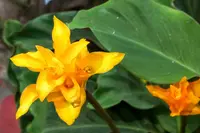
Eternal flame, Goeppertia crocata, is a compact tropical houseplant grown for its deep green, purple-backed leaves and bright orange, candle-like flower bracts. It forms low clumps, making it suitable for shelves, tables, and grouped displays indoors.

This species comes from the shaded understory of Brazilian rainforests, so it prefers warm, stable conditions and protected light. The contrast between its foliage and glowing blooms is strongest in medium to bright indirect light.

It can be a bit finicky because it reacts to dry air, cold drafts, and irregular watering. Those who learn how to care for Eternal Flame usually find it rewarding, especially if kept in evenly moist, airy soil and moderate humidity.

Main Plant Requirements

Care Difficulty

Hard Care

Light Preference

Bright Indirect Light

Water Requirements

Keep Soil Moist

Temperature Preference

Tropical / Frost Sensitive

Hardiness Zone

11–12

Soil Texture

Loamy, Peaty, Organic-rich

Soil pH

Acidic (5.5–6.5), Slightly acidic (6.5–7.0)

Soil Drainage

Moist but well-drained

Fertilization

Light (every 4–6 weeks)

Get Personalized Care Plan

Scan your plant to receive care tips personalized for your specific plant

Available on iOS and Android

How to Care for the Eternal Flame

Goeppertia crocata prefers bright, filtered light that mimics a forest understory.

  • Provide 6–8 hours of bright, indirect light daily; soft morning sun is tolerated, but shield from direct midday and afternoon rays to prevent leaf scorch.
  • Tolerates partial shade, but in very low light flowering of Eternal Flame declines and leaves may turn dull or stretched toward the light source.
  • In summer, move slightly farther from strong windows; in winter, move closer to bright windows or use sheer curtains to maximize safe light exposure.

This species needs evenly moist, airy soil without remaining saturated.

  • Water when the top 2–3 cm of soil feels dry, letting excess drain fully; never leave the pot standing in collected water.
  • In warm growing seasons, expect to water more often as leaves may slightly curl or droop when moisture is low; in cooler months, extend the interval while still preventing complete drying.
  • Signs of overwatering include yellowing leaves, limp stems, and sour-smelling soil; improve drainage with a loose, fine bark and peat or coir mix to protect Goeppertia crocata roots.

This plant thrives in stable, warm conditions with no cold drafts.

  • Aim for 65–80°F (18–27°C) for best growth; short peaks to 85°F (29°C) are tolerated if humidity and soil moisture are maintained.
  • Protect from temperatures below 60°F (16°C); growth slows and leaf damage appears near 55°F (13°C), and light frost can kill foliage.
  • Keep away from heaters, air conditioners, and exterior doors; in cooler seasons, a consistently warm room is better than moving the plant between contrasting temperature zones.

This species needs consistently high humidity to keep foliage healthy and reduce leaf damage.

  • Aim for 60–75% humidity; it tolerates brief dips but prolonged air below 50% leads to browning leaf edges.
  • Dry indoor air causes crisp tips, curling leaves, and stalled new growth in Eternal Flame.
  • Increase humidity by grouping plants, using a humidifier near the pot, or placing the container on a pebble tray with water below the pot base.

This plant prefers a loose, airy, organic-rich substrate that stays slightly moist but never waterlogged.

  • Use a peat- or coco-based mix with 30–40% perlite and/or fine bark to create a light, well-draining texture for Goeppertia crocata.
  • Ensure the mix holds moisture yet drains within a few minutes after watering to protect fine roots from suffocation and rot.
  • Keep pH roughly 5.5–6.5; most standard houseplant mixes naturally fall in this slightly acidic range and work well.
  • Avoid heavy garden soil, pure compost, or mixes that stay soggy, and break up any compaction to improve aeration.

This species is well suited to container growing, especially in stable indoor conditions.

  • Choose a wide, shallow pot that matches the spreading root system so moisture distributes evenly through the mix.
  • Select a container material that matches your environment; porous terracotta dries faster, while glazed ceramic retains moisture longer.
  • Ensure drainage holes are generous and use a firm, level surface to keep the relatively broad foliage canopy stable and upright.

This plant responds well to moderate, consistent feeding during its active season.

  • Use a balanced liquid fertilizer (such as 10-10-10 or 20-20-20) diluted to 25–50% strength for Eternal Flame.
  • Apply every 4–6 weeks in spring and summer, when growth is strongest.
  • Switch to a slow-release, balanced fertilizer or light compost top-dress once per season if preferred.
  • Stop feeding in fall and winter, or limit to very light applications if growth continues indoors.

Pruning needs for Goeppertia crocata are light and focused on hygiene rather than shaping.

  • Best time for pruning is during active growth in spring and summer, when recovery is fastest.
  • Remove yellow, brown, or torn leaves at the base using clean, sharp scissors or pruning snips.
  • Cut out dead flower stalks after blooming to keep the plant tidy and reduce disease risk.
  • Thin only severely crowded or damaged foliage to maintain a compact, balanced clump.

Container-grown plants benefit from occasional repotting to maintain healthy roots and growth.

  • Plan to repot every 2–3 years in spring, or when roots circle the pot, emerge from drainage holes, or growth slows.
  • Choose a pot 2–3 cm wider with good drainage and a peat-free, airy houseplant mix rich in organic matter.
  • Water the plant the day before, then gently loosen and lift the root ball, teasing circling roots without tearing heavily.
  • After repotting, water thoroughly, keep in bright, indirect light, and avoid strong sun or heavy feeding for 2–3 weeks to limit stress.

Division is the standard method for increasing this plant, usually done during active growth.

  • Divide the clump in spring or early summer, when roots are growing and recovery is faster.
  • Remove the plant from its pot and gently separate sections, ensuring each division has several healthy leaves and roots.
  • Plant divisions into small pots with fresh, airy, evenly moist mix and firm lightly around the roots.
  • Maintain high humidity, warm temperatures (70–80°F), and shaded, indirect light to encourage quick establishment.

This tropical species is not frost hardy and needs warm, stable indoor conditions in winter.

  • Keep indoor temperatures around 65–75°F and avoid exposure below 55°F to prevent leaf damage.
  • Move any outdoor containers indoors before nights drop near 50°F, choosing a bright, draft-free spot.
  • Maintain slightly drier soil than in summer, but never allow the root ball to fully dry out.
  • Use a thin mulch of fine bark on the pot surface to buffer root temperature and slow moisture loss.

Care Tips

Rotate for symmetry

Turn the pot 90° every 1–2 weeks to keep the foliage mound even and prevent the leaves from permanently leaning toward the main light source.

Refresh compacted mix

Every 6–12 months, gently loosen and remove the top 2–3 cm of compacted potting mix and replace it with fresh, airy mix to maintain root oxygen and reduce risk of root stress.

Support flower spikes

When flower stalks start to lean, insert a small, discreet stake and tie them loosely with soft plant ties so the orange blooms stay upright and are less likely to snap at the base.

Manage seasonal rest

If growth slows in late fall and winter, reduce handling, avoid repotting, and allow slightly drier intervals between waterings to match the plant’s lighter physiological activity.

Quarantine and inspect

When adding new houseplants, keep them in a separate area for 2–3 weeks and inspect undersides of leaves and petiole joints weekly so pests are not introduced to existing plants when growing Eternal Flame.

Common Pests and Diseases

Spider mites

This pest often appears in dry indoor air and causes stippled, dull leaves and fine webbing, especially on leaf undersides. Symptoms include curling, browning, and faster decline on the thin, pleated foliage of this species.

Solution

Rinse leaves thoroughly with lukewarm water, focusing on undersides, then wipe with a soft cloth to remove mites and webbing. Increase humidity, isolate the plant, and repeat washing every few days; for heavier infestations, apply a neem oil or insecticidal soap spray labeled for indoor use, keeping the product off the flowers if possible.

Fungus gnats

These insects thrive in the consistently moist potting mix that Goeppertia crocata prefers and their larvae feed on organic matter and fine roots. Symptoms include tiny black flies hovering near the soil surface and slow, stressed growth in very wet substrates.

Solution

Allow the top 2–3 cm of soil to dry slightly between waterings and improve drainage by checking that excess water can leave the pot. Use yellow sticky traps to reduce adults and apply a biological control such as Bacillus thuringiensis israelensis (BTI) or beneficial nematodes to target larvae in the soil.

Mealybugs

This pest hides in leaf bases and along midribs, appearing as white, cottony clusters that excrete sticky honeydew. Symptoms include distorted new growth, leaf yellowing, and sometimes sooty mold on the glossy green parts of the leaves.

Solution

Remove visible insects with a cotton swab dipped in isopropyl alcohol, then gently wipe affected areas of the foliage. For wider infestations, use a neem oil or insecticidal soap solution applied to all leaf surfaces and petioles every 7–10 days, and inspect regularly to catch any reinfestation early.

Leaf spot disease

This disease is usually fungal and causes water-soaked or brown spots with yellow halos on the broad, delicate leaves. Symptoms include irregular lesions that may merge, leading to large dead patches and tearing along the decorative folds of the foliage.

Solution

Remove and discard affected leaves, cutting well into healthy tissue, and avoid wetting the foliage when watering. Improve air movement around the plant, reduce overcrowding, and if spotting continues, apply a houseplant-safe fungicide labeled for leaf spot, following directions carefully.

Bacterial leaf blight

This disease favors warm, wet conditions and produces dark, greasy-looking spots or streaks that expand quickly along veins. Symptoms include rapid yellowing, collapsing patches of tissue, and a foul smell if severely affected leaves remain on the plant.

Solution

Isolate the plant, prune out all affected leaves with sterile tools, and dispose of them in the trash rather than compost. Keep leaves dry, reduce overhead misting directly on foliage, increase spacing for airflow, and if blight keeps progressing, consider discarding heavily infected plants to protect nearby calatheas and other related species.

Interesting Facts

True Brazilian native

This species is naturally found in the understory of Brazil’s Atlantic Forest, where it grows in warm, shaded, and very humid conditions on the forest floor.

Nightly leaf movement

Like other members of the Marantaceae family, it performs nyctinasty, raising its leaves upward at night through a specialized joint called a pulvinus at the base of each leaf.

Contrasting orange blooms

The plant produces compact spikes of vivid orange flowers that rise above the dark foliage, a color contrast that is relatively uncommon among indoor ornamental foliage plants.

Botan icon

Did you know?

Unlike many popular prayer plants grown mainly for their patterned leaves, this species has been selected and traded primarily for its bright orange inflorescences, which have made it one of the few Marantaceae members specifically marketed as a flowering indoor plant rather than just a foliage plant.

FAQs about Eternal Flame

Flowering often slows if the plant is too young, recently repotted, or recovering from stress. Insufficient light, skipped fertilization, or temperature swings can also delay blooms. Stable, moderate conditions usually restore normal flowering over time.

Grow Healthy Plants with Botan Care

Keep your plants happy and healthy with plant identification, disease detection, and easy care guidance.

Botan plant care app — identify plants on mobile

Explore More Plants