Sturdy climbing support
Provide a firm moss pole or coco totem from the start and gently tie new vines every 10–15 cm to encourage larger leaves and a more stable, upright plant.

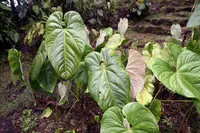
Philodendron grandipes is a climbing aroid grown mainly for its large, elongated green leaves and tropical look. It tends to form long vines that appreciate support from a pole or trellis.
This species is believed to originate from tropical rainforest habitats, where it grows as an understory climber in warm, humid, shaded conditions. Its vining habit and relatively sturdy foliage make it appealing to collectors and intermediate growers.
Philodendron grandipes generally prefers bright, indirect light, evenly moist but not waterlogged soil, and good airflow. Understanding how to care for Philodendron grandipes mainly involves providing stable warmth, moderate humidity, and a consistent, gentle watering routine.

Care Difficulty
Moderate Care

Light Preference
Bright Indirect Light

Water Requirements
Moderate Water

Temperature Preference
Tropical / Frost Sensitive

Hardiness Zone
10–12

Soil Texture
Loamy, Peaty, Organic-rich

Soil pH
Acidic (5.5–6.5), Slightly acidic (6.5–7.0)

Soil Drainage
Moist but well-drained

Fertilization
Light (every 4–6 weeks)
Scan your plant to receive care tips personalized for your specific plant
Available on iOS and Android
This aroid prefers bright, stable light that mimics dappled forest shade.
This species prefers evenly moist but never waterlogged soil.
Stable, warm conditions support healthy foliage and root function.
This species prefers moderate to high humidity and reacts quickly to very dry air.
This aroid prefers an airy, organic-rich, fast-draining potting medium that resists compaction.
This species adapts well to container culture when the pot supports its climbing, potentially top-heavy growth.
This species responds well to light, consistent feeding in active growth.
Pruning helps maintain a manageable shape and encourages healthy new growth.
Container-grown plants benefit from occasional repotting to maintain root health.
This plant is commonly multiplied from stem cuttings rather than seed in home conditions.
This tropical species is sensitive to frost and requires protective winter care in cool climates.

Plant Health Check
Not sure what's wrong with your plant? Check your plant's health inside the app.
This species develops notably long, pendulous leaves compared with many related philodendrons, forming a draping canopy effect when grown from a climbing or elevated position.
Philodendron grandipes is described as a hemiepiphyte, meaning it can spend part of its life attached to trees and part with roots in the soil, an adaptation that helps it access both light and stable moisture in tropical forests.
Like many aroids, it shows marked heteroblasty, where juvenile foliage looks different from mature leaves, but in this species the transition involves a strong increase in leaf length and a more elongated, strap-like form.
This species is primarily a climbing aroid. It produces long, vining stems that attach to rough surfaces or support structures with aerial roots. Given vertical support, it tends to grow upward rather than forming a sprawling groundcover.
Keep your plants happy and healthy with plant identification, disease detection, and easy care guidance.