Stake Heavy Stems
Install sturdy stakes or a slim bamboo tripod when shoots reach 30–40 cm so tall, heavy foliage and inflorescences stay upright and do not snap in wind or heavy rain.

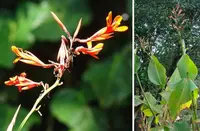
Canna tuerckheimii is a large, tropical canna species grown mainly for its bold foliage and strong architectural presence. It forms tall clumps with broad, paddle-shaped leaves and striking flower spikes. Native to Central America, it thrives in warm, humid conditions and is often used as a focal plant in spacious gardens or large containers. Its vigorous growth and preference for consistently moist, rich soil make it easier to manage in climates with mild winters. Understanding how to care for Canna tuerckheimii mainly involves providing ample light, warmth, and moisture, along with room for its substantial size.

Care Difficulty
Moderate Care

Light Preference
Partial Sun

Water Requirements
Keep Soil Moist

Temperature Preference
Tropical / Frost Sensitive

Hardiness Zone
9–11

Soil Texture
Loamy, Silty, Organic-rich

Soil pH
Acidic (5.5–6.5), Slightly acidic (6.5–7.0)

Soil Drainage
Moist but well-drained

Fertilization
Moderate (every 2–4 weeks)
Scan your plant to receive care tips personalized for your specific plant
Available on iOS and Android
This tropical species performs best in strong, consistent light for vigorous foliage and flowering.
This canna prefers evenly moist soil but suffers if kept either soggy or bone dry for long periods.
This species grows best in warm conditions and is not tolerant of frost or prolonged cold.
This species benefits from moderately humid air but adapts to typical indoor levels.
This species prefers deep, moisture-retentive but well-aerated soil.
This species is well suited to container growing when given enough root volume and stability.
This species responds well to steady nutrition during the warm growing season.
Thoughtful pruning keeps Canna tuerckheimii tidy and focused on strong flowering.
This tall canna is most often grown in the ground, with transplanting focused on dividing mature clumps.
Multiplying Canna tuerckheimii is most reliable through division of its rhizomes.
This canna is frost-sensitive and benefits from planned winter protection in most temperate climates.

Plant Health Check
Not sure what's wrong with your plant? Check your plant's health inside the app.
This species is one of the tallest cannas, capable of forming massive leafy clumps with leaves that can exceed 1 m in length, giving it a distinctly tropical, almost banana-like appearance in its native cloud forest habitat.
It is naturally found in wet montane and cloud forests of Central America, where it grows along streams and in constantly moist, humus-rich soils under high humidity and frequent mists.
The large, often orange to red flowers are adapted for pollination by hummingbirds, with tubular structures and bright colors that make nectar easily accessible to these birds in its native range.

Among ornamental cannas, this species is notable for combining very large, lush foliage with strong tolerance for cool, misty, high-altitude conditions, which makes it unusually well adapted to cloud forest climates compared with many lowland Canna species.
This species performs best outdoors in warm, humid conditions with space for its tall foliage. It can be kept in a large pot under bright light indoors, but long-term Canna tuerckheimii indoor care is challenging due to size and light needs.
Keep your plants happy and healthy with plant identification, disease detection, and easy care guidance.