Harris’ tillandsia Care (Tillandsia harrisii)

Harris’ tillandsia

About Harris’ tillandsia

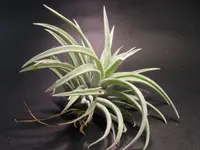
Harris’ tillandsia (Tillandsia harrisii) is an epiphytic air plant from dry regions of Guatemala, where it grows attached to rocks or trees rather than in soil. Its rosette of stiff, curling leaves is covered in dense silver trichomes, giving the plant a fuzzy, frosted look and helping it handle strong light and dry air. Mature plants produce a short flower spike with tubular blooms that add seasonal interest. This species stays compact and grows slowly, which makes it suitable for small indoor displays and terrariums with good air flow. These traits usually make it straightforward to care for Harris’ tillandsia in bright, indirect light and moderate humidity.

Main Plant Requirements

Care Difficulty

Moderate Care

Light Preference

Bright Indirect Light

Water Requirements

Low Water

Temperature Preference

Tropical / Frost Sensitive

Hardiness Zone

10–12

Soil Texture

Rocky, Sandy, Organic-rich

Soil pH

Acidic (5.5–6.5)

Soil Drainage

Well-drained

Fertilization

Light (every 4–6 weeks)

Get Personalized Care Plan

Scan your plant to receive care tips personalized for your specific plant

Available on iOS and Android

How to Care for the Harris’ tillandsia

This air plant prefers bright, indirect light that mimics open but lightly sheltered habitats.

  • Provide 6–8 hours of bright, filtered light daily, such as near an east or bright north window, or under a sheer curtain outdoors.
  • Allow gentle morning sun but protect Harris’ tillandsia from strong midday and afternoon sun, which can scorch the silvery leaves and cause brown patches.
  • In winter, move it closer to the light source or add grow lights to compensate for shorter days, keeping it shaded from intense summer sun shifts.

Watering Tillandsia harrisii focuses on thorough wetting followed by complete drying.

  • Soak or drench the plant for 5–10 minutes, then shake off excess water and let it dry fully within 3–4 hours in good air flow.
  • Increase watering when air is hot, dry, or indoor heating is on, and reduce slightly in cool, humid seasons while still allowing full hydration each time.
  • Watch leaf texture and color: curling, crispy, or dull leaves suggest underwatering, while limp, dark, or rotting bases indicate excess moisture and poor drying.

This species prefers warm, stable conditions without frost or extreme heat swings.

  • Aim for 65–80°F (18–27°C) for steady growth, with good air circulation to prevent heat buildup around the foliage.
  • Protect from cold below 45°F (7°C); brief dips to 40°F (4°C) may be tolerated if dry, but repeated chills weaken the plant and invite rot.
  • Shield from prolonged exposure above 95°F (35°C) by increasing airflow and shade, since high heat combined with intense sun quickly dehydrates the leaves.

This air plant relies on moderate humidity and careful watering rather than moist air alone.

  • Aim for 40–60% humidity, which matches most homes and suits Harris’ tillandsia well.
  • In very dry air below about 30%, increase misting frequency and extend soak time slightly while letting plants dry fully afterward.
  • Watch for curling, rigid, or browning leaf tips as signs of humidity stress, and group plants or place near a humidifier if these appear.

Tillandsia harrisii is epiphytic and must never be planted in regular potting soil.

  • Mount on inert, non‑rotting materials such as cork bark, driftwood, or stone so air flows freely around the base.
  • Avoid any peat, compost, or garden soil, which hold water, suffocate the plant, and promote rot at the leaf bases.
  • If using decorative substrate in a container, choose loose materials like large bark, pumice, or aquarium gravel that do not stay wet.
  • Ensure the plant sits above any moist material after watering so it dries within 2–3 hours and does not rest in trapped moisture.

This species is suitable for containers as long as it remains above the substrate and fully exposed to air.

  • Use shallow, wide containers or bowls to spread plants out and prevent the rosette from touching pooled water after soaking.
  • Choose porous materials such as unglazed ceramic to reduce condensation and help leaves dry quickly after misting.
  • Secure the plant with wire, fishing line, or a small rock rather than burying the base so air can circulate around all leaf surfaces.

This epiphytic air plant has modest nutrient needs but responds well to light feeding during active growth.

  • Use a low-nitrogen, balanced NPK epiphyte or air-plant fertilizer at 1/4–1/2 strength in water.
  • Mist-feed every 3–4 weeks in spring–summer, ensuring solution reaches all leaf surfaces.
  • Reduce feeding to 1 light application every 6–8 weeks in fall–winter or when growth slows.
  • After feeding Harris’ tillandsia, rinse lightly with plain water once to prevent salt buildup on leaves.

Pruning needs for Tillandsia harrisii are minimal and focus on cleanliness and airflow.

  • Trim only dead, brown, or clearly damaged leaves, keeping healthy silver-gray tissue intact.
  • Use small, sharp scissors or snips disinfected with alcohol to limit disease spread.
  • Remove completely dried flower spikes to maintain a neat form and direct energy to offsets.
  • Gently thin crowded, overlapping leaves if trapping moisture, which improves ventilation and reduces rot risk.

This air plant is usually mounted rather than potted, so focus on remounting or repositioning instead of classic repotting.

  • Move the plant when it outgrows its mount, becomes unstable, or when slow growth suggests poor airflow or light.
  • Best timing is spring to early summer, when temperatures are stable and recovery is fastest.
  • Every 2–3 years, detach gently, keeping base intact, and secure to a new, dry, non-toxic mount using wire or cotton thread.
  • After remounting, provide bright, indirect light, slightly increased humidity, and careful misting for 1–2 weeks to limit stress.

Propagation of this species is commonly done through offsets rather than seed in home collections.

  • Wait until pups at the base reach about 1/3–1/2 the size of the parent Tillandsia harrisii before separating.
  • Best season is spring–summer, when warmth and brighter light support faster establishment.
  • Gently twist or cut pups away at the base with sterile scissors, keeping their own base tissue intact.
  • Mount new plants on small pieces of cork, wood, or stone, then provide bright, indirect light and frequent light misting until established.

This subtropical air plant is sensitive to freezing temperatures and needs indoor conditions in cold climates.

  • Bring plants indoors before temperatures drop near 40°F, as frost can damage leaf tissues.
  • Place in bright, indirect light away from cold drafts, heaters, or very dry air vents.
  • Reduce watering in winter, allowing leaves to dry completely within 3–4 hours after misting to prevent rot.

Care Tips

Optimize mounting surfaces

Attach plants to rough, inert materials like cork bark, hardwood, or unglazed pottery so trichomes are not crushed and air can move freely around the base.

Rotate for even growth

Turn the plant 90° every 1–2 weeks so all sides receive similar light exposure and develop a balanced rosette rather than leaning toward one direction.

Improve air exchange

Place the plant on an open wire rack or mesh stand instead of a solid shelf so air can circulate underneath and help the base dry quickly after misting or soaking.

Seasonal rest adjustment

During winter, reduce handling and disturbance and allow slightly longer drying intervals after watering to mimic the plant’s natural cooler, drier rest period while still avoiding shriveled leaves.

Inspect base regularly

Once a month, gently check the central base and lower leaves for soft spots, odor, or darkening so any early rot or scale insects are detected and treated before they spread when caring for Harris’ tillandsia.

Common Pests and Diseases

Mealybugs

This pest prefers the sheltered bases of the leaves and the fuzzy trichomes of Tillandsia harrisii, where it sucks sap and leaves cottony clusters. Symptoms include slow growth, leaf yellowing, and sticky honeydew that can lead to sooty mold.

Solution

Isolate the plant, then remove visible insects with a cotton swab dipped in isopropyl alcohol and rinse the leaves thoroughly with lukewarm water, aiming water between leaf bases. Improve air movement, avoid overfertilizing, and repeat alcohol spot-treatments weekly until no new insects appear.

Scale insects

These insects attach tightly along leaf sheaths and midribs, appearing as small brown or tan bumps that do not wipe off easily. Symptoms include localized yellow or pale patches and general decline if populations build up.

Solution

Manually remove scale with a soft brush or cotton swab dipped in isopropyl alcohol, then rinse the plant well. Increase airflow, keep the plant in bright conditions, and repeat inspections weekly; for heavy infestations, use a diluted insecticidal soap spray followed by a thorough fresh-water rinse after 15–20 minutes.

Spider mites

This pest becomes more common on harrisii kept in very dry, warm indoor air, where it causes tiny pale speckles, dull coloration, and fine webbing along inner leaf bases. Symptoms include a dusty look to the foliage and slowed growth.

Solution

Rinse the plant thoroughly under running water, directing the stream into leaf axils, and repeat every few days for 2–3 weeks. Increase humidity slightly, improve air circulation, and use a mild insecticidal soap or neem oil spray followed by a fresh-water rinse if mites persist, taking care not to leave oily residues on the trichomes.

Fungal leaf spot

This disease develops when water sits trapped in the leaf bases in low airflow, leading to small brown or black spots that may expand and cause tissue collapse. Symptoms include discolored patches that feel soft or sunken compared with healthy firm leaves.

Solution

Remove severely spotted or mushy leaves with clean scissors and let the plant dry quickly in bright, indirect light with strong airflow. Adjust watering by soaking or misting early in the day, shaking out trapped water, and, if spots continue to spread, apply a labeled copper- or sulfur-based fungicide lightly and allow the plant to dry completely between treatments.

Bacterial soft rot

This disease thrives when harrisii remains wet and poorly ventilated, especially at the crown, causing a foul odor, translucent wet lesions, and rapid tissue collapse from the center outward. Symptoms include leaves that detach easily at the base and a slimy texture in affected areas.

Solution

Isolate the plant, cut away all soft or foul-smelling tissue with sterile tools, and let the remaining healthy parts dry in a very airy, warm spot for several days. Reduce soaking frequency, always let the plant dry within 2–3 hours after watering, and ensure strong airflow to prevent recurrence; severely affected plants are often best discarded to protect nearby air plants and to support Tillandsia harrisii plant care practices that favor dryness and ventilation.

Interesting Facts

Silver trichome armor

This species has an unusually dense covering of silvery trichomes (specialized leaf hairs) that reflect intense sunlight and collect tiny amounts of water from fog and humid air, an adaptation to the exposed, arid cliffs of its native Guatemala.

Slow, compact growth

Compared with many air plants, it forms a tight rosette and enlarges slowly, producing thick, slightly recurved leaves that help reduce water loss in its dry, high-light habitat.

Cliff-dwelling epiphyte

In the wild it often grows on rocky walls and exposed tree branches rather than forest interiors, tolerating strong light and rapid drying that would stress many other bromeliads.

Botan icon

Did you know?

This species is considered part of the xeric air plant group, which has evolved to thrive in environments with intermittent moisture rather than constant humidity, making it unusually tolerant of brief droughts compared with many other tillandsias.

FAQs about Harris’ tillandsia

Brown tips usually indicate underwatering, very dry air, or excess sun. Brown, soft bases suggest rot from staying wet too long or poor air movement. Remove dead tissue and correct moisture and airflow to stabilize the plant.

Grow Healthy Plants with Botan Care

Keep your plants happy and healthy with plant identification, disease detection, and easy care guidance.

Botan plant care app — identify plants on mobile

Explore More Plants