Heartleaf philodendron Care (Philodendron hederaceum var. oxycardium)

Also known as: Heart Leaf Vine
Heartleaf philodendron

About Heartleaf philodendron

Heartleaf philodendron (Philodendron hederaceum var. oxycardium) is a tropical vining aroid grown mainly as an indoor foliage plant. It forms long, trailing or climbing stems with glossy, heart-shaped leaves in shades of medium to deep green.

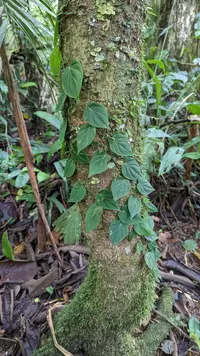
In nature it occurs in warm, humid forests of Central and South America, where it grows as an understory climber on trees. Its tolerance of indoor conditions, ability to cope with some neglect, and forgiving response to pruning make it popular for homes and offices.

This plant generally prefers bright, indirect light, lightly moist but well-drained soil, and stable indoor temperatures, which are key points in how to care for Heartleaf philodendron.

Main Plant Requirements

Care Difficulty

Easy Care

Light Preference

Bright Indirect Light

Water Requirements

Moderate Water

Temperature Preference

Tropical / Frost Sensitive

Hardiness Zone

10–12

Soil Texture

Loamy, Peaty, Organic-rich

Soil pH

Acidic (5.5–6.5), Slightly acidic (6.5–7.0)

Soil Drainage

Moist but well-drained

Fertilization

Light (every 4–6 weeks)

Get Personalized Care Plan

Scan your plant to receive care tips personalized for your specific plant

Available on iOS and Android

How to Care for the Heartleaf philodendron

This plant prefers bright, indirect light with brief gentle direct sun rather than harsh exposure.

  • Provide 6–8 hours of bright, indirect light daily; gentle early morning sun from an east window or shaded outdoor spot is suitable for the Heartleaf philodendron.
  • Protect from strong midday or afternoon sun, which can scorch leaves, cause pale patches, and lead to crispy edges.
  • In low light it survives but growth slows and internodes stretch; in winter, move closer to a bright window or supplement with a grow light.

This species prefers evenly moist but not saturated soil, with short dry periods between waterings.

  • Before watering Philodendron hederaceum var. oxycardium, let the top 2–4 cm of soil dry; the surface should feel dry but slightly cool beneath.
  • Use a free-draining mix and containers or beds that do not hold standing water, since yellowing leaves and a sour smell indicate overwatering and root stress.
  • In spring and summer, expect more frequent watering as growth and evaporation increase; in fall and winter, extend the interval and watch for drooping, thin leaves as a sign the plant is too dry.

This philodendron prefers stable, warm conditions with protection from cold drafts and frost.

  • Aim for 65–80°F (18–27°C) for best growth; short peaks to 85°F (29°C) are tolerated if humidity and soil moisture are adequate.
  • Growth slows below 60°F (16°C), and tissue damage can occur near 50°F (10°C); avoid placing the plant near open windows or unheated spaces in cold weather.
  • Philodendron hederaceum var. oxycardium is not frost tolerant, so in regions with frost it should be moved or grown where temperatures remain above 55°F (13°C) year-round.

This species prefers moderately humid air but usually handles typical home conditions.

  • Aim for 50–60% humidity for best foliage quality and steadier growth.
  • Leaves curling inward, brown edges, or stalled new growth indicate humidity stress, especially for Heartleaf philodendron near heating or AC vents.
  • Increase humidity by grouping plants, using a small room humidifier, or placing pots on a pebble tray with water below the pot base.

This plant performs best in a loose, airy, organic-rich mix that drains quickly yet retains some moisture.

  • Use a base of peat or coco coir with added compost for nutrients and moisture retention.
  • Improve drainage and aeration by mixing in perlite and medium orchid bark so roots get both air pockets and consistent moisture.
  • Target a slightly acidic to neutral pH around 6.0–7.0, which supports nutrient availability and root health in Philodendron hederaceum var. oxycardium.
  • Avoid dense garden soil, heavy clay, or mixes that stay waterlogged, as these conditions promote root rot and limit oxygen to the roots.

This species is very suitable for container growing in homes and sheltered outdoor spaces.

  • Choose a stable, relatively heavy pot or use a cachepot if supporting climbing vines or a moss pole to prevent tipping.
  • Select a container depth that allows roots to spread horizontally without compacting tightly at the base, which can restrict water movement.
  • Use pots with generous drainage holes and pair them with a saucer that can be emptied promptly to avoid water pooling at the bottom.

This vining aroid benefits from moderate feeding during active growth but dislikes heavy fertilizer buildup.

  • Use a balanced liquid fertilizer (around 10-10-10 or 20-20-20) at 1/4–1/2 strength for Heartleaf philodendron in spring and summer.
  • Apply every 4–6 weeks when growth is active, on already moist soil to limit root burn.
  • Reduce feeding to 1 light application in late fall or stop entirely in winter when growth slows.
  • Flush the pot with plain water every 2–3 months to wash out accumulated salts.

Thoughtful pruning keeps Philodendron hederaceum var. oxycardium compact, leafy, and well-shaped.

  • Time most pruning for spring or early summer when the plant resumes active growth.
  • Use clean, sharp scissors or pruners to remove yellowing, dead, damaged, or crossing stems at the node.
  • Shorten overly long vines above a node to encourage branching and a fuller, bushier plant.
  • Pinch soft tips periodically to control length and maintain desired trailing or climbing form.

This philodendron grows well in containers and benefits from occasional repotting to refresh soil and space roots.

  • Check for roots circling the pot, pushing from drainage holes, or slower growth as signs it needs a larger container.
  • Plan to repot every 2–3 years in spring, moving to a pot 2–5 cm wider with drainage holes.
  • Gently loosen circling roots and trim rotted sections, then set the plant at the same soil level in fresh airy mix.
  • Water thoroughly after repotting, keep in bright indirect light, and avoid heavy feeding for 3–4 weeks to reduce stress.

Philodendron hederaceum var. oxycardium is most often propagated by stem cuttings taken from healthy vines.

  • Take 8–12 cm stem sections in spring or summer with at least 1–2 nodes and a leaf.
  • Place cuttings in water or a moist, well-drained mix, keeping nodes submerged or buried but leaves above the surface.
  • Provide bright, indirect light, 70–80°F warmth, and high humidity to support fast root development.
  • Once roots reach 3–5 cm, pot into small containers with airy potting mix and keep evenly moist until established.

This tropical houseplant is frost-sensitive and needs warm indoor conditions in winter in most climates.

  • Move outdoor containers inside before temperatures drop below 55°F and avoid any frost exposure.
  • Place in bright, indirect light away from drafts, heaters, and cold window glass that can chill foliage.
  • Reduce watering so the top 2–3 cm of soil dry between waterings, since growth slows in cooler, shorter days.
  • Maintain indoor temperatures around 65–80°F and moderate humidity to prevent leaf yellowing and tip browning.

Care Tips

Provide climbing support

Install a moss pole or plastic trellis and loosely tie vines with soft plant ties so aerial roots can attach and support thicker, more vigorous growth.

Periodic vine reset

Every 1–2 years, trim a few older, bare vines back to just above a healthy leaf node to encourage fresh, fuller growth from the base rather than letting the plant become sparse and leggy.

Rooted cuttings recycling

When pruning, root 10–15 cm tip cuttings in water or a light mix, then replant several around the original root ball to thicken the plant and refresh its overall shape.

Leaf surface management

Wipe both sides of the leaves every 3–4 weeks with a barely damp, soft cloth to remove dust, improve light capture, and make it easier to monitor for early pest activity.

Seasonal growth monitoring

Track new leaf size and spacing along the stem through the year; if new leaves become notably smaller or internodes lengthen, adjust fertilization and support structures to keep growing Heartleaf philodendron dense and robust.

Common Pests and Diseases

Spider mites

This pest often appears on older vines and plants kept in dry, warm indoor air, causing stippled, dull foliage and fine webbing between leaves and nodes.

Solution

Rinse both sides of the leaves and stems under a gentle shower, then wipe down with a damp cloth; repeat every few days and increase humidity to 50–60%. For persistent mites, apply insecticidal soap or a ready-to-use neem oil spray to all leaf surfaces and stems, following label intervals until no new damage appears.

Mealybugs

These insects cluster in leaf axils, along vines, and on aerial roots, where they appear as white cottony masses and cause sticky honeydew and leaf yellowing.

Solution

Isolate the plant, then dab visible insects with cotton swabs dipped in 70% isopropyl alcohol and wipe the affected areas. Follow with a thorough spray of insecticidal soap on all foliage and stems every 7–10 days until no new mealybugs are seen, and avoid overfertilizing, which can encourage outbreaks when growing Philodendron hederaceum var. oxycardium.

Thrips

These insects favor the thin, heart-shaped leaves, causing silvery streaks, distorted new growth, and black specks of frass on the undersides of leaves.

Solution

Rinse foliage thoroughly, then use sticky traps placed near the plant to reduce flying adults. Treat the entire plant with insecticidal soap or a systemic insecticide labeled for indoor ornamentals, repeating at 7–10 day intervals to break the life cycle, and prune heavily damaged leaves to reduce hiding places.

Bacterial leaf spot

This disease produces water-soaked, translucent or dark lesions that often start at the leaf edge or along veins, sometimes with yellow halos.

Solution

Remove and discard affected leaves promptly, keep foliage dry, and avoid overhead watering or splashing between plants. Improve airflow around the plant and, in severe or spreading cases, use a copper-based bactericide labeled for houseplants, following the shortest effective schedule and monitoring new leaves for symptoms.

Fungal leaf spot

Symptoms include small brown or black spots that enlarge over time, sometimes with tan centers and irregular edges, often appearing after periods of high humidity and poor air circulation.

Solution

Trim off spotted leaves with clean tools and dispose of them, then allow the potting mix surface to dry slightly between waterings and increase air movement. If new spots continue to form, apply a broad-spectrum fungicide suitable for indoor foliage plants according to label directions until new growth emerges clean.

Interesting Facts

Heart-shaped leaf adaptation

The species name oxycardium refers to its sharply pointed heart-shaped leaves, an adaptation that increases drip efficiency so water runs quickly off the blade in its native wet tropical habitats.

Araceae climbing strategy

This plant begins life as a small ground-dwelling juvenile but naturally transforms into a climbing vine that roots along tree trunks, a growth pattern known as hemi-epiphytism within the arum family Araceae.

Leaf dimorphism in nature

In wild conditions, mature plants can develop larger, thicker leaves with a slightly different shape and texture than the softer juvenile leaves commonly seen in homes, a phenomenon called leaf dimorphism that reflects changes in light and height on the host tree.

FAQs about Heartleaf philodendron

Yellow leaves usually come from overwatering, low light, or natural aging of the oldest foliage. Check for soggy soil, improve drainage, and remove spent leaves. If new growth stays green, the plant is generally fine.

Grow Healthy Plants with Botan Care

Keep your plants happy and healthy with plant identification, disease detection, and easy care guidance.

Botan plant care app — identify plants on mobile

Explore More Plants