Windbreak planning
Plant or install a windbreak on the prevailing-wind side so young trees develop straight trunks and do not suffer branch breakage from strong coastal or storm winds.

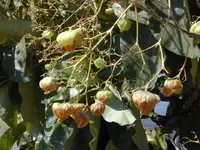
Star apple, Chrysophyllum cainito, is a tropical evergreen fruit tree grown mainly for its sweet, round, purple or green fruits. It has a dense, rounded canopy with glossy green leaves that are coppery or golden underneath, giving the tree a distinctive two-tone look in the light.
This species is native to Central America and the Caribbean and is now widely cultivated in tropical regions around the world. It grows best in warm, frost-free climates, with plenty of sun, regular moisture, and well-drained soil.
The tree is moderately easy to grow in suitable climates but sensitive to cold and poor drainage, which can limit success. Gardeners who understand how to care for star apple usually find it reliable and productive over time.

Care Difficulty
Moderate Care

Light Preference
Full Sun

Water Requirements
Regular Water

Temperature Preference
Tropical / Frost Sensitive

Hardiness Zone
10–11

Soil Texture
Sandy, Loamy, Organic-rich

Soil pH
Acidic (5.5–6.5), Slightly acidic (6.5–7.0)

Soil Drainage
Moist but well-drained

Fertilization
Minimal (feed rarely)
Scan your plant to receive care tips personalized for your specific plant
Available on iOS and Android
Chrysophyllum cainito needs bright outdoor light in warm climates but must be protected from harsh exposure.
Chrysophyllum cainito prefers consistently moist, well-drained soil without long dry spells or standing water.
This tropical tree requires warm, frost-free conditions for reliable growth and fruiting.
This tropical fruit tree prefers consistently warm, moderately humid air to thrive.
This species performs best in deep, well-aerated, free-draining soil that still retains some moisture.
This tree can be grown in large containers, especially in its juvenile stage or in mild climates.
Chrysophyllum cainito responds well to moderate, consistent feeding during its active growing season.
Pruning Chrysophyllum cainito helps manage size, improve light penetration, and support strong framework branches.
Chrysophyllum cainito is usually field-grown; early transplanting is important for a stable, long-lived tree.
Chrysophyllum cainito is usually propagated from seeds or grafted onto seedling rootstocks for better fruit quality.
Chrysophyllum cainito is a tropical, frost-sensitive tree that needs careful winter management outside truly warm climates.

Plant Health Check
Not sure what's wrong with your plant? Check your plant's health inside the app.
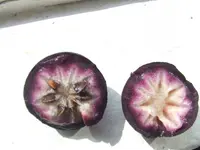
When the ripe fruit is cut horizontally, the seed cavity shows a clear star-shaped pattern formed by its radiating carpels, which gives rise to the common name star apple.
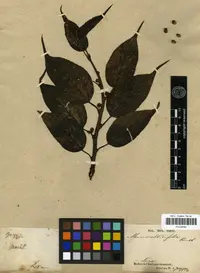
The leaves are dark green on top but have a striking golden-brown to coppery underside with fine hairs, which can give the canopy a metallic sheen in bright light.
Both the tree and fruit contain abundant white latex, a milky sap that can make the skin and immature pulp sticky and is characteristic of many species in the Sapotaceae family.
This species likely originated in the Greater Antilles and Central America but has been spread throughout the humid tropics since at least the 17th century, becoming a common backyard fruit tree in parts of the Caribbean, Southeast Asia, and tropical America due to its sweet pulp and reliable productivity.
Growth is moderate under warm, frost‑free conditions. Seedlings often add about 30–60 cm per year once established, then slow as the canopy fills out. Grafted trees reach fruiting size faster than seed‑grown plants.
Keep your plants happy and healthy with plant identification, disease detection, and easy care guidance.