Snow load management
In regions with heavy, wet snow, gently brush accumulated snow off branches with a broom to prevent limb breakage and permanent splaying of the plant’s structure.

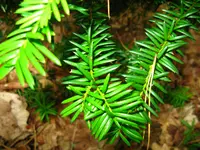
Wellesley yew (Taxus × media) is a hybrid evergreen shrub or small tree, valued for its dense, dark green needles and versatile landscape use. It typically forms a compact, rounded to upright shape that responds well to pruning, making it suitable for hedges, foundation plantings, and structured gardens.
This hybrid originates from crosses between English yew and Japanese yew, combining cold tolerance with good shade adaptability. It is generally considered reliable and long-lived when planted in well-drained soil and protected from extreme heat or waterlogging.
Understanding how to care for Wellesley yew starts with choosing a site with partial sun, consistent but not excessive moisture, and soil that does not stay saturated.

Care Difficulty
Easy Care

Light Preference
Partial Shade

Water Requirements
Moderate Water

Temperature Preference
Cold Hardy

Hardiness Zone
4–7

Soil Texture
Loamy, Sandy, Clay

Soil pH
Acidic (5.5–6.5), Slightly acidic (6.5–7.0)

Soil Drainage
Well-drained

Fertilization
Minimal (feed rarely)
Scan your plant to receive care tips personalized for your specific plant
Available on iOS and Android
Taxus × media grows best with balanced light that avoids extremes of deep shade and harsh afternoon sun.
Taxus × media prefers evenly moist, well-drained soil and is sensitive to prolonged saturation.
This yew is cold-hardy yet benefits from moderate temperatures during active growth.
Humidity is rarely critical for Taxus × media, which thrives in typical outdoor air conditions.
Taxus × media performs best in moist but sharply drained, structured soil that does not stay waterlogged.
This shrub is suitable for long-term container growing if the pot provides stable support and controlled drainage.
Taxus × media benefits from light, measured feeding rather than heavy fertilization.
Taxus × media responds well to thoughtful pruning that maintains structure and density.
Taxus × media is usually grown in the ground and moved only when necessary, as it dislikes frequent disturbance.
Taxus × media is most commonly propagated from semi-hardwood cuttings, which root slowly but reliably under controlled conditions.
Taxus × media is generally cold hardy in much of the US and needs only minimal winter attention once established.

Plant Health Check
Not sure what's wrong with your plant? Check your plant's health inside the app.
This yew is a stable hybrid between the European yew (Taxus baccata) and the Japanese yew (Taxus cuspidata), combining cold tolerance from the Japanese parent with the dense, ornamental foliage of the European parent.
Many named landscape forms such as 'Hicksii', 'Densiformis', and 'Wardii' are clonal cultivars of this single hybrid taxon, selected for different growth habits, from narrow columnar to broad, low mounds.
Compared with its parent species, this hybrid often shows better tolerance of urban stresses such as air pollution, fluctuating soil moisture, and compacted soils, which is one reason Taxus × media plant care is frequently recommended for city landscapes.

Although it is widely planted and long-lived in cultivation, Taxus × media is not known to occur as a stable, naturally reproducing population in the wild; it is essentially a human-made hybrid maintained and propagated through horticulture rather than a naturally evolved species.
Yellowing foliage usually comes from poor drainage, waterlogged soil, root damage, or excessive fertilizer. Compacted soil, recent transplanting, or road salt exposure also cause chlorosis. Improve drainage, adjust watering, and flush out excess salts to stabilize this plant.
Keep your plants happy and healthy with plant identification, disease detection, and easy care guidance.