Root flare check
When planting or inspecting established trees, ensure the root flare is visible at soil level rather than buried, since a covered flare increases risk of rot and poor anchoring in wind.

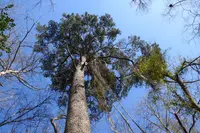
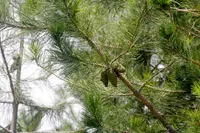
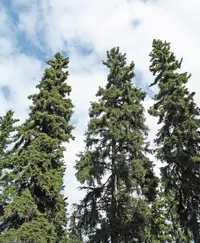
Spruce pine, Pinus glabra, is an evergreen conifer native to the southeastern United States, especially moist coastal plains and river bottoms. It forms a medium to tall, narrow tree with a straight trunk, smooth gray bark when young, and relatively short, flexible needles.
This species tolerates shade better than many pines and adapts to acidic, sandy, or loamy soils, which can make it easier to establish in suitable climates. It prefers consistent moisture but not standing water.
Because of its moderate growth rate, wind firmness, and tolerance of humidity, it can be a practical choice for larger gardens, naturalized areas, or restoration projects. Understanding how to care for Spruce Pine starts with matching its need for mild winters, adequate moisture, and well-drained, slightly acidic soil.

Care Difficulty
Moderate Care

Light Preference
Full Sun

Water Requirements
Moderate Water

Temperature Preference
Cold Hardy

Hardiness Zone
8–9

Soil Texture
Sandy, Loamy

Soil pH
Strongly acidic (4.5–5.5), Acidic (5.5–6.5)

Soil Drainage
Moist but well-drained

Fertilization
Minimal (feed rarely)
Scan your plant to receive care tips personalized for your specific plant
Available on iOS and Android
This southeastern pine prefers consistent light conditions that mimic open woodland edges.
This species favors evenly moist but not saturated soil, especially while establishing.
This pine is adapted to warm, humid climates with mild winters and hot summers.
This species tolerates a wide humidity range and usually does not need special humidity management outdoors.
Pinus glabra prefers aerated, sandy to loamy soil that drains freely yet retains modest moisture.
This species can be grown in large containers for several years, mainly as a juvenile or patio specimen.
This species grows naturally in low-nutrient soils and usually needs only light feeding in managed landscapes.
Pinus glabra benefits from minimal, well-timed pruning to maintain structure and remove problem wood.
This pine is usually grown in the ground, so focus on careful transplanting rather than frequent repotting.
Propagation of Pinus glabra is typically done from seed and is considered slow but reliable under suitable conditions.
Pinus glabra is cold hardy in much of its native range and usually needs little specific winter care in the ground.

Plant Health Check
Not sure what's wrong with your plant? Check your plant's health inside the app.
This species is unusually shade-tolerant for a pine, often establishing and persisting in the understory of mixed hardwood–pine forests rather than in open, sunny sites.
It naturally occurs on moist, acidic soils such as stream terraces, flatwoods, and swamp margins in the southeastern US, thriving where many other pines decline.
The tree produces relatively small cones, often less than 6 cm long, and can begin cone production at a comparatively young age, which helps maintain populations in disturbed wetland habitats.

Pinus glabra is one of the few pines that can form part of the evergreen hardwood forest canopy in river floodplains of the southeastern US, acting as a transitional species between classic pine forests and broadleaf evergreen systems.
This species grows at a moderate rate, usually adding about 30–60 cm per year under good conditions. Growth is faster on moist, well-drained, acidic soils and slower on dry, compacted, or nutritionally poor sites.
Keep your plants happy and healthy with plant identification, disease detection, and easy care guidance.