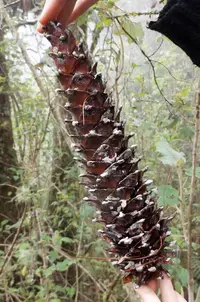
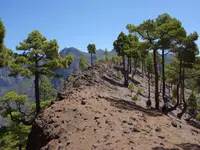
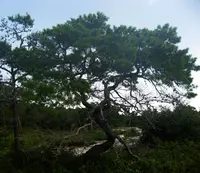
Wind-hardening seedlings
Expose young plants to increasing wind over several weeks by gradually moving containers to more open sites, which encourages shorter, sturdier shoots and reduces bending or breakage once planted out.

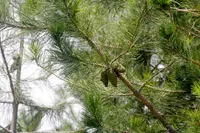
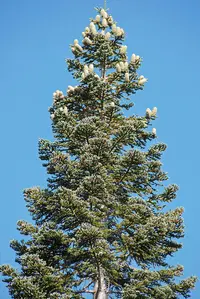
Gregg’s pine, Pinus greggii, is a fast-growing evergreen conifer native to northeastern Mexico and parts of Texas. It forms a slender, upright tree with long, fine needles that give it a soft, airy look. In nature it often grows on dry, rocky slopes and open woodlands, which makes it relatively tolerant of poor soils and variable moisture once established. Its main demands are good sun exposure and free-draining soil, so heavy, waterlogged sites are not suitable. Gardeners who understand these conditions find it straightforward to care for Gregg’s Pine in suitable climates.

Care Difficulty
Moderate Care

Light Preference
Full Sun

Water Requirements
Low Water

Temperature Preference
Warm Climate

Hardiness Zone
8–10

Soil Texture
Sandy, Loamy, Rocky

Soil pH
Acidic (5.5–6.5), Slightly acidic (6.5–7.0)

Soil Drainage
Well-drained

Fertilization
Minimal (feed rarely)
Scan your plant to receive care tips personalized for your specific plant
Available on iOS and Android
This highland pine thrives in bright, open exposures with long hours of direct sun.
This drought-tolerant pine prefers deep, infrequent watering once established.
This species is adapted to warm, seasonally dry climates with mild to moderate winter cold.
This species prefers dry air and rarely needs humidity adjustment in typical indoor or outdoor conditions.
Pinus greggii prefers mineral, fast-draining soil that mimics rocky, upland sites.
This pine can be grown in containers for many years if the pot and substrate are chosen to support its deepening root system.
This pine grows well in lean soils, so feeding is light and focused on young or container-grown plants.
Pruning needs for Pinus greggii are minimal and mainly corrective.
This pine is most often grown in the ground, so focus on correct transplanting rather than frequent repotting.
Pinus greggii is typically propagated from seed rather than cuttings.
This species is generally cold hardy in suitable regions and needs only modest winter care.

Plant Health Check
Not sure what's wrong with your plant? Check your plant's health inside the app.
This species occurs naturally in a relatively small area of northeastern Mexico, mainly in the Sierra Madre Oriental, where it is adapted to dry, cool highlands rather than the wetter mountain habitats many pines prefer.
It has long, very slender needles typically grouped in 3 per bundle, giving the crown a fine, feathery texture that differs from the coarser foliage of many related Mexican pines.
In its native range it is considered a pioneer tree, able to colonize disturbed or eroded slopes quickly, which is why foresters use it for reforestation and erosion control in suitable climates.

Genetic and provenance trials in several countries have shown that some populations of this species can outperform many other pines in early height growth under subtropical highland conditions, making it a focus of tree-breeding programs for fast timber production.
This species is evergreen and keeps its needles year-round, although older inner needles naturally shed. In cold or dry conditions, foliage may dull slightly in color, but the tree does not go bare like a deciduous species.
Keep your plants happy and healthy with plant identification, disease detection, and easy care guidance.