Hiba Arbor-vitae Care (Thujopsis dolabrata)

Also known as: hiba, Hiba Cedar
Hiba Arbor-vitae

About Hiba Arbor-vitae

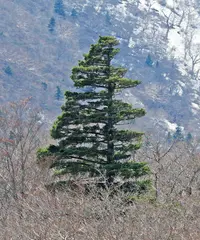
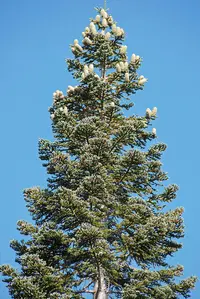
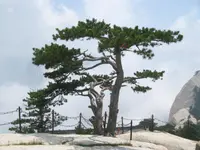
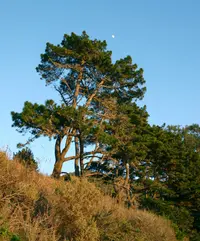
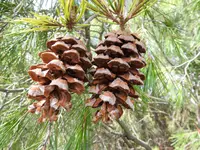
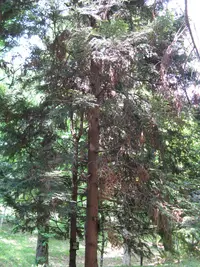
Hiba arbor-vitae (Thujopsis dolabrata) is an evergreen coniferous tree grown mainly for its dense, glossy foliage and attractive, patterned bark. It belongs to the cypress family and forms a pyramidal to broadly conical shape over time.

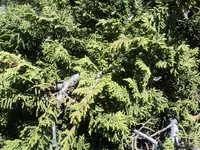
In nature, it occurs in cool, moist forests of Japan, often on mountain slopes with high rainfall and well-drained, humus-rich soils. The flattened sprays of scale-like leaves have a distinct, almost tiled texture that makes the plant stand out in landscape plantings.

It is generally slow-growing and long-lived, with moderate needs that suit patient gardeners willing to care for Hiba Arbor-vitae in stable, temperate conditions. It prefers consistent moisture, shelter from harsh drying winds, and light shade to full sun in cooler climates.

Main Plant Requirements

Care Difficulty

Moderate Care

Light Preference

Partial Shade

Water Requirements

Regular Water

Temperature Preference

Cold Hardy

Hardiness Zone

5–7

Soil Texture

Loamy, Sandy, Organic-rich

Soil pH

Acidic (5.5–6.5), Slightly acidic (6.5–7.0)

Soil Drainage

Moist but well-drained

Fertilization

Minimal (feed rarely)

Get Personalized Care Plan

Scan your plant to receive care tips personalized for your specific plant

Available on iOS and Android

How to Care for the Hiba Arbor-vitae

Thujopsis dolabrata thrives in cool, bright locations with protection from harsh afternoon sun.

  • Provide 4–6 hours of sun daily, ideally morning sun with light shade or dappled light from midday onward.
  • Plant in a site with partial shade; strong afternoon sun, especially in summer, can scorch foliage and cause bronzing or dieback.
  • In hotter regions, increase shade to 60–70% in summer, while in cooler climates it can handle more open exposure without foliage stress, ideal for caring for Hiba Arbor-vitae.

Thujopsis dolabrata prefers evenly moist, cool soil that never stays waterlogged.

  • Water when the top 3–5 cm of soil feels slightly dry, aiming for consistently damp but not saturated conditions around the root zone.
  • Use deep, slow watering on well-drained, slightly acidic soil; standing water or heavy clay promotes root rot and yellowing foliage.
  • In summer droughts, increase watering frequency and watch for drooping or browning tips; in cool, wet seasons, reduce watering and monitor for limp, darkened roots if overwatered.

This species favors cool, humid climates with moderate summers and cold-tolerant winters.

  • Optimal growth occurs around 45–70°F (7–21°C), supporting dense foliage and steady shoot development.
  • Mature plants tolerate down to about -10°F (-23°C) once established, though young plants benefit from winter mulch to protect roots from deep frost heave.
  • Heat above 85°F (29°C), especially with dry wind, can stress foliage; provide shade, mulch, and consistent moisture during hot spells to limit scorch.

This conifer prefers consistently moist air but adapts to a range of outdoor humidity.

  • Aim for 50–80% humidity, typical of sheltered, woodland-like sites.
  • Tolerates brief drier air, but prolonged <40% humidity dries foliage tips and browns inner scales.
  • If foliage browns or sheds excessively in dry, windy spots, use windbreaks or group plantings to raise local humidity.
  • Sheltered planting near other shrubs or a water feature improves the microclimate for Hiba Arbor-vitae.

Thujopsis dolabrata thrives in deep, moist, well-drained, humus-rich soil.

  • Use a loamy structure with plenty of organic matter, such as garden loam mixed with compost or leaf mold.
  • Ensure drainage is reliable; soil should stay moist but never waterlogged, so avoid heavy, compacted clay unless amended.
  • Target a slightly acidic to neutral pH around 5.5–7.0, which supports healthy root and foliage development.
  • Improve aeration and drainage by digging in pine bark fines or coarse sand, especially in dense or slowly draining sites.

This species can be grown in large containers for several years if root space and stability are managed carefully.

  • Choose a tall, heavy container to counteract the plant’s eventual height and wind catch, reducing tipping risk.
  • Provide a deep root zone with at least 40–50 cm of soil to accommodate its strong, downward-growing roots.
  • Use a potting mix that holds moisture yet drains freely, such as bark-based compost blended with coarse sand or fine gravel.

Thujopsis dolabrata grows steadily with modest feeding, especially in containers or poor soil.

  • Apply a balanced slow-release NPK fertilizer once each spring to established landscape plants, following label rates.
  • For container-grown Hiba Arbor-vitae, use a half-strength balanced liquid feed every 4–6 weeks during the growing season.
  • Avoid fertilizing in late fall or winter to prevent tender, frost-susceptible growth.
  • Supplement with a thin layer of compost over the root zone annually to support soil structure and microbial life.

Thujopsis dolabrata needs only light, selective pruning to maintain health and structure.

  • Carry out structural pruning in late winter or very early spring before new growth starts.
  • Remove dead, diseased, crossing, or storm-damaged branches with clean, sharp bypass pruners or a pruning saw.
  • Thin crowded interior shoots slightly to improve light and air flow while keeping the natural outline.
  • Avoid cutting back into old bare wood, as new shoots emerge best from younger, green branches.

Thujopsis dolabrata is usually grown in the ground, so focus on careful transplanting rather than frequent repotting.

  • Transplant in early spring or early fall when soil is cool and moisture is reliable, reducing stress.
  • Look for circling roots, rootbound containers, or slowed growth as cues that a young plant needs a larger pot or planting out.
  • Dig a wide, shallow planting hole, keep the root flare at soil level, and backfill with native soil rather than rich mixes.
  • Water thoroughly after planting, then keep soil evenly moist and apply a 5–8 cm mulch ring, keeping mulch away from the trunk.

Thujopsis dolabrata is most commonly propagated from semi-hardwood cuttings rather than seed.

  • Take semi-hardwood cuttings in late summer, 8–12 cm long, from healthy, non-flowering shoots.
  • Remove lower foliage, dip the base in rooting hormone, and insert into a free-draining mix such as sand and peat or perlite.
  • Maintain high humidity and bright, indirect light at 65–75°F, keeping the medium just moist, not wet.
  • Seed propagation is slow and variable; cold stratification and patient aftercare are needed for consistent germination.

Thujopsis dolabrata is generally cold hardy, so outdoor plants in suitable climates need minimal winter care.

  • Apply a 5–8 cm layer of organic mulch over the root zone in late fall, keeping it slightly away from the trunk.
  • Water well before the ground freezes, especially for newly planted trees, to limit winter desiccation.
  • Move container plants to a sheltered, unheated but frost-free or slightly protected spot to prevent root damage.

Care Tips

Windbreak planning

Site young plants where existing structures or shrubs break prevailing winds, or install a temporary shade-and-wind cloth screen for the first 2–3 years to reduce desiccation and leader damage.

Mulch root zone

Apply a 5–8 cm layer of composted bark or wood chips over the root zone, keeping it 5–8 cm away from the trunk, to stabilize soil moisture and protect the shallow roots from temperature swings.

Form a strong leader

If the central leader bends or forks, stake it loosely and remove competing upright shoots during late winter so the tree develops a single, straight main stem and a stable structure.

Irrigation ring setup

Build a shallow soil berm in a ring just beyond the drip line of newly planted trees so hose or drip irrigation water collects and infiltrates deeply rather than running off on sloped sites.

Monitor for snow load

In regions with heavy, wet snow, gently brush accumulated snow off the layered branches with a broom before it freezes hard to prevent breakage and preserve the plant’s natural tiered form when growing Hiba Arbor-vitae.

Common Pests and Diseases

Cypress aphids

This pest feeds on young stems and foliage, causing yellowing, needle drop, and a general loss of vigor, often with sticky honeydew on twigs. Sooty mold may grow on the honeydew, making foliage appear dark or dirty.

Solution

Prune and destroy heavily infested shoots, then hose down foliage to remove aphids and honeydew. If populations remain high, use a targeted insecticidal soap or a systemic insecticide labeled for conifers, and support plant health with adequate water and mulch to reduce stress.

Juniper scale

This pest appears as tiny white or gray scale bumps on twigs and needles, causing patchy yellowing and dieback of sprays. Symptoms include thinning foliage and reduced growth, especially on stressed trees.

Solution

Cut out and dispose of badly affected branches, then use a soft brush or strong water spray to dislodge scales where possible. For persistent infestations, apply horticultural oil during the crawler stage according to label directions and improve plant vigor through proper watering and reduced competition from nearby plants.

Cypress canker

This disease causes sudden browning and dieback of individual branches, usually starting at discrete points along the stem with sunken, discolored cankers. Symptoms include resin oozing and clear separation between healthy green and dead brown tissue along a branch.

Solution

Remove and destroy infected branches by cutting well below visible cankers, disinfecting tools between cuts. Improve air circulation by avoiding overcrowding, avoid overhead irrigation that wets foliage, and protect trees from drought stress, which increases susceptibility.

Needle blight

This disease leads to browning and shedding of older inner sprays, often leaving only the outer foliage green. Symptoms include small dark spots or bands on needles and fine twig dieback under humid or poorly ventilated conditions.

Solution

Rake up and discard fallen needles and prune out affected inner branches to reduce inoculum, cleaning tools between cuts. Increase spacing and airflow, water at the base rather than overhead, and where disease pressure is high, apply a fungicide labeled for conifer needle blights in early spring according to Thujopsis dolabrata care instructions.

Interesting Facts

Unique hatchet-shaped leaves

This conifer has thick, glossy, scale-like leaves shaped like small hatchet blades, with a bright white, waxy underside that gives the foliage a distinctive two-tone appearance when branches move in the wind.

Limited natural range

It is naturally native to cool, moist forests of central and southern Japan, where it typically grows on mountain slopes and ravines rather than across a wide range of habitats.

Exceptionally durable wood

The wood is highly valued in Japan for its durability, dimensional stability, and resistance to decay, so it has been traditionally used for high-quality construction, joinery, and sometimes for temple architecture.

Botan icon

Did you know?

Old specimens of Thujopsis dolabrata in Japan can reach more than 30 m in height with massive, buttressed trunks, and some are treated as protected, culturally significant trees due to their age and size.

FAQs about Hiba Arbor-vitae

This species is a true evergreen conifer. It holds its scale-like foliage year-round, though color can dull slightly in winter. Older inner foliage may shed gradually inside the canopy, which is normal and not a sign of decline.

Grow Healthy Plants with Botan Care

Keep your plants happy and healthy with plant identification, disease detection, and easy care guidance.

Botan plant care app — identify plants on mobile

Explore More Plants