Weeping Pinyon Pine Care (Pinus pinceana)

Also known as: Pince's Pinyon Pine, weeping pinyon
Weeping Pinyon Pine

About Weeping Pinyon Pine

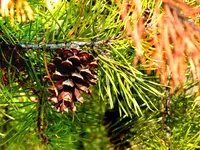
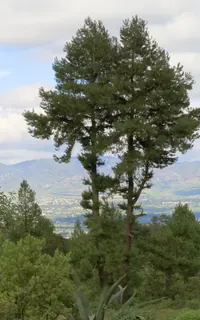
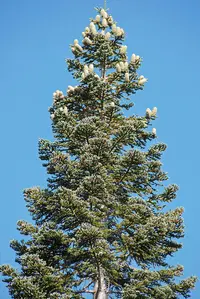
Pinus pinceana, commonly called weeping pinyon pine, is a small, slow-growing conifer with gracefully drooping branches and fine, bluish-green needles. It forms a compact, often rounded tree that develops a distinctive, softly weeping outline over time.

This species is native to arid, rocky regions of northern and central Mexico, where it adapts to strong sun, lean soils, and low rainfall. It is valued by collectors for its drought tolerance and ornamental form, but its slow growth and need for sharp drainage can challenge impatient or inexperienced growers.

Those learning how to care for Weeping Pinyon Pine should know it prefers full sun, low to moderate moisture, and well-drained, often sandy or rocky soil.

Main Plant Requirements

Care Difficulty

Moderate Care

Light Preference

Full Sun

Water Requirements

Low Water

Temperature Preference

Warm Climate

Hardiness Zone

8–10

Soil Texture

Sandy, Loamy, Rocky

Soil pH

Slightly acidic (6.5–7.0), Neutral (7.0)

Soil Drainage

Well-drained

Fertilization

Minimal (feed rarely)

Get Personalized Care Plan

Scan your plant to receive care tips personalized for your specific plant

Available on iOS and Android

How to Care for the Weeping Pinyon Pine

This drought-adapted pine prefers strong, direct sun to maintain compact growth and healthy needles.

  • Provide 6–10 hours of direct sun daily; open, south- or west-facing exposures suit Weeping Pinyon Pine in most climates.
  • Tolerates light afternoon shade in very hot, low-humidity regions, but too much shade causes sparse, elongated shoots and reduced cone production.
  • Young trees benefit from a bit of filtered shade during extreme summer heat, while mature trees handle intense sun if soil is well drained and not waterlogged.

This species is highly drought tolerant and must not be kept in consistently wet soil.

  • In well-drained ground, water deeply only when the top 5–8 cm of soil is completely dry, then allow it to dry again before the next watering.
  • Reduce watering in fall and winter; for established landscape Pinus pinceana, natural rainfall often suffices except during prolonged droughts.
  • Watch for overwatering signs such as yellowing needles, dieback at branch tips, and soft roots, and underwatering signs like browning needle tips and premature needle drop.

This pine thrives in warm, arid to semi-arid climates with significant temperature swings between day and night.

  • Optimal growing temperatures are about 70–90°F (21–32°C) during the day and 45–60°F (7–16°C) at night in the active season.
  • Mature trees generally tolerate cold down to about 0°F (−18°C) when hardened off, but young plants are more vulnerable to sudden hard frosts.
  • Heat tolerance is high up to around 100°F (38°C) if soil is sharply drained and roots are not sitting in water, especially during summer.

This species tolerates low humidity and usually does not need special moisture in the air.

  • Aim for 30–50% humidity, similar to dry indoor air or arid outdoor climates.
  • It handles dry air well; browning needle tips usually indicate root or water issues, not humidity stress.
  • If air is extremely dry and hot, occasional misting can cool foliage but is not essential for Weeping Pinyon Pine.

Pinus pinceana needs very fast-draining, mineral, low-organic soil to avoid root rot.

  • Use a gritty mix such as 60–70% coarse sand or small gravel with 30–40% loam or cactus mix for structure.
  • Ensure sharp drainage; water should pass through the pot or bed within seconds, not sit or puddle on the surface.
  • Aim for slightly acidic to neutral pH around 6.0–7.2, avoiding alkaline conditions that can limit nutrient uptake.
  • Avoid heavy clay, dense peat, or fine compost-only mixes that hold water and restrict aeration around the roots.

This species can be grown in containers, but only with excellent drainage and careful root management.

  • Select a deep, narrow container that accommodates the developing taproot and prevents circling roots near the surface.
  • Use a heavy, stable pot (e.g., thick clay) so the top growth and dry, gritty mix do not make it tip in wind.
  • Elevate the pot slightly on feet or blocks so drainage holes stay clear and excess water escapes immediately after irrigation.

This drought-adapted conifer needs very modest feeding, especially when grown in the ground.

  • For Weeping Pinyon Pine in poor or sandy soil, apply a light layer of compost around the drip line in spring.
  • Use a low-dose, balanced slow-release NPK (around 5-5-5), applied once at the start of the growing season.
  • Avoid fertilizing in late summer or winter to prevent tender growth before cold weather.
  • Reduce strength by using about half the label rate, as excess nutrients can stress this slow-growing species.

Pruning Pinus pinceana should stay minimal, focused on health and structure rather than reshaping.

  • Best time is late winter to very early spring, before new candles start to extend.
  • Remove only dead, diseased, broken, or rubbing branches using clean, sharp bypass pruners or a pruning saw.
  • Limit cuts to small branches to maintain the natural weeping habit and slow growth pattern.
  • Avoid cutting into thick older wood; instead, thin congested interior twigs back to branch junctions.

This species is usually field-grown and dislikes frequent disturbance of its root system.

  • Transplant young plants in late winter or early spring, before active growth, when soil is workable.
  • Look for roots circling the container, poor drainage, or stalled growth as signs a potted plant needs a larger container.
  • Plan on shifting containers only every 3–4 years, stepping up 1 pot size with a very well-drained, gritty mix.
  • Handle the rootball gently, loosen only the outermost circling roots, water thoroughly, then shade lightly for 1–2 weeks to reduce stress.

Propagation of this pine is typically done from seed and is considered specialized rather than routine for home growers.

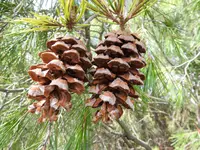
  • Collect ripe cones, extract seeds, and store dry and cool until sowing time.
  • Provide a cold stratification period of about 6–8 weeks at 34–41°F to improve germination.
  • Sow seeds in late winter to early spring in a sharply draining, low-organic mix, barely covered with grit.
  • Keep the medium just slightly moist, give bright light, and maintain good airflow to limit damping-off disease.

This pine is adapted to cold, dry winters and usually needs minimal intervention in its hardiness range.

  • In-ground plants tolerate moderate frosts when soils drain well and are not waterlogged.
  • Apply a 5–8 cm layer of mineral mulch or gravel around the root zone, keeping it away from the trunk flare.
  • For container plants in colder climates, overwinter in a cold, bright, sheltered area to avoid deep root freezing.

Care Tips

Deep root training

In the first 2–3 years, water less often but for a longer duration to encourage a deep root system that improves drought resilience and anchorage on dry, rocky sites.

Mineral mulch ring

Apply a 5–8 cm ring of inert gravel or crushed rock around the root zone instead of organic mulch to mimic its native habitat, keep the root collar dry, and reduce fungal issues.

Wind exposure shaping

On windy sites, allow some consistent wind exposure rather than shielding completely, as moderate wind trains flexible branches and reduces breakage as the canopy becomes heavier with time.

Low-nitrogen feeding

If growth is very slow, use a low-nitrogen, slow-release fertilizer formulated for conifers at half strength in early spring only, to avoid forcing soft, weak shoots that are more cold- and drought-sensitive.

Periodic health checks

Once or twice a year, inspect branch crotches and inner whorls for dead twigs, scale insects, or spider mites and remove affected material promptly, which simplifies caring for Weeping Pinyon Pine and keeps the narrow canopy open and well ventilated.

Common Pests and Diseases

Pine needle scale

This pest appears as tiny white, oval shells on needles and causes gradual yellowing and drop of foliage on stressed trees. Heavy infestations can weaken branches and reduce the plant’s vigor in dry, hot conditions where this species is often grown.

Solution

Prune and discard heavily infested twigs, then spray needles thoroughly with horticultural oil during the crawler stage in spring to smother young scales. Improve tree vigor with appropriate watering on well-drained soil and avoid excess nitrogen, which can make scale problems worse.

Pine tip moth

These insects tunnel into young shoots, causing wilting or death of new tips and a stunted, misshapen outline on small specimens. Symptoms include browned, hollow shoots with fine frass inside when split open.

Solution

Remove and destroy damaged shoot tips before larvae complete development, checking especially in late spring and early summer. In areas with a history of tip moth, use pheromone traps to time a targeted application of Bacillus thuringiensis (Bt) or a labeled insecticide just as eggs hatch on new growth.

Pine needle blight

This disease causes scattered needles to turn reddish-brown from the tip backward, often while adjacent needles remain green. In dryland pines such as this species, infections usually start on lower, shaded branches during periods of extended cool, wet weather.

Solution

Thin nearby vegetation and avoid overhead irrigation to keep foliage as dry as possible, especially in spring. Prune out and dispose of heavily affected lower branches and, where disease pressure is high, apply a copper or chlorothalonil-based fungicide to new needles according to label directions.

Bark beetles

These insects bore into weakened trunks or major branches, leaving small entry holes and fine boring dust at the base of the tree. Infested trees may show fading foliage from green to dull red, especially during drought or heat stress.

Solution

Focus on prevention by maintaining strong vigor with deep but infrequent watering and avoiding trunk wounds or recent heavy pruning. Remove and dispose of severely infested trees or branches promptly and, in high-risk regions, consider a professional application of a trunk-injected or sprayed systemic insecticide as a preventive measure for high-value specimens.

Interesting Facts

Unusual weeping habit

This species naturally develops slender, drooping branchlets unlike most pinyon pines, giving mature trees a distinctly weeping, fountain-like silhouette adapted to shedding intense sun and reducing water loss.

Extreme drought specialist

Native to semi-arid limestone slopes in central and northern Mexico, this pine grows in rocky, nutrient-poor soils with very low rainfall, relying on deep roots and small, narrow needles to minimize water loss.

Edible but tiny seeds

Like other pinyon pines, it produces edible seeds, but they are very small and not commercially important, which is one reason why Pinus pinceana is rarely used as a nut crop despite being closely related to true pinyon pines.

Botan icon

Did you know?

This species has a highly fragmented natural range and is considered threatened in parts of its native habitat, which makes responsible sourcing and conservation-focused Pinus pinceana plant care important for long-term survival of wild populations.

FAQs about Weeping Pinyon Pine

This species grows slowly, often only 5–15 cm per year. It can take 10–15 years to form a noticeably sized small tree, especially in dry, rocky sites where it naturally occurs.

Grow Healthy Plants with Botan Care

Keep your plants happy and healthy with plant identification, disease detection, and easy care guidance.

Botan plant care app — identify plants on mobile

Explore More Plants