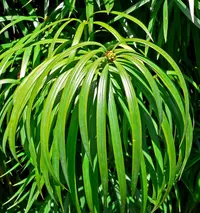
Virginia Pine Care (Pinus virginiana)

Also known as: Scrub Pine, Jersey pine
Virginia Pine

About Virginia Pine

Virginia pine, Pinus virginiana, is a small to medium evergreen conifer native to the eastern United States. It is often found on dry, poor, or rocky soils where many other trees struggle.

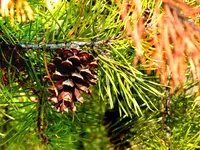
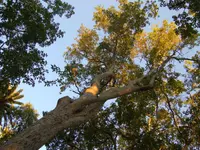
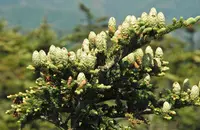
This pine has a rather irregular, sometimes scruffy outline, with short twisted needles in pairs and small, persistent cones. It grows relatively fast when young but stays modest in height compared with many other pines.

Virginia pine tolerates drought, poor fertility, and urban conditions, which makes it adaptable but sometimes less tidy in appearance. Those who want to know how to care for Virginia Pine should note its preference for full sun, well-drained soil, and low to moderate moisture.


Main Plant Requirements

Care Difficulty

Easy Care

Light Preference

Full Sun

Water Requirements

Low Water

Temperature Preference

Cold Hardy

Hardiness Zone

4–8

Soil Texture

Sandy, Loamy, Rocky

Soil pH

Strongly acidic (4.5–5.5), Acidic (5.5–6.5)

Soil Drainage

Well-drained

Fertilization

Minimal (feed rarely)

Get Personalized Care Plan

Scan your plant to receive care tips personalized for your specific plant

Available on iOS and Android

How to Care for the Virginia Pine

This pine thrives in open, bright sites with consistent direct sun exposure each day.

  • Provide 6–8 hours of direct sun daily; full sun from morning through late afternoon supports dense foliage and sturdy growth for Virginia Pine.
  • Tree tolerates light partial shade (3–4 hours direct sun) but may become sparse and elongated if shaded by buildings or taller trees.
  • In hot southern areas, aim for strong morning sun with some relief from intense late-afternoon sun to limit needle scorch on shallow-rooted young trees.

This species prefers well-drained soil and is more tolerant of dryness than prolonged wetness.

  • For established trees, water deeply only after a dry spell when the top 5–8 cm of soil feel dry and cracks start to appear on the surface.
  • During the first 1–2 years after planting Pinus virginiana, soak the root zone every 7–10 days in dry weather, allowing water to drain freely between soakings.
  • Reduce or stop supplemental watering in cool, rainy seasons; yellowing needles and soft, sour-smelling soil indicate overwatering, while browning needle tips and brittle shoots signal drought stress.

This hardy pine tolerates a wide temperature range typical of many temperate climates.

  • Optimal growing temperatures are about 60–80°F (16–27°C) in spring and early summer, when new shoots and needles develop most actively.
  • Mature trees survive winter lows near -20°F (-29°C); gradual seasonal cooling improves cold tolerance and limits frost cracking of bark.
  • Heat tolerance is good up to about 95°F (35°C) if soil is not waterlogged; extended extremes above this with drought can cause needle browning and tip dieback, especially in young trees.

This pine handles a wide humidity range and rarely needs special humidity management indoors or outdoors.

  • Target 30–50% humidity, which matches typical indoor air and many outdoor conditions in its native range.
  • Virginia Pine tolerates dry air but may show slight needle tip browning if combined with underwatering and high heat.
  • If air is extremely dry, group plants, place containers on a pebble tray with water below the pot base, or move away from heating vents.

Pinus virginiana prefers lean, well-drained mineral soils and struggles in compacted or waterlogged substrates.

  • Use a sandy or sandy-loam mix with low to moderate organic matter, such as 50–70% coarse sand plus pine bark fines and a small amount of compost.
  • Ensure fast drainage; water should infiltrate quickly and not pool on the surface or keep the root zone soggy.
  • Aim for slightly acidic to neutral pH, roughly 5.5–7.0, avoiding strongly alkaline or saline soils that restrict nutrient uptake.
  • To improve aeration in heavy ground, incorporate coarse sand and fine gravel, and avoid peat-heavy mixes that hold excessive moisture.

This species can be grown in containers for several years, mainly as a young landscape plant or bonsai subject.

  • Choose a deep, heavy container that resists tipping because its upright growth and wind exposure can make it top-heavy.
  • Select a potting mix that drains very quickly yet holds some weight, reducing both root rot risk and blow-over in strong winds.
  • Elevate the container slightly on feet or bricks so drainage holes stay clear and excess water does not reabsorb into the root zone.

This native pine usually needs little feeding on suitable soils, but light, targeted fertilization can support establishment and growth in poor sites.

  • Use a balanced slow-release fertilizer (for example 10-10-10) or well-aged compost on nutrient-poor or sandy soils.
  • Apply a light dose once each spring at the start of active growth; avoid multiple applications in summer.
  • Reduce or skip feeding in fall and winter when Pinus virginiana growth slows or is dormant.
  • Use at 1/2–3/4 the label rate for trees, keeping fertilizer off the trunk and watering in well.

Pruning Pinus virginiana is mainly corrective, used to remove problem wood and manage overall form.

  • Schedule pruning for late winter to very early spring, before new growth starts.
  • Remove dead, diseased, crossing, or storm-damaged branches back to the branch collar with sharp bypass pruners or a clean saw.
  • Thin crowded interior branches lightly to improve airflow and maintain a stable, balanced crown.
  • Avoid cutting into old bare wood; shape gradually by shortening or removing younger shoots at their base.

This species is usually field-grown or planted out young; management focuses on timely transplanting rather than frequent repotting.

  • Transplant container-grown plants when roots circle the pot, growth slows, or watering frequency increases sharply.
  • Move young Pinus virginiana into the ground in early spring or early fall to allow root establishment in mild conditions.
  • Step up only 1 pot size or plant into a well-drained site, keeping the root flare at soil level.
  • Minimize root stress by watering deeply before and after planting, handling the root ball gently, and mulching 5–8 cm away from the trunk.

Sexual propagation from seed is standard for this pine; vegetative methods are technically possible but less common for home growers.

  • Collect mature cones in late summer or fall, then dry until scales open and release seeds.
  • Stratify seeds in moist medium at 34–41°F for 6–10 weeks to improve germination.
  • Sow in spring in a fast-draining, slightly acidic mix, covering seeds lightly and keeping evenly moist with good light.
  • Use deep containers or nursery beds so taproots can develop straight, then transplant seedlings carefully while still small.

This cold-hardy pine tolerates typical winters in much of its range and usually needs minimal special care once established.

  • Young or newly planted trees benefit from 5–8 cm of mulch over the root zone to buffer freeze–thaw cycles.
  • Keep mulch a few cm away from the trunk to prevent excess moisture and rot at the base.
  • For container-grown plants in colder zones, group pots in a sheltered spot or sink containers into the ground to insulate roots.

Care Tips

Wind-firm training

In the first 3–5 years, allow some exposure to steady, moderate wind and avoid staking unless necessary so the trunk and root system develop the strength needed to handle the species’ naturally irregular, sometimes top-heavy crown.

Selective leader guidance

If multiple leaders form, remove all but the strongest central one in late winter and lightly shorten competing upright shoots to reduce future splitting and maintain a more structurally sound tree when growing Virginia Pine.

Understory competition control

Keep a 60–90 cm vegetation-free ring around the base using mulch or careful shallow cultivation so seedlings and young trees are not outcompeted by turfgrass or aggressive weeds for water and nutrients.

Pitch moth monitoring

Inspect trunks and major branches 2–3 times per year for fresh pitch masses or frass (sawdust-like waste) and prune out localized infestations promptly, disposing of infested material away from the site to limit pine tip moth and bark beetle buildup.

Snow and ice management

After heavy snow or ice, gently brush downward along branches with a broom rather than shaking them so the often irregular limbs are less likely to crack or tear from sudden movement.

Common Pests and Diseases

Pinewood nematode

This pest is a microscopic worm that invades the resin canals, often causing rapid decline and death in stressed Virginia pine trees. Symptoms include yellowing needles, thinning crowns, and quick browning of entire branches or the whole tree.

Solution

Remove and destroy heavily infested trees promptly to prevent spread, and avoid moving firewood or logs from affected areas. Plant in well-drained soil, reduce drought stress through proper watering and mulch, and consult local forestry or extension services about sanitation felling and any regionally recommended controls when caring for Virginia Pine.

Nantucket pine tip moth

These insects are small moths whose larvae bore into new shoots, causing dead or stunted tips, crooked leaders, and reduced growth. Symptoms include browned or wilted new shoots with small entry holes and frass (sawdust-like waste).

Solution

Prune out and destroy infested shoot tips before larvae mature, focusing on new damage each growing season. Maintain tree vigor with appropriate watering and spacing, and in high-value plantings consider timing an insecticide labeled for tip moths to coincide with egg hatch based on local extension pest monitoring.

Pitch canker

This disease is caused by a fungus that creates sunken, resin-soaked cankers on branches and stems, leading to dieback and distorted growth. Symptoms include resin bleeding, flagging (browning) branch tips, and sometimes girdling that kills entire limbs.

Solution

Prune out infected branches at least 15–20 cm below visible cankers during dry weather and disinfect pruning tools between cuts. Avoid wounding trunks and branches, space trees for good airflow, and remove severely affected trees to reduce the source of spores around healthy pines.

Needle cast

This disease is caused by fungi that infect needles, leading to spotting, premature needle drop, and thin, sparse canopies. Symptoms include discolored bands or spots on older needles and distinct lines of dead needles on interior branches while tips remain green initially.

Solution

Rake up and remove fallen needles to lower the amount of fungal spores, and improve air circulation by proper spacing and avoiding overhead irrigation. In sites with recurrent problems, apply a labeled fungicide to new needles in spring according to local extension timing recommendations.

Pine bark beetles

These insects bore through the bark and create galleries in the inner bark, disrupting water flow and often killing weakened Virginia pines. Symptoms include fading needle color from green to yellow to red, small pitch tubes on the bark, and fine boring dust at the base of the tree or in bark crevices.

Solution

Promptly remove and destroy heavily infested or dead trees to reduce beetle populations, and avoid storing fresh pine logs near living trees. Keep trees healthy by preventing drought stress, avoiding trunk injuries, and consulting a certified arborist about the possible preventive use of systemic or trunk-applied insecticides in high-risk areas.

Interesting Facts

Appalachian transition specialist

Virginia pine naturally dominates on poor, dry, often rocky soils along the Appalachian region, where many other tree species struggle to establish, making it an important early forest colonizer.

Key wildlife seed source

Its small, persistent cones produce seeds that are a major winter food for birds such as pine warblers and finches, and the dense, irregular crown provides cover and nesting sites for small mammals and birds.

Short-lived pioneer conifer

Unlike many pines, Virginia pine often lives only 65–90 years in natural stands, acting as a pioneer species that prepares the site for longer-lived hardwood trees through soil stabilization and organic matter accumulation.

Botan icon

Did you know?

Virginia pine was one of the first native pines in the eastern United States to be widely used for large-scale reforestation of mined and degraded lands in the 20th century, because its strong taproot, tolerance of poor soils, and fast juvenile growth allowed it to establish where few other tree species could survive.

FAQs about Virginia Pine

This species has a moderate growth rate, usually adding 30–60 cm per year in suitable conditions. It often forms a noticeable small tree in 8–12 years, then continues thickening and extending its crown with age.

Grow Healthy Plants with Botan Care

Keep your plants happy and healthy with plant identification, disease detection, and easy care guidance.

Botan plant care app — identify plants on mobile

Explore More Plants