Deep structural staking
Stake young trees with 2–3 solid posts placed outside the root ball and use flexible tree ties set low and loose so the trunk can still move and develop a strong taper against wind.

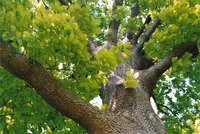
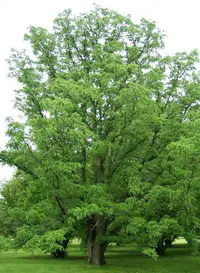
Hungarian oak (Quercus frainetto) is a large, long-lived deciduous tree valued for its broad crown and deeply lobed, handsome foliage. It forms a strong, architectural presence in landscapes and parks.
This species is native to southeastern Europe, where it grows in mixed woodlands and on well-drained slopes. It prefers full sun, moderately moist but not waterlogged soil, and tolerates a range of soil types if drainage is good.
Its deep roots, slow to moderate growth, and eventual large size mean it suits spacious gardens more than small yards. Gardeners who learn how to care for Hungarian Oak usually find it robust and relatively low-maintenance once established.

Care Difficulty
Moderate Care

Light Preference
Full Sun

Water Requirements
Moderate Water

Temperature Preference
Cold Hardy

Hardiness Zone
5–8

Soil Texture
Sandy, Loamy, Clay

Soil pH
Acidic (5.5–6.5), Slightly acidic (6.5–7.0)

Soil Drainage
Moist but well-drained

Fertilization
Minimal (feed rarely)
Scan your plant to receive care tips personalized for your specific plant
Available on iOS and Android
Quercus frainetto thrives as a full-sun landscape tree when given ample open exposure.
This oak prefers deep, infrequent watering that encourages a strong root system once established.
This hardy oak is suited to temperate climates with cold winters and warm summers.
This species tolerates a wide humidity range and usually does not need special humidity management outdoors.
Quercus frainetto prefers deep, structured mineral soils with reliable drainage and moderate moisture retention.
This species is only suitable for short-term container growing because it develops a large, deep root system and becomes heavy and difficult to manage.
Mature Quercus frainetto in the ground usually needs little supplemental feeding on average garden soils.
Pruning Quercus frainetto focuses on safety, structure, and removal of unhealthy branches rather than frequent shaping.
Quercus frainetto is usually grown in the ground, so focus on careful transplanting of young trees rather than frequent repotting.
Propagation of Quercus frainetto is typically done from seed and is a slow, long-term process for patient growers.
Established Quercus frainetto is cold hardy in much of its range and usually needs minimal winter care in the landscape.

Plant Health Check
Not sure what's wrong with your plant? Check your plant's health inside the app.
This species develops some of the largest and most deeply lobed leaves in the oak genus, often reaching 20–35 cm long, which increases light capture in the bright, open habitats it prefers.
Hungarian oak is naturally associated with dry, calcareous soils over limestone in southeastern Europe, where its root system and leaf structure are adapted to cope with summer drought and high soil pH.
In parts of the Balkans and Hungary it forms characteristic thermophilous oak forests, where its broad crown shapes the canopy structure and supports diverse understory plant and animal communities.

This oak produces exceptionally large acorns on conspicuously long stalks, a combination that helps distinguish it from many related European white oaks and provides a valuable, energy-rich food source for birds and mammals in its native range.
Brown leaves usually result from drought stress, compacted or shallow soil, road salt, or heat and wind scorch. Check soil moisture, mulch the root zone, avoid trunk damage, and reduce salt exposure to support recovery and new growth.
Keep your plants happy and healthy with plant identification, disease detection, and easy care guidance.