Wind-firm training
In the first 2–3 years, lightly stake young plants on windy sites and gradually loosen ties each season so the trunk strengthens without rubbing damage or becoming dependent on the stake.

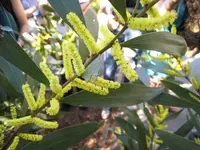
Sydney golden wattle (Acacia longifolia) is an evergreen shrub or small tree known for its bright yellow, bottlebrush-like flower spikes and slender, leathery foliage. It often forms dense, bushy screens in gardens and landscapes.
This species is native to coastal southeastern Australia, where it grows in sandy soils and tolerates salt-laden winds. In suitable climates it is fast-growing and generally hardy, which makes it useful for hedging and erosion control.
Acacia longifolia prefers full sun, well-drained soil, and moderate moisture, and it can cope with dry periods once established. These traits make it relatively straightforward to care for Sydney golden wattle in mild, frost-free regions.

Care Difficulty
Moderate Care

Light Preference
Full Sun

Water Requirements
Low Water

Temperature Preference
Warm Climate

Hardiness Zone
9–11

Soil Texture
Sandy, Loamy, Rocky

Soil pH
Acidic (5.5–6.5), Slightly acidic (6.5–7.0)

Soil Drainage
Well-drained

Fertilization
Minimal (feed rarely)
Scan your plant to receive care tips personalized for your specific plant
Available on iOS and Android
Acacia longifolia prefers bright, open conditions that mimic coastal or woodland edges.
This species is drought-tolerant once established and prefers infrequent, deeper watering.
This plant thrives in mild, frost-free to light-frost climates typical of warm temperate coasts.
This species tolerates a wide humidity range and rarely needs special humidity management indoors or outdoors.
Acacia longifolia prefers lean, sandy, sharply drained soil that does not stay wet.
This species can be grown in containers, especially when kept smaller than its outdoor size.
Acacia longifolia is adapted to low‑nutrient soils and usually needs only light feeding in cultivation.
Pruning Acacia longifolia helps maintain a stable structure and supports flowering on younger growth.
This species is usually grown in the ground; focus on careful transplanting of young plants rather than frequent repotting.
Acacia longifolia is most often propagated from seed, which is straightforward if seed dormancy is broken first.
In mild coastal and Mediterranean climates, Acacia longifolia usually needs minimal winter care once established.

Plant Health Check
Not sure what's wrong with your plant? Check your plant's health inside the app.
This species forms root nodules with symbiotic bacteria that convert atmospheric nitrogen into a usable form, allowing it to colonize poor, sandy soils along coasts and dunes.
Its seeds have a hard, water-resistant coat and often require heat or mechanical damage to germinate, an adaptation to fire-prone habitats in its native range in southeastern Australia.
The long, cylindrical yellow flower spikes produce abundant pollen that supports a wide range of insects, especially in late winter and early spring when few other nectar and pollen sources are available.

Outside its native range, this species is a legally declared invasive plant in several Mediterranean-climate regions, where its fast growth, prolific seed production, and dense stands can displace local vegetation and alter fire regimes.
This species can self-seed freely and spread, especially in mild, coastal climates. In some regions it is considered invasive. Regular seed pod removal and monitoring seedlings are important parts of responsible Acacia longifolia plant care outdoors.
Keep your plants happy and healthy with plant identification, disease detection, and easy care guidance.