Wind-hardening young plants
Expose young plants gradually to stronger wind over 2–3 weeks by moving containers or opening windbreaks, which encourages sturdier stems and reduces the risk of windthrow as the tree matures.

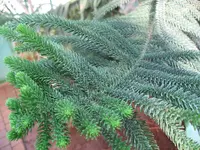
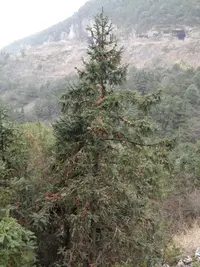
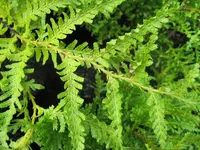
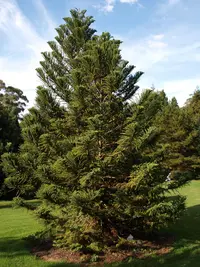
Totara (Podocarpus totara) is an evergreen coniferous tree native to New Zealand, valued for its dense, durable wood and long lifespan. In nature it forms tall, straight trunks with fibrous bark and fine, needle-like foliage. Garden forms are often smaller and slower-growing, making them suitable for larger landscapes, windbreaks, or specimen trees. This species tolerates cool climates, wind, and a range of soils, which generally makes it robust once established. It prefers full sun to light shade, moderate moisture, and well-drained soil. Understanding how to care for totara starts with providing stable conditions and avoiding waterlogged sites.

Care Difficulty
Moderate Care

Light Preference
Full Sun

Water Requirements
Moderate Water

Temperature Preference
Cold Hardy

Hardiness Zone
7–10

Soil Texture
Sandy, Loamy, Clay

Soil pH
Slightly acidic (6.5–7.0), Neutral (7.0)

Soil Drainage
Well-drained

Fertilization
Minimal (feed rarely)
Scan your plant to receive care tips personalized for your specific plant
Available on iOS and Android
This conifer prefers steady light levels suited to a cool-temperate climate.
This species prefers evenly moist but well-drained soil once established.
This hardy tree is adapted to mild, maritime conditions with cool winters.
This conifer tolerates a wide humidity range and usually does not need special humidity management indoors or outdoors.
Podocarpus totara prefers well-structured, free-draining soil that stays slightly moist but not waterlogged.
This species can adapt well to container growing when given a stable, deep pot and controlled moisture.
This native conifer grows slowly and usually needs only modest feeding in cultivation.
Podocarpus totara responds well to light, targeted pruning to maintain structure and health.
This species is usually grown in the ground, with transplanting more relevant than frequent repotting.
Propagation of Podocarpus totara is usually done from semi-ripe cuttings or seeds under controlled conditions.
Mature plants are generally cold hardy in suitable climates and need limited winter attention.

Plant Health Check
Not sure what's wrong with your plant? Check your plant's health inside the app.
Totara is a long‑lived conifer found naturally only in New Zealand, where it is a dominant tree of lowland to montane forests on both main islands.
The heartwood is naturally resistant to decay and insects, which made it a preferred material for traditional house posts, canoes, and later for railway sleepers and fence posts.
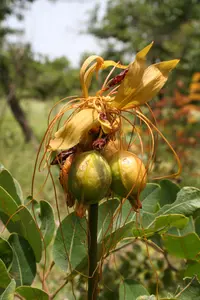
Its fleshy red arils, which are modified seed coverings, are an important food source for native birds such as kereru, which in turn disperse the seeds across the forest.

Māori valued totara so highly for carving and waka (canoe) building that specific trees were traditionally selected and sometimes observed for many years before being felled, reflecting both the tree’s exceptional timber properties and its cultural significance.
Growth is slow to moderate. Young plants often add 10–20 cm per year, sometimes less in poor conditions. In good garden sites with adequate moisture and nutrients, annual growth can reach 20–30 cm on established trees.
Keep your plants happy and healthy with plant identification, disease detection, and easy care guidance.