Encourage Strong Structure
During the first 3–5 years, selectively remove weak, crossing, or steeply upright interior branches in late winter to build a strong, open framework that resists storm damage and supports the mature canopy.

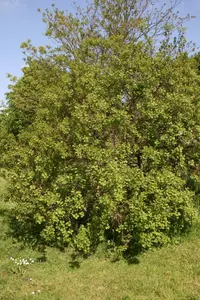
American smoketree, Cotinus obovatus, is a deciduous shrub or small tree known for its hazy, smoke-like flower clusters and strong fall color. It typically forms a rounded crown with open branching and can develop a rugged, picturesque silhouette as it matures.
This species is native to rocky hillsides and limestone bluffs in the south-central United States, so it is naturally adapted to poor, well-drained soils and dry conditions. Its drought tolerance and low nutrient needs make it relatively easy to grow once established, which helps when learning how to care for American smoketree.
It prefers full sun, moderate moisture, and soil that drains freely, and it is usually grown as an ornamental feature tree or in mixed shrub borders.

Care Difficulty
Easy Care

Light Preference
Full Sun

Water Requirements
Low Water

Temperature Preference
Cold Hardy

Hardiness Zone
4–9

Soil Texture
Sandy, Loamy, Clay

Soil pH
Slightly acidic (6.5–7.0), Slightly alkaline (7.0–7.5)

Soil Drainage
Well-drained

Fertilization
Minimal (feed rarely)
Scan your plant to receive care tips personalized for your specific plant
Available on iOS and Android
This deciduous shrub or small tree develops best color and form with ample direct sun exposure.
This species is drought-tolerant once established and prefers infrequent, deeper watering.
This hardy North American shrub tolerates a wide temperature range once established.
Humidity is rarely a concern for Cotinus obovatus in typical outdoor conditions.
Cotinus obovatus prefers moderately fertile, well-structured mineral soil that drains freely.
This species can be grown in large outdoor containers for several years but remains best suited to in-ground planting.
This native tree usually needs minimal feeding in average garden soil, but light fertilization can support establishment and growth.
Cotinus obovatus responds well to thoughtful pruning that manages size while preserving its natural form and flowering.
This species is usually grown in the ground; focus on careful transplanting rather than frequent container repotting.
New Cotinus obovatus plants are most often produced from seeds or semi-hardwood cuttings under controlled conditions.
Mature American smoketree is cold hardy in most temperate US regions and generally needs little winter attention once established.

Plant Health Check
Not sure what's wrong with your plant? Check your plant's health inside the app.
This species is native only to the south-central United States, occurring in scattered populations from Tennessee and Kentucky southward to Texas, often on dry, rocky limestone slopes and uplands.
It is especially valued for its long-lasting fall display, where leaves can turn vivid shades of orange, red, and purple, often more intense and extended than many related ornamental shrubs and trees.
After flowering, its spent flower stalks develop a mass of elongated, hairlike structures that create the characteristic hazy, smoke-like effect around the canopy, which is typically more open and tree-like than in the common European smokebush.
Genetic and field studies indicate that wild populations of this species are relatively uncommon and locally restricted compared to other smoke trees, leading some botanists and conservation agencies to monitor it closely as a species of conservation interest in parts of its native range.
Poor flowering usually comes from insufficient light, heavy or poorly drained soil, or pruning at the wrong time, which removes flower buds. Mature trees also bloom more reliably than young ones. Avoid high-nitrogen fertilizers that push foliage instead of flowers.
Keep your plants happy and healthy with plant identification, disease detection, and easy care guidance.