Container size strategy
Use a deep, slightly undersized pot rather than a very large one to encourage a compact, swollen trunk and reduce the risk of prolonged wet soil around the roots.

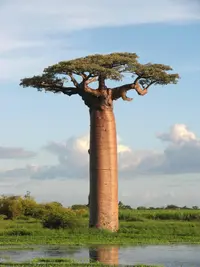
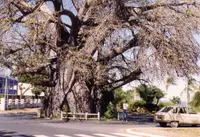
Grandidier’s baobab, Adansonia grandidieri, is a long-lived tree species best known for its tall, bottle-shaped trunk and sparse crown of branches. It is native to the dry, western regions of Madagascar, where it grows in open, sunny landscapes with a pronounced dry season.
The species stores water in its massive trunk and has small, seasonal leaves, which makes it naturally drought tolerant and slow growing. In cultivation it prefers bright light, warm temperatures, and sharply draining, sandy or gritty soil.
Its unusual form and slow growth habit appeal to collectors, but seedlings and young plants can be sensitive to overwatering and poor drainage, so it helps to learn how to care for Grandidier’s baobab before planting.

Care Difficulty
Moderate Care

Light Preference
Full Sun

Water Requirements
Low Water

Temperature Preference
Tropical / Frost Sensitive

Hardiness Zone
11–12

Soil Texture
Sandy, Loamy, Rocky

Soil pH
Slightly acidic (6.5–7.0), Neutral (7.0)

Soil Drainage
Well-drained

Fertilization
Minimal (feed rarely)
Scan your plant to receive care tips personalized for your specific plant
Available on iOS and Android
This species needs strong, direct light to form a healthy trunk and canopy.
This drought-adapted tree needs infrequent but thorough watering in well-drained soil.
This species prefers warm to hot conditions with no frost exposure.
This species tolerates a wide humidity range and rarely needs special humidity management indoors.
This species needs very fast-draining, mineral-rich soil to protect its caudex and roots from rot.
This species can be grown in containers, especially during its juvenile stages or in cool climates.
This species grows on poor soils and needs only modest feeding in cultivation.
Adansonia grandidieri needs minimal pruning, mainly to maintain structure and remove problem wood.
Container or young landscape plants benefit from careful transplanting to protect the sensitive taproot.
Most Adansonia grandidieri plants are raised from seed, which suits its strong taproot habit.
This tropical tree is highly frost sensitive and needs strict protection in cooler climates.

Plant Health Check
Not sure what's wrong with your plant? Check your plant's health inside the app.
This species is naturally restricted to the dry, seasonal forests and scrub of southwestern Madagascar, where it dominates flat, limestone-rich plains and low plateaus rather than wetter or mountainous habitats.
It is listed as Endangered on the IUCN Red List because its remaining populations are fragmented and declining due to agricultural expansion, charcoal production, and loss of its already narrow native habitat.
The large, dry-season fruits and fibrous bark provide food and shelter for lemurs, fruit bats, and many bird species, making this baobab a structural keystone in its local ecosystems.

Single individuals of this baobab can live for many centuries, forming massive, bottle-shaped trunks that store large amounts of water and create the iconic avenue-like landscapes seen along Madagascar’s Avenue of the Baobabs.
Growth is slow, especially in containers. Seedlings may add 5–15 cm per year under warm, bright, dry conditions. In cooler climates or small pots, annual growth can be much slower, which is normal for this species.
Keep your plants happy and healthy with plant identification, disease detection, and easy care guidance.