Chamaedorea pinnatifrons Care

Chamaedorea pinnatifrons

About Chamaedorea pinnatifrons

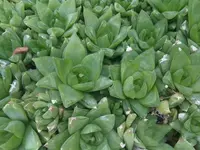
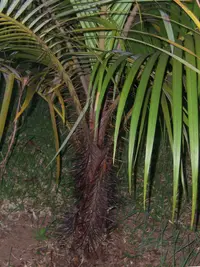
Chamaedorea pinnatifrons is a clustering understory palm native to humid forests of Central and South America. It forms multiple slender canes with soft, arching, feather-like fronds. In habitat it often grows in shaded valleys, which makes it naturally adapted to lower light and sheltered conditions. The foliage has a fine texture that gives a light, elegant look rather than a bold, architectural presence. This species is generally moderate in difficulty, as it prefers stable warmth, consistent moisture, and good air circulation. It dislikes extreme dryness, waterlogging, and sudden temperature swings. Understanding how to care for Chamaedorea pinnatifrons starts with providing dappled light, a well-draining but moisture-retentive soil mix, and protection from harsh sun and drafts.

Main Plant Requirements

Care Difficulty

Moderate Care

Light Preference

Partial Shade

Water Requirements

Moderate Water

Temperature Preference

Tropical / Frost Sensitive

Hardiness Zone

10–11

Soil Texture

Loamy, Peaty, Organic-rich

Soil pH

Acidic (5.5–6.5), Slightly acidic (6.5–7.0)

Soil Drainage

Moist but well-drained

Fertilization

Light (every 4–6 weeks)

Get Personalized Care Plan

Scan your plant to receive care tips personalized for your specific plant

Available on iOS and Android

How to Care for the Chamaedorea pinnatifrons

This palm prefers bright but gentle light that mimics filtered forest conditions.

  • Provide 3–5 hours of soft, filtered light daily, such as dappled shade under taller plants or sheer-curtained windows for Chamaedorea pinnatifrons.
  • Allow morning sun in cooler climates, but protect from strong midday and afternoon sun, which can scorch fronds and cause yellow or brown patches.
  • In deeper shade growth becomes sparse and stretched; move gradually to a brighter, indirect spot, especially in late autumn and winter as outdoor light levels drop.

This species prefers evenly moist but never waterlogged soil.

  • Water when the top 2–4 cm of soil feels dry, using thorough soaking that allows excess to drain away, then empty any standing water from trays or saucers.
  • In spring and summer, expect faster drying and more frequent watering; in autumn and winter, extend intervals as growth slows and evaporation decreases.
  • Watch for overwatering signs such as limp, yellowing fronds and sour-smelling soil, and underwatering signs like crisp brown leaf tips and very light, shrinking soil.

This palm grows best in consistently warm, frost-free conditions.

  • Ideal active growth occurs at 65–80°F (18–27°C), with stable day–night temperatures and moderate humidity enhancing leaf quality.
  • Avoid exposure below 45°F (7°C); brief drops to 40°F (4°C) may be survived but can cause leaf damage, especially in wind or wet conditions.
  • In hot spells above 90°F (32°C), increase shade and airflow and check soil moisture more often, as heat stress and rapid drying can lead to leaf tip burn.

This species benefits from moderate, stable humidity but tolerates typical indoor levels.

  • Aim for 40–60% humidity to reduce leaflet tip browning and keep growth steady.
  • Tolerates short periods of drier air, but persistent humidity below 30% leads to crispy tips and dull, yellowing leaf edges.
  • Increase humidity with a wide pebble tray under the pot, grouping plants, or a small humidifier placed nearby, not blowing directly on foliage.

Chamaedorea pinnatifrons prefers a loose, airy, organic-rich mix that drains freely yet holds some moisture.

  • Use a peat- or coco-based mix amended with perlite and fine orchid bark to create a fibrous, well-structured medium.
  • Ensure fast drainage; water should flow through in seconds, with the mix feeling moist but never waterlogged after watering.
  • Aim for slightly acidic to neutral pH, roughly 6.0–7.0, to support nutrient availability and healthy root function.
  • Avoid compacted, clay-heavy, or pure garden soil, and break up any clods so roots can access oxygen and spread evenly.

This palm is well suited to container growing for patios, shaded balconies, and interiors.

  • Choose a pot slightly wider than the root mass but deeper than it is wide to support the upright, clustered stems without crowding roots.
  • Select a heavier material such as ceramic or thick terracotta to prevent tipping as the foliage becomes taller and more top-heavy.
  • Use a container with multiple drainage holes so excess water exits quickly, then empty any outer cachepot or saucer within 10–15 minutes to avoid stagnant moisture at the base.

This palm responds well to moderate feeding during active growth but does not need heavy fertilization.

  • Apply a balanced liquid fertilizer (around 10-10-10 or 20-20-20) at 1/2 strength every 4–6 weeks in spring and summer.
  • Use a slow-release palm or general fertilizer in early spring if growing Chamaedorea pinnatifrons in large containers or nutrient-poor soil.
  • Skip feeding in late fall and winter when growth slows, except for very light compost topdressing if soil is poor.
  • Water before and after applying fertilizer to limit root burn and support even nutrient uptake.

Pruning focuses on removing declined foliage and maintaining a clean, natural crown structure.

  • Time most pruning for late winter to early spring, with light touch-ups at any time to remove obviously dead fronds.
  • Cut completely brown, yellow, or diseased fronds at the base using clean, sharp bypass pruners.
  • Remove crossing, rubbing, or severely storm-damaged fronds to reduce mechanical stress and pest entry points.
  • Avoid cutting green, healthy fronds, since this can weaken the palm and reduce its ability to photosynthesize and flower.

Container-grown plants appreciate occasional repotting, while in-ground palms dislike frequent transplant disturbance.

  • Look for roots circling the pot, pushing through drainage holes, or slowed growth as cues that a larger container is needed.
  • Plan repotting for late spring to early summer, about every 3–4 years for healthy Chamaedorea pinnatifrons in containers.
  • Shift only 1 pot size up, keeping the root ball intact and at the same soil depth to reduce shock.
  • Water thoroughly after moving, shade from intense sun for 1–2 weeks, and avoid fertilizer for about 4 weeks to limit root stress.

Propagation is most often done from seed, which requires patience and stable warm conditions.

  • Collect fresh, ripe seeds, clean off pulp, and sow in spring in a sterile, well-draining mix kept at 75–85°F.
  • Maintain even moisture and high humidity; germination can take several weeks to months for Chamaedorea pinnatifrons.
  • Provide bright, indirect light and gentle air movement to discourage fungal problems in seedlings.
  • Pot on young plants carefully once roots fill small cells, disturbing the root system as little as possible.

Cold sensitivity means this palm benefits from thoughtful winter protection in many climates.

  • Treat it as hardy only in mild, essentially frost-free zones; sustained temperatures below about 28–30°F can damage foliage.
  • Mulch the root zone with 5–8 cm of bark or leaf mold, keeping material slightly away from the trunk.
  • For in-ground plants, wrap the lower trunk and central crown with breathable frost cloth during freezing nights.
  • Move container plants indoors or into a sheltered greenhouse before the first hard frost, providing bright, indirect light.

Care Tips

Multi-stem management

Remove weak, yellowing, or badly crowded stems at the base with clean, sharp pruners to maintain good airflow through the clump and reduce fungal problems as the plant matures.

Understory positioning

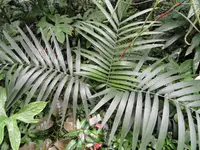
If grown outdoors in suitable climates, plant this species beneath taller shrubs or trees to mimic its natural forest understory, which helps protect fronds from wind scorch and heavy rain damage.

Container stability

Use a wide, heavy container or add a layer of coarse gravel at the bottom (below drainage holes) to keep tall, multi-stem plants from tipping as they gain height and leaf mass.

Pest-monitoring routine

Inspect the undersides of leaflets and the narrow rachis (leaf midrib) every 2–3 weeks with a hand lens so that scale, spider mites, and mealybugs are caught early and treated before colonies spread through the clump.

Gradual acclimation

When moving a plant between indoor and outdoor locations, increase light and wind exposure over 7–10 days to avoid frond bleaching and mechanical damage, which is especially important when growing Chamaedorea pinnatifrons in containers.

Common Pests and Diseases

Spider mites

This pest thrives on Chamaedorea foliage in warm, dry air and causes fine stippling, pale fronds, and delicate webbing along leaf undersides and stems.

Solution

Rinse fronds thoroughly with a strong but controlled stream of water, then wipe leaf undersides; increase humidity to 50–60% and avoid hot, dry drafts. For persistent infestations, apply insecticidal soap or a light horticultural oil to both sides of the leaves every 7–10 days until new growth appears clean, as part of general Chamaedorea pinnatifrons care instructions.

Palm aphids

These insects feed on tender frond bases and along leaf midribs, secreting sticky honeydew that can attract sooty mold and ants.

Solution

Prune heavily infested fronds and wash remaining foliage with lukewarm water and mild insecticidal soap, making sure to reach leaflet bases and midribs. Repeat treatments at 7–10 day intervals and reduce excess nitrogen fertilization, which can encourage soft, aphid-prone growth.

Scale insects

This pest appears as small, tan to brown bumps on stems and leaf ribs, drawing sap and causing yellowing, weak fronds over time.

Solution

Gently scrape or wipe visible scale with a cotton pad dipped in isopropyl alcohol, then follow with an application of horticultural oil to coat remaining juveniles. Inspect regularly and treat new patches early, since settled adults are well protected by their waxy covers.

Leaf spot

This disease causes small water-soaked lesions that expand into brown or tan spots, sometimes with yellow halos, mainly on older fronds in humid, crowded conditions.

Solution

Remove and discard affected fronds, then improve air circulation around the plant and avoid wetting the foliage when watering. If spotting progresses, use a copper-based fungicide labeled for palms, applied according to the label at 10–14 day intervals until new leaves emerge clean.

Pink rot

This disease, often caused by Nalanthamala or Gliocladium fungi, leads to soft, collapsing tissues at the base of young fronds, sometimes with salmon-pink spore masses on decaying areas.

Solution

Cut out all soft or discolored tissue back to firm, healthy material and discard infected debris, keeping tools disinfected with 70% alcohol between cuts. Reduce overhead watering, keep the crown dry, and maintain moderate, not excessive, moisture in a free-draining mix; in severe cases, apply a systemic fungicide specifically labeled for palm crown and stem rots.

Interesting Facts

Understory rain-forest palm

This species naturally grows in the shaded understory of humid tropical forests from southern Mexico to Panama, often forming scattered colonies along streams and on moist slopes.

Specialized beetle pollination

Its small, clustered flowers are primarily pollinated by tiny nitidulid beetles that visit the inflorescences to feed and reproduce, an interaction documented in several Neotropical Chamaedorea species including this one.

Important forest food source

The fleshy orange fruits are eaten by birds and small mammals, which disperse the seeds through their droppings and help maintain the genetic connectivity of wild populations.

Botan icon

Did you know?

In parts of its native range, the young leaves of this species are harvested and sold as decorative greenery for religious and civic celebrations, making it a minor but locally important non-timber forest product that links traditional use with small-scale rural income.

FAQs about Chamaedorea pinnatifrons

This palm has a slow to moderate growth rate. In suitable warm conditions, it may add 15–30 cm of height per year, slowing noticeably in cooler climates, low light, cramped containers, or poor nutrition.

Grow Healthy Plants with Botan Care

Keep your plants happy and healthy with plant identification, disease detection, and easy care guidance.

Botan plant care app — identify plants on mobile

Explore More Plants