Flood-tolerant siting
Position plants where seasonal shallow flooding or water pooling is acceptable, as this palm tolerates prolonged wet roots better than most and will outcompete less flood-adapted species there.

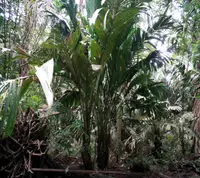
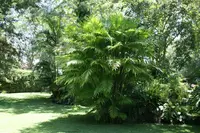
Troolie palm (Manicaria saccifera) is a large, water-loving palm native to lowland swamps and river margins in northern South America and parts of Central America. It forms massive, simple leaves that can be among the largest of any palm, creating a bold, architectural look. In nature it often grows in dense, wet stands with a stout trunk hidden by old leaf bases and fibrous material. This species is challenging outside its natural habitat because it needs constant warmth, high humidity, and saturated, organic soils. It suits only very specialized collections, and most growers will find it demanding to care for Troolie Palm over the long term.

Care Difficulty
Hard Care

Light Preference
Partial Shade

Water Requirements
Aquatic

Temperature Preference
Tropical / Frost Sensitive

Hardiness Zone
12–13

Soil Texture
Sandy, Loamy, Organic-rich

Soil pH
Acidic (5.5–6.5)

Soil Drainage
Waterlogged tolerant

Fertilization
Minimal (feed rarely)
Scan your plant to receive care tips personalized for your specific plant
Available on iOS and Android
This large, swamp-dwelling palm prefers bright, filtered light similar to a humid tropical forest edge.
This palm is naturally adapted to waterlogged tropical swamps and needs consistently moist to wet conditions.
This species requires a stable, hot, frost-free climate to thrive and develop full-sized fronds.
This palm needs high, consistent humidity to grow well in cultivation.
Provide consistently moist, organic-rich soil that mimics waterlogged tropical forest floors.
This species is only moderately suitable for container growing due to its eventual size and strong root system.
Manicaria saccifera grows slowly and needs only light, careful feeding in cultivation.
Manicaria saccifera needs minimal pruning, focused on safety and sanitation rather than shaping.
This palm is usually grown in the ground, and any transplanting of Manicaria saccifera should be rare and carefully planned.
Propagation of Manicaria saccifera is specialized and mainly done from seeds rather than by home growers.
Troolie Palm is strictly tropical and lacks frost tolerance, so winter care focuses on avoiding chilling and freezing injury.

Plant Health Check
Not sure what's wrong with your plant? Check your plant's health inside the app.
This species produces some of the largest leaves of any palm, with individual fronds reaching over 8 m in length and forming huge, undivided leaf blades that can resemble a giant roof sheet in the forest understory.
It is strongly associated with permanently waterlogged, lowland swamp forests in northern South America and Central America, where its dense stands can dominate peat-rich, flooded habitats.
Indigenous and local communities have long harvested its very large, durable leaves as a primary material for thatching roofs, taking advantage of their toughness and resistance to decay in humid climates.
The fruits of this palm are enclosed in a thick, fibrous, almost armor-like outer layer, an adaptation that helps protect the seeds from predation and physical damage in dynamic, flood-prone swamp environments.
This palm grows slowly, often only 10–20 cm of trunk height per year in suitable tropical conditions. It may take 15–25 years or more to form a substantial trunk and full crown.
Keep your plants happy and healthy with plant identification, disease detection, and easy care guidance.