Rhizome Containment
Plant licorice in a large, bottomless container sunk into the ground to keep its spreading rhizomes from invading nearby beds while still allowing deep root growth.

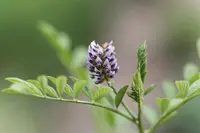
Cultivated licorice, Glycyrrhiza glabra, is a hardy herbaceous perennial grown mainly for its sweet, aromatic roots. It forms clumps of upright stems with pinnate leaves and small pale flowers, followed by short pods.
In nature it occurs from the Mediterranean region through western and central Asia, usually in sunny, open habitats with deep, loose soils. The plant develops an extensive root and rhizome system, so it needs space and patience, as roots take several years to mature.
It is generally not difficult but requires full sun, consistent moisture, and well-drained, fertile soil. Understanding these basic needs provides a solid starting point on how to care for cultivated licorice.

Care Difficulty
Moderate Care

Light Preference
Full Sun

Water Requirements
Moderate Water

Temperature Preference
Cold Hardy

Hardiness Zone
6–9

Soil Texture
Sandy, Loamy, Organic-rich

Soil pH
Slightly acidic (6.5–7.0), Neutral (7.0)

Soil Drainage
Moist but well-drained

Fertilization
Minimal (feed rarely)
Scan your plant to receive care tips personalized for your specific plant
Available on iOS and Android
This sun-loving perennial thrives in open, bright conditions for strong growth and root production.
This deep-rooted species prefers steady moisture but does not tolerate prolonged waterlogging.
This hardy perennial tolerates a wide temperature range but performs best in moderate warmth.
Humidity is not a critical factor for Glycyrrhiza glabra, which adapts well to typical outdoor air levels.
This species prefers deep, loose, well-drained soil that allows its long roots to extend freely.
This plant can be grown in containers but needs unusually deep, stable pots to accommodate its long roots and spreading growth habit.
Glycyrrhiza glabra benefits from modest, balanced feeding in reasonably fertile soil.
Pruning Glycyrrhiza glabra is mainly done to maintain plant health and manage size.
Transplanting this deep-rooted perennial focuses on minimizing disturbance to its spreading rhizomes.
New plants are typically raised from rhizome divisions or seeds of Glycyrrhiza glabra.
This hardy perennial usually needs minimal winter care in temperate climates.

Plant Health Check
Not sure what's wrong with your plant? Check your plant's health inside the app.
The main sweet compound in its roots, glycyrrhizin, tastes roughly 30–50 times sweeter than table sugar but is chemically a saponin, not a sugar.
This species forms root nodules with Rhizobium bacteria that convert atmospheric nitrogen into forms the plant can use, which can gradually enrich poor soils over time.
Dried roots of this plant are recorded in early medical texts from ancient Mesopotamia, Egypt, Greece, and China, where they were traded as a valued flavoring and herbal ingredient.

Chemical analysis of its roots shows more than 300 distinct compounds, which has made this species a long-standing model plant in research on natural sweeteners, stress tolerance, and plant–microbe interactions.
This species spreads by deep, running rhizomes and can become wide-forming over time. In open ground it may wander several feet from the original planting, so use root barriers or containers if garden space is limited.
Keep your plants happy and healthy with plant identification, disease detection, and easy care guidance.