Achillea salicifolia Care

Achillea salicifolia

About Achillea salicifolia

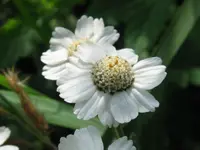
Achillea salicifolia is a herbaceous perennial from the yarrow group, forming clumps of finely divided, fern-like foliage. It produces flat-topped clusters of small, usually white to pale-colored flowers on upright stems.

The species is native to parts of Europe and western Asia, where it grows in open meadows, grasslands, and light woodland edges. Its hardy nature, tolerance of poor soils, and moderate drought resistance make it relatively straightforward for gardeners who want to care for Achillea salicifolia.

This plant prefers sunny positions, well-drained soil, and conditions that are not constantly wet, which helps maintain a healthy, compact growth habit.

Main Plant Requirements

Care Difficulty

Easy Care

Light Preference

Full Sun

Water Requirements

Low Water

Temperature Preference

Cold Hardy

Hardiness Zone

3–8

Soil Texture

Sandy, Loamy, Rocky

Soil pH

Slightly acidic (6.5–7.0), Slightly alkaline (7.0–7.5)

Soil Drainage

Well-drained

Fertilization

Minimal (feed rarely)

Get Personalized Care Plan

Scan your plant to receive care tips personalized for your specific plant

Available on iOS and Android

How to Care for the Achillea salicifolia

This sun-loving perennial thrives in open, bright positions with long daily exposure.

  • Provide 6–8 hours of direct sun daily; Achillea salicifolia flowers best in full sun sites with no afternoon shade in cooler climates.
  • In hotter regions, give full morning sun and light afternoon shade to limit leaf scorch and faded flower color during peak summer heat.
  • Avoid deep or continuous shade; stems become weak and floppy, flowering is reduced, and plants are more prone to mildew in damp, low-light spots.

This species prefers dry to moderately moist soil and is highly drought tolerant once established.

  • Allow the top 3–5 cm of soil to dry before watering; in most garden soils this means waiting until foliage just begins to lose slight turgor rather than following a fixed schedule.
  • Ensure sharply drained soil with sand or grit so water never pools around the crown, which reduces the risk of root rot and winter losses.
  • During prolonged hot, dry periods, give a deep soak rather than frequent light splashes; pale, drooping foliage indicates underwatering, while yellowing, limp stems suggest overwatering.

This hardy perennial tolerates a wide temperature range typical of temperate outdoor gardens.

  • Best growth and flowering occur at 65–80°F (18–27°C), especially in sunny, open positions with free-draining soil during the main growing season.
  • Mature plants survive winter cold down to about -20°F (-29°C) in well-drained ground, with dormant crowns protected naturally by snow or a light mulch layer.
  • In hot spells above 90°F (32°C), flowering may slow; provide soil moisture and, in very exposed sites, light afternoon shade to reduce heat stress and flower scorch.

This species is adapted to dry, open habitats and does not have special humidity requirements.

Achillea salicifolia prefers lean, well-drained soil that mimics dry meadow or rocky slope conditions.

  • Use a sandy or gravelly loam with low to moderate organic matter to prevent waterlogging.
  • Aim for slightly alkaline to neutral pH around 6.8–7.8, avoiding strongly acidic mixes.
  • Blend coarse sand or grit with standard garden soil and a small amount of compost to improve drainage and structure.
  • Avoid heavy clay, compacted sites, or rich, wet mixes that encourage weak, floppy growth and root problems.

This species can grow reliably in containers if drainage and stability are managed carefully.

  • Choose a wide, relatively shallow pot to accommodate its spreading root system and reduce tipping in windy spots.
  • Select a heavy material such as ceramic or thick terracotta to stabilize the plant’s upright flowering stems.
  • Fill the container with a very free-draining mix containing coarse sand or grit so excess water moves away from the crown quickly.

This drought-tolerant perennial needs only light feeding on poor soils to maintain steady growth and flowering.

  • Apply a thin layer of garden compost or well-rotted manure around plants in early spring, avoiding direct contact with stems.
  • On very lean soils, use a balanced slow-release fertilizer (for example 10-10-10) at half the label rate once in spring.
  • Avoid additional feeding during mid-summer onward, as excess nutrients can cause floppy growth and fewer flowers.
  • Do not fertilize Achillea salicifolia in winter or dormancy, since inactive roots cannot use nutrients effectively.

Thoughtful pruning keeps Achillea salicifolia compact, long-blooming, and healthy.

  • In early summer, deadhead spent flower clusters with clean hand pruners to extend blooming and maintain a tidy shape.
  • After the main flowering flush, cut stems back by about one-third to encourage fresh foliage and possible repeat flowering.
  • In late autumn or very early spring, remove dead, damaged, or weak stems down to the basal growth.
  • Thin crowded shoots at the base to improve air circulation and reduce the risk of fungal disease.

This species is usually grown in garden beds, so focus on occasional division and transplanting rather than frequent repotting.

  • Transplant or divide clumps every 3–4 years in early spring or early autumn to prevent overcrowding and decline in flowering.
  • Look for signs such as bare, woody centers, reduced vigor, or stems leaning outward as indicators that division is needed.
  • Lift clumps carefully with a fork, tease or cut into smaller sections with healthy roots, and replant at the same depth in well-drained soil.
  • Water thoroughly after transplanting, then keep soil lightly moist for 1–2 weeks to limit root stress while new growth establishes.

Gardeners commonly multiply Achillea salicifolia by division, softwood cuttings, or seeds.

  • Divide established clumps in early spring or early autumn, replanting vigorous outer sections into well-drained soil.
  • Take 7–10 cm softwood stem cuttings in late spring, remove lower leaves, and root in a free-draining, slightly moist mix under bright, indirect light.
  • Sow seeds in late winter to early spring on the surface of a light seed mix, as they need light to germinate at 65–70°F.
  • Provide gentle bottom warmth and good air movement to reduce damping-off and improve seedling survival.

This hardy perennial usually needs minimal winter care in most temperate climates.

  • Plants tolerate typical frosts when grown in well-drained soil, but prolonged waterlogging increases winter loss.
  • In colder regions, apply a light mulch layer around the root zone after the ground cools, keeping mulch away from crowns.
  • Container-grown plants are more exposed; move pots to a sheltered, unheated area to reduce freeze–thaw stress.

Care Tips

Staggered division

Divide clumps every 3–4 years in early spring, replanting only the most vigorous outer sections to maintain flowering quality and prevent the center from becoming woody and sparse.

Timely deadheading

Shear off spent flower stems just above the foliage as soon as the main flush fades to encourage a lighter repeat bloom and keep the plant compact rather than floppy.

Support in windy sites

In exposed gardens, insert low, discreet plant supports or a pea-grid ring in early spring so stems grow through the framework and are less likely to lodge in strong wind or heavy rain.

Drought training

In the first growing season, water deeply but infrequently to encourage a deep root system that will make the plant significantly more drought-tolerant in subsequent years.

Targeted pest monitoring

Inspect foliage and flower stems every 1–2 weeks during warm weather for aphids and spittlebugs, and if found, dislodge them promptly with a firm jet of water rather than resorting immediately to insecticides when caring for Achillea salicifolia.

Common Pests and Diseases

Powdery mildew

This disease causes a white, powdery coating on leaves, especially in warm, dry conditions with poor air movement. Symptoms include distorted foliage and reduced flowering if it becomes severe.

Solution

Improve air circulation by spacing clumps and thinning crowded growth, and avoid overhead watering late in the day. Remove heavily affected stems, water at soil level, and if needed apply a sulfur or potassium bicarbonate fungicide labeled for ornamentals as part of broader Achillea salicifolia care instructions.

Botrytis blight

This disease leads to soft, brown, water-soaked spots on leaves and flower stalks, which may become covered with gray, fuzzy mold in cool, damp weather. Symptoms include collapse of individual stems or flower heads.

Solution

Remove and discard all affected flower heads and stems, and keep spent blooms deadheaded to reduce soft tissue that supports infection. Improve drainage and airflow, avoid wetting foliage, and in persistent cases use a labeled fungicide during prolonged cool, wet periods.

Aphids

These insects feed on young stems and flower stalks, causing curling or distortion and leaving sticky honeydew that can attract sooty mold. This pest tends to cluster on new growth and under flower buds, reducing vigor and bloom quality.

Solution

Spray colonies off with a firm jet of water, then inspect regularly and repeat as needed. If infestations persist, apply insecticidal soap or a light horticultural oil, directing coverage to shoot tips and the undersides of stems while avoiding open blooms when pollinators are active.

Spittlebugs

These insects create frothy, white spittle masses on stems and in leaf axils in spring and early summer. This pest rarely kills plants but can stunt growth and reduce ornamental quality if populations are high.

Solution

Wash off the spittle masses with a strong stream of water, focusing on stem joints where they hide. In severe cases, prune out heavily infested stems and dispose of them, and reduce nearby dense weeds or groundcover that shelter the nymphs.

Leaf spot complex

This disease group causes small brown or purplish spots on leaves that can merge into larger patches in humid, wet conditions. Symptoms include premature yellowing and shedding of lower foliage, making clumps look thin at the base.

Solution

Remove and discard spotted lower leaves and any fallen debris around the plant to lower the source of infection. Water at the base in the morning, not on the foliage, and if the problem recurs yearly, consider thinning clumps and rotating to more disease-resistant yarrow species or cultivars in very humid sites.

Interesting Facts

Balkan streamside specialist

Achillea salicifolia is naturally concentrated in the Balkan Peninsula, where it often grows along mountain streams and moist meadows rather than the dry, open habitats typical for many other Achillea species.

Distinct willow-like foliage

The species name salicifolia refers to its leaves, which are longer, narrower, and less finely dissected than those of common yarrow, giving a foliage shape reminiscent of some willow species in outline.

Hybridization within genus

In regions where it overlaps with closely related Achillea taxa, A. salicifolia can form natural hybrids, which has contributed to taxonomic debate and reclassification within this group of yarrows based on both morphology and molecular data.

FAQs about Achillea salicifolia

This species is highly attractive to many pollinators. Flat flower clusters provide easy landing platforms for bees, hoverflies, and butterflies. Planting larger groups increases visibility and nectar availability, supporting beneficial insects throughout the main blooming season.

Grow Healthy Plants with Botan Care

Keep your plants happy and healthy with plant identification, disease detection, and easy care guidance.

Botan plant care app — identify plants on mobile

Explore More Plants