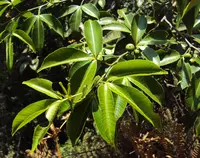
narrowleaf mountainmint Care (Pycnanthemum tenuifolium)

Also known as: common horsemint
narrowleaf mountainmint

About narrowleaf mountainmint

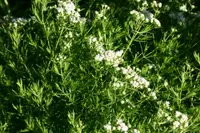
Narrowleaf mountainmint, Pycnanthemum tenuifolium, is a perennial herb in the mint family, valued for its fine, needle-like foliage and dense, bushy growth. In summer it produces clusters of small, pale flowers that attract bees, butterflies, and many other pollinators.

This species is native to eastern and central North America, where it grows in sunny meadows, open woods, and prairies. It has a naturally tidy form and a strong, clean mint scent when the leaves are crushed.

The plant is generally easy to grow, as it tolerates lean soils, moderate drought once established, and winter cold. Those learning how to care for narrowleaf mountainmint usually focus on providing sun, good drainage, and avoiding overly rich, wet soil.

Main Plant Requirements

Care Difficulty

Easy Care

Light Preference

Full Sun

Water Requirements

Moderate Water

Temperature Preference

Cold Hardy

Hardiness Zone

4–8

Soil Texture

Sandy, Loamy, Rocky

Soil pH

Acidic (5.5–6.5), Slightly acidic (6.5–7.0)

Soil Drainage

Well-drained

Fertilization

Minimal (feed rarely)

Get Personalized Care Plan

Scan your plant to receive care tips personalized for your specific plant

Available on iOS and Android

How to Care for the narrowleaf mountainmint

This sun-loving perennial thrives in open, bright conditions typical of prairies and meadows.

  • Provide full sun for 6–8 hours per day; 4–6 hours with light afternoon shade is acceptable, especially in hotter regions.
  • Plant narrowleaf mountainmint where it receives strong morning sun and, if possible, light, filtered light after 3 p.m. to reduce heat stress and leaf scorch risk.
  • In summer, watch for pale, lanky stems as a sign of insufficient light; in cooler seasons, ensure surrounding plants do not shade it out.

This species prefers evenly draining soil and moderate moisture once established.

  • In the ground, allow the top 3–5 cm of soil to dry between waterings; newly planted clumps may need checking every few days in hot, dry weather.
  • Use well-drained, sandy or loamy soil so water does not pool around roots, which can lead to yellowing, limp stems and root rot.
  • During peak summer heat, water when foliage begins to lose turgor or the soil feels dry at finger depth; reduce frequency in cool, rainy periods for healthy Pycnanthemum tenuifolium growth.

This hardy North American native tolerates a wide range of outdoor temperatures once established.

  • Active growth is strongest around 70–85°F (21–29°C), with good performance in typical warm summer conditions.
  • Mature plants survive winter cold well below 0°F (-18°C), dying back to the ground and resprouting in spring as soil warms above about 50°F (10°C).
  • In heat waves above 95°F (35°C), growth may slow; combine full sun with mulch and adequate soil moisture to prevent stress during extended hot, dry spells.

This species is adapted to outdoor conditions and does not have strict humidity requirements.

This species prefers lean, well-drained mineral soils and tolerates relatively poor sites.

  • Use sandy or sandy-loam soil with low to moderate organic matter to mimic dry meadow conditions.
  • Ensure very sharp drainage; raised beds or sloped sites help prevent waterlogging around the root zone.
  • Aim for slightly acidic to neutral pH, roughly 6.0–7.0, which supports nutrient availability without excess fertility.
  • If soil is heavy, incorporate coarse sand or small gravel to improve aeration and reduce compaction for Pycnanthemum tenuifolium.

This species can be grown in containers if the pot mimics its naturally dry, free-draining conditions.

  • Select a deep, narrow container to accommodate its clumping roots while limiting lateral spread.
  • Choose a heavy clay or ceramic pot outdoors so the spreading stems do not tip the container in wind.
  • Use an extra-gritty potting mix and elevate the pot slightly so drainage holes never sit directly in standing water.

This adaptable native herb generally needs little feeding in garden soil, but light fertilization can support denser growth of narrowleaf mountainmint in poor sites.

  • In average garden soil, skip routine fertilizer and rely on a 2–5 cm layer of compost each spring.
  • On poor or sandy soils, use a balanced slow-release fertilizer (around 10-10-10) once in early spring.
  • Dilute liquid balanced fertilizer to 1/4–1/2 strength if used during active growth.
  • Avoid feeding in late fall or winter to prevent soft, frost-prone growth.

Pruning Pycnanthemum tenuifolium is straightforward and mainly used to manage height and keep clumps tidy.

  • In late winter or very early spring, cut back old, dead stems to just above ground level using clean hand pruners.
  • During late spring to early summer, lightly trim stem tips to encourage bushier growth and more flowering shoots.
  • Remove any damaged, diseased, or crowded stems during the growing season to improve air flow.
  • Shear lightly after main flowering if a neater shape or modest rebloom is desired.

This species is most often grown in the ground, so care focuses on dividing and transplanting established clumps rather than frequent repotting.

  • Look for congested clumps, weaker flowering, or roots circling inside a container as signs it needs division or transplanting.
  • Plan divisions or transplants in early spring or early fall when temperatures are mild and soil is workable.
  • For in-ground plants, divide every 3–4 years, replanting vigorous outer sections into prepared soil.
  • Water thoroughly after transplanting, shade lightly for a few days if conditions are hot, and keep soil evenly moist to reduce root stress.

Pycnanthemum tenuifolium is commonly propagated by division, stem cuttings, or seeds to expand plantings.

  • Divide mature clumps in early spring or early fall, replanting firm, rooted sections at the same depth.
  • Take 7–10 cm softwood cuttings in late spring to early summer, and root them in a moist, well-drained, low-fertility mix.
  • Provide bright, indirect light and moderate humidity for cuttings until roots form, usually in several weeks.
  • Sow fresh seed on the soil surface in fall or early spring; light aids germination, so do not bury deeply.

This cold-hardy perennial usually needs minimal winter care in its outdoor range.

  • Plants tolerate normal frosts and freezing; top growth dies back while roots remain alive.
  • After hard frost, stems can be left standing for wildlife habitat, then cut back in late winter.
  • In very cold or exposed sites, apply a light 3–5 cm mulch after the ground cools to buffer root-zone temperature.
  • Container plants in cold regions can be moved to a sheltered, unheated but frost-free or minimally freezing area.

Care Tips

Encourage Dense Clumps

Cut back stems by about one-third in late spring before flowering to keep plants compact, reduce lodging, and stimulate more branching and blooms.

Staggered Harvest Timing

If harvesting for tea or bouquet use, take only 1 of every 3 stems across a patch at a time so the colony maintains vigor and continues to support pollinators all season.

Rhizome Boundary Control

Install a shallow root barrier 10–15 cm deep or edge with a spade once a year around beds to keep spreading rhizomes from invading neighboring plantings.

Pollinator Corridor Planting

Plant in drifts of 5–10 plants spaced 30–45 cm apart and link these drifts across the garden to create a continuous nectar corridor that supports bees and beneficial insects while growing narrowleaf mountainmint.

Targeted Pest Monitoring

Inspect the undersides of stems and leaves every 1–2 weeks in warm weather for spider mites and aphids, and wash them off with a firm water spray before populations build up.

Common Pests and Diseases

Rust fungi

This disease causes small orange, brown, or rust-colored pustules on the undersides of leaves, sometimes leading to yellowing and early leaf drop. Symptoms include patchy thinning in dense clumps during humid weather.

Solution

Remove and discard infected leaves, thin crowded stems to improve air flow, and avoid overhead watering so foliage dries quickly. In sites with repeated issues, rotate the planting area if possible and apply a sulfur or copper-based fungicide labeled for rust at the first sign of lesions, following label directions closely.

Powdery mildew

This disease produces a white, powdery coating on leaves and stems, often in late summer when days are warm and nights are cool. Symptoms include distorted new growth and reduced vigor in dense, moist plantings.

Solution

Increase spacing between plants, cut back and remove affected stems, and water at soil level in the morning so foliage stays dry. In gardens with frequent powdery mildew, use resistant companion species, keep the clump from becoming overly lush with nitrogen, and apply a horticultural oil or bicarbonate-based product labeled for powdery mildew when conditions favor outbreaks.

Aphids

These insects cluster on tender stems and flower buds, sucking sap and excreting sticky honeydew that can attract sooty mold. This pest may cause curled, distorted growth and reduced flowering on stressed plants.

Solution

Blast colonies off with a firm stream of water, then repeat every few days until numbers drop. Encourage natural predators such as lady beetles, avoid high-nitrogen fertilizers that promote soft growth, and if needed use insecticidal soap or a light horticultural oil, making sure to coat the undersides of stems and buds thoroughly.

Spider mites

These pests feed on leaf undersides, causing fine stippling, a dull gray-green appearance, and in heavy infestations, fine webbing between stems. This pest is more common in hot, dry conditions or in very sandy soils where plants are drought-stressed.

Solution

Rinse plants thoroughly with water, focusing on leaf undersides, and repeat several times per week to disrupt mite populations. Improve plant vigor with consistent but not excessive watering, increase humidity around the planting if very dry, and use insecticidal soap or a miticide labeled for spider mites if the infestation persists.

Interesting Facts

Distinctly minty chemistry

This species contains high levels of monoterpenes such as pulegone and menthone in its essential oils, which give the foliage a strong minty aroma and make it notably more fragrant than several other North American mountainmints.

Pollinator concentration effect

The dense, flat-topped flower clusters provide abundant nectar and pollen in a compact space, so a single clump can host a striking diversity of native bees, wasps, and small butterflies at the same time during peak bloom.

Fine, threadlike foliage

Its very narrow, almost needlelike leaves greatly increase surface area for photosynthesis while reducing water loss, which helps the plant tolerate sunny, dry, and sandy or rocky habitats in its native range.

Botan icon

Did you know?

In field surveys of eastern and central North America, narrowleaf mountainmint is often used as an indicator species for relatively intact, high-quality prairie, glade, and open woodland habitats, because it tends to persist where native plant communities are still fairly undisturbed.

FAQs about narrowleaf mountainmint

This species spreads steadily by short rhizomes and self-seeding but is usually not difficult to manage. Clumps can expand over several seasons; control spread by dividing every few years and removing unwanted seedlings around the planting area.

Grow Healthy Plants with Botan Care

Keep your plants happy and healthy with plant identification, disease detection, and easy care guidance.

Botan plant care app — identify plants on mobile

Explore More Plants