prickly rose Care (Rosa acicularis)

Also known as: Prickly Wild Rose, Bristly Rose
prickly rose

About prickly rose

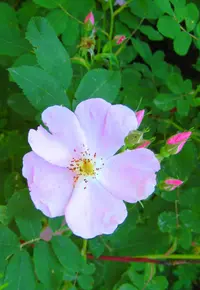
Prickly rose, Rosa acicularis, is a hardy deciduous shrub rose known for its dense thickets of slender stems covered in fine prickles. It typically bears single pink flowers followed by bright red rose hips that attract wildlife.

This species occurs naturally across cold and temperate regions of the Northern Hemisphere, including much of North America. It adapts well to poor soils and harsh winters, which can make it easier to establish in suitable climates.

Prickly rose generally prefers full sun to light shade, moderately moist, well-drained soil, and benefits from some space to form its natural suckering clumps, which helps when learning how to care for prickly rose.


Main Plant Requirements

Care Difficulty

Moderate Care

Light Preference

Full Sun

Water Requirements

Moderate Water

Temperature Preference

Cold Hardy

Hardiness Zone

2–7

Soil Texture

Loamy, Sandy, Organic-rich

Soil pH

Acidic (5.5–6.5), Slightly acidic (6.5–7.0)

Soil Drainage

Well-drained

Fertilization

Minimal (feed rarely)

Get Personalized Care Plan

Scan your plant to receive care tips personalized for your specific plant

Available on iOS and Android

How to Care for the prickly rose

Rosa acicularis prefers bright outdoor conditions with several hours of direct sun for strong flowering and healthy growth.

  • Aim for 4–6 hours of direct sun daily, ideally morning sun with light afternoon shade to reduce heat and leaf scorch risk.
  • Tolerates light or open shade, but flowering and stem strength decline if it receives less than about 3–4 hours of direct light.
  • In hot summers, provide filtered light during the hottest afternoon hours and ensure nearby plants or structures do not fully shade prickly rose.

Rosa acicularis prefers evenly moist, well‑drained soil rather than constantly wet or bone-dry conditions.

  • Water when the top 3–5 cm of soil feels dry, applying a deep soak at the root zone instead of light, frequent sprinkling.
  • During hot, dry periods, monitor foliage for drooping or dull leaves as a cue to water, while avoiding standing water or soggy soil.
  • In clay or compacted ground, improve drainage with organic matter; yellowing, soft leaves suggest overwatering, while crisp leaf edges indicate drought stress.

This cold-hardy rose thrives outdoors in cool to temperate climates with pronounced seasonal changes.

  • Active growth is strongest around 60–75°F (16–24°C), supporting steady shoot and flower development in spring and early summer.
  • Very hardy, it can survive winter lows down to about -40°F (-40°C) once established and fully dormant in the ground.
  • Tolerates summer heat up to about 85–90°F (29–32°C) if soil moisture is maintained; extended extremes above this can reduce flowering and stress the plant.

Rosa acicularis handles a wide humidity range and rarely needs special humidity management outdoors.

Rosa acicularis prefers deep, loose, well-drained loam that stays evenly moist but not waterlogged.

  • Use a loamy mix with roughly equal parts garden soil, coarse sand, and compost to support rooting and moisture balance.
  • Aim for slightly acidic to neutral pH, around 6.0–7.0, adjusting with elemental sulfur or garden lime if needed.
  • In heavy clay, improve aeration and drainage by working in coarse sand or fine gravel plus plenty of organic matter.
  • Avoid compacted, waterlogged, or extremely alkaline ground, which restricts roots and increases susceptibility to root diseases.

This species can be grown in large outdoor containers if the pot is chosen for root depth and stability.

  • Select a tall, heavy container that resists tipping as stems elongate and catch wind.
  • Choose thick-walled terracotta or concrete to moderate root-zone temperature and reduce sudden moisture swings.
  • Elevate the pot slightly on risers so drainage holes stay clear and excess water escapes quickly in rain.

Rosa acicularis is adapted to lean soils and usually needs only light, targeted feeding in gardens.

  • Apply a thin layer of compost or well-rotted manure around the root zone in early spring to support new growth.
  • If growth or flowering is weak, use a balanced slow-release fertilizer (about 10-10-10) at half strength once in spring.
  • Avoid summer overfeeding, which encourages soft, disease-prone shoots and reduces cold hardiness.
  • Do not fertilize prickly rose in late fall or winter; allow the plant to enter dormancy naturally.

Rosa acicularis responds well to modest pruning that maintains health and natural shrub shape.

  • Prune in late winter or very early spring before buds break, when structure is easy to see.
  • Remove dead, diseased, or crossing stems first using clean, sharp bypass pruners.
  • Thin crowded interior shoots to improve air flow and light, which supports healthier foliage and flowering.
  • Shorten overly long canes by up to one-third to control size while preserving a natural, arching form.

This species is usually grown in-ground, so guidance focuses on transplanting garden plants rather than routine repotting.

  • Transplant in early spring or fall when temperatures are mild and soil is workable.
  • Look for signs such as stunted growth, poor flowering, or roots circling inside a container before moving a plant.
  • Lift the root ball carefully, keeping as much soil around the roots as possible to limit shock.
  • Replant at the same depth in a well-prepared hole, water thoroughly, then keep soil evenly moist until new growth resumes.

Rosa acicularis can be propagated by seeds, hardwood cuttings, or division of suckers with moderate care.

  • Collect hips in fall, clean seeds, and cold-stratify them for 3–4 months at about 35–40°F before spring sowing.
  • Take hardwood cuttings in late fall or winter, plant in a free-draining mix, and keep slightly moist until rooted.
  • In early spring, separate rooted suckers from the parent plant and replant promptly at the same depth.
  • Provide bright, indirect light, steady moisture, and good air circulation to reduce rot while new roots form.

Rosa acicularis is very cold hardy and typically needs minimal winter care in most temperate climates.

  • Tolerates severe frost, but benefits from 5–8 cm of mulch over the root zone in late fall.
  • Avoid piling mulch directly against stems to reduce risk of rot and rodent damage.
  • In very exposed sites or containers, shield the base from extreme wind and move pots to a sheltered, unheated area.

Care Tips

Snow protection strategy

In regions with harsh winters, mound loose soil or compost 10–15 cm over the crown before freeze-up and leave snow to accumulate around plants as natural insulation, then carefully remove the extra soil in spring to prevent rot at the base.

Sucker management

Inspect the base and surrounding soil 2–3 times per season and promptly cut out unwanted root suckers at or below soil level to keep thickets from spreading into paths or neighboring plantings.

Airflow through thickets

When stems become dense, selectively remove a few of the oldest canes at ground level every 2–3 years to open the center, which improves airflow and reduces fungal disease pressure in clusters when growing prickly rose.

Wildlife browsing control

In areas with deer, rabbits, or moose, install sturdy wire mesh or multi-strand fencing around young plants for the first 2–3 years, or use individual trunk guards in winter, to prevent severe browsing that can delay establishment.

Targeted disease monitoring

Starting in late spring, regularly inspect leaves for early signs of black spot or rust and immediately remove and dispose of infected foliage from both the plant and soil surface to reduce spore loads and the need for heavy chemical controls.

Common Pests and Diseases

Rose rust

This disease causes orange to rust-brown powdery pustules on the undersides of leaves and sometimes on stems, which can lead to premature leaf drop in cool, moist climates.

Solution

Prune out and dispose of infected leaves and stems, improve air circulation by thinning dense growth, and avoid overhead watering; in climates with persistent rust, apply a sulfur or chlorothalonil-based fungicide labeled for roses at the first sign of pustules and repeat as directed during wet periods.

Powdery mildew

This disease produces white, powdery patches on young leaves, buds, and stems, which may curl or distort and can reduce flowering in dense thickets of prickly rose.

Solution

Remove and discard heavily infected shoots, ensure good airflow and full sun exposure, and water at the base in the morning; in repeated problem areas, use a potassium bicarbonate or myclobutanil-based fungicide labeled for roses at regular intervals during warm, dry periods when nights are cool.

Black spot

This disease shows as round black spots with feathery or yellow halos on leaves, leading to yellowing and gradual defoliation, especially in humid conditions or near natural thickets.

Solution

Promptly remove and discard fallen leaves and affected foliage, avoid wetting the leaves, and keep shrubs spaced to dry quickly; if needed, protect new growth with a preventive fungicide program using products labeled for black spot on roses, applied from leaf-out through humid weather.

Rose aphids

These insects cluster on tender shoots, buds, and leaf undersides, sucking sap and causing leaf curling, distorted buds, and sticky honeydew that can attract sooty mold on wild and cultivated stands.

Solution

Spray infested shoots with a strong stream of water to dislodge aphids, encourage natural predators such as lady beetles, and, if populations remain high, use insecticidal soap or a light horticultural oil, ensuring thorough coverage of shoot tips and leaf undersides.

Rose sawfly larvae

These insects, often called rose slugs, skeletonize leaves by eating the soft tissue between veins, leaving a thin translucent layer that later turns brown on shrubs growing in hedgerows or woodland edges.

Solution

Inspect foliage regularly in spring and early summer, hand-pick or shake larvae off into soapy water, and prune out heavily infested stems; for larger outbreaks, apply a horticultural oil or spinosad-based product labeled for sawflies, targeting the undersides of leaves where larvae feed.

Interesting Facts

Circumpolar rose shrub

This species is one of the few wild roses with a broad circumpolar distribution, occurring across northern North America, Europe, and Asia in cold, boreal, and subarctic regions.

Extreme cold tolerance

Mature plants tolerate very low winter temperatures typical of taiga and boreal forest climates, surviving long periods of frozen soil and short growing seasons.

Spine-covered surfaces

Stems and even young shoots carry numerous fine, straight prickles, a trait that inspired the epithet acicularis, meaning needle-like, and provides strong protection against browsing animals.

Botan icon

Did you know?

In many northern ecosystems, this species is an important early-season nectar and pollen source for wild bees and other pollinators, as its pink flowers often open soon after snowmelt when few other shrubs are in bloom.

FAQs about prickly rose

Lack of flowers usually comes from too much shade, heavy pruning at the wrong time, or excess nitrogen fertilizer. Ensure strong sun, avoid cutting new shoots in spring, and use a balanced or rose-specific fertilizer.

Grow Healthy Plants with Botan Care

Keep your plants happy and healthy with plant identification, disease detection, and easy care guidance.

Botan plant care app — identify plants on mobile

Explore More Plants