Deep root establishment
During the first 1–2 years, give the plant very occasional but thorough soakings that penetrate at least 30–40 cm into the soil to encourage a deep, drought-resilient root system rather than shallow surface roots.

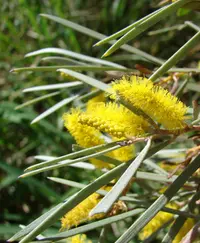
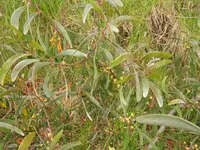
Mulga (Acacia aneura) is a long-lived Australian desert tree known for its fine, grey-green foliage and dense, upright canopy. It is commonly grown as a hardy ornamental or shelter tree in dry landscapes.
This species naturally occurs across arid inland Australia, thriving in low-rainfall regions with hot summers and poor, sandy or stony soils. Its deep root system and drought tolerance make it relatively easy to maintain where conditions are dry and well drained.
For gardeners learning how to care for mulga, the key traits are its need for full sun, minimal watering once established, and avoidance of heavy, waterlogged soils.

Care Difficulty
Moderate Care

Light Preference
Full Sun

Water Requirements
Low Water

Temperature Preference
Warm Climate

Hardiness Zone
8–10

Soil Texture
Sandy, Loamy, Rocky

Soil pH
Slightly acidic (6.5–7.0), Alkaline (7.5–8.5)

Soil Drainage
Well-drained

Fertilization
Minimal (feed rarely)
Scan your plant to receive care tips personalized for your specific plant
Available on iOS and Android
This arid-zone acacia thrives in open, sunny positions with strong, direct light.
This drought-adapted species prefers deep, infrequent watering and very fast-draining soil.
This desert tree is adapted to hot, dry climates but needs protection from hard frost when young.
This arid-climate species is adapted to low humidity and usually does not need special humidity management indoors or outdoors.
Acacia aneura prefers very fast-draining, lean, sandy soil that mimics its desert habitat.
This species can be grown in containers for several years if the pot and drainage are managed carefully.
Acacia aneura is highly adapted to poor soils and usually needs only light feeding in cultivation.
Pruning Acacia aneura is mainly corrective, aimed at maintaining structure and safety rather than frequent shaping.
Transplanting Acacia aneura requires care, as this species resents root disturbance and is usually grown directly in the ground.
Propagation of Acacia aneura is usually done from seed, with specific pretreatment to improve germination.
In its preferred climates Acacia aneura is fairly cold tolerant and usually needs minimal winter care once established.

Plant Health Check
Not sure what's wrong with your plant? Check your plant's health inside the app.
This species is the dominant tree in vast mulga woodlands across arid inland Australia, forming structurally important habitats that support many specialized birds, reptiles, and invertebrates.
Mature plants replace true leaves with narrow, grey‑green phyllodes (flattened leaf stalks) that reduce water loss and reflect heat, an adaptation to extremely dry, hot environments.
Acacia aneura develops very deep and wide‑spreading roots that allow it to access moisture far below the surface and stabilize fragile sandy and loamy desert soils.

Acacia aneura can live for many decades, often well over 100 years, and its extremely dense, hard wood has long been valued by Indigenous Australians for tools and fuel in harsh desert regions.
Lack of flowers usually comes from insufficient light, very young age, or recent transplant stress. Nutrient-rich, moist conditions can also reduce flowering. Avoid heavy fertilizing and allow the plant to mature naturally before expecting reliable blooms.
Keep your plants happy and healthy with plant identification, disease detection, and easy care guidance.