Staking Young Columns
Install a sturdy stake on the windward side and loosely tie the young stem with soft, UV-stable ties so the column develops straight and is not rocked loose at the roots in exposed sites.

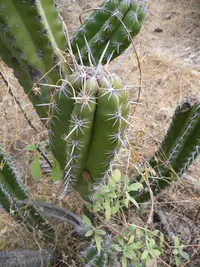
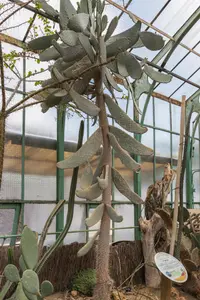
Chiotilla (Escontria chiotilla) is a columnar cactus native to arid and semi-arid regions of central Mexico. It forms tall, branched stems with strong spines and a striking, architectural look.
The plant produces small yellow flowers and dark, edible fruits that are valued locally. Its slow, upright growth habit makes it more suitable for outdoor desert-style gardens or large, very bright indoor spaces.
This species prefers strong light, low to moderate moisture, and sharply draining, mineral-rich soil. Once its basic desert needs are met, it is relatively straightforward to care for Chiotilla, but it does not tolerate prolonged cold or excess water.

Care Difficulty
Moderate Care

Light Preference
Full Sun

Water Requirements
Low Water

Temperature Preference
Tropical / Frost Sensitive

Hardiness Zone
10–11

Soil Texture
Sandy, Loamy, Rocky

Soil pH
Slightly acidic (6.5–7.0), Neutral (7.0)

Soil Drainage
Well-drained

Fertilization
Minimal (feed rarely)
Scan your plant to receive care tips personalized for your specific plant
Available on iOS and Android
This columnar cactus thrives in strong sun but benefits from gradual exposure in hot climates.
This desert cactus needs deep but infrequent watering and fast drainage.
This species prefers warm, arid conditions and is not reliable in prolonged cold.
This species tolerates typical indoor humidity and rarely needs special adjustment.
Escontria chiotilla needs a very fast-draining, mineral-based substrate to prevent root and stem rot.
This species is suitable for container growing, especially in cooler or wetter climates.
This cactus benefits from light feeding during its active season but performs well with modest nutrition overall.
Pruning needs for Escontria chiotilla are minimal and mainly corrective.
This species grows slowly in containers and usually needs infrequent repotting or transplanting.
Escontria chiotilla is most often propagated by seeds, with cuttings used less commonly.
This cactus is sensitive to prolonged freezing and benefits from dry, cool but not icy winter conditions.

Plant Health Check
Not sure what's wrong with your plant? Check your plant's health inside the app.
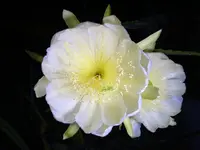
Its tubular, night-opening flowers are adapted for pollination by bats and nocturnal insects, which are attracted by pale coloration and evening scent rather than bright daytime colors.
The small, dark purple to nearly black fruits are edible berries traditionally eaten fresh or used in jams and drinks in parts of central and southern Mexico.
Unlike many small, clustering cacti, it develops a tall, upright, branching trunk and can form a tree-like structure in its native habitat, contributing to the vertical structure of dry forest and scrub vegetation.

This species is endemic to central Mexico, meaning it occurs naturally only in that region, where it grows on rocky slopes and arid scrublands and plays a specific role in local food webs as both a nectar and fruit resource for wildlife.
This columnar cactus is slow-growing, especially in early years. In cultivation it often adds only a few centimeters in height per year, speeding up slightly once well-established in warm, bright, dry conditions with minimal disturbance.
Keep your plants happy and healthy with plant identification, disease detection, and easy care guidance.