Wind and trunk support
Install a sturdy stake or post on the windward side and secure the soft, hollow trunk with wide, soft ties to prevent snapping in storms as the canopy and fruit load increase.

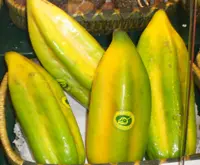
Babaco, Vasconcellea × pentagona, is a fast-growing, soft-wooded fruit shrub or small tree related to papaya. It is usually grown for its elongated, seedless, aromatic fruits. The plant has thick, hollow stems, large lobed leaves clustered at the top, and a somewhat umbrella-shaped canopy that gives a tropical look.
Babaco originates from the Andean region of Ecuador, where it grows in mild, frost-free, highland climates. It is considered moderately easy to grow if protected from frost, given bright light, and planted in well-drained, fertile soil. Understanding how to care for Babaco mainly involves managing temperature, avoiding waterlogging, and supporting the brittle stems as the plant becomes heavy with fruit.

Care Difficulty
Moderate Care

Light Preference
Full Sun

Water Requirements
Regular Water

Temperature Preference
Tropical / Frost Sensitive

Hardiness Zone
10–12

Soil Texture
Sandy, Loamy, Organic-rich

Soil pH
Acidic (5.5–6.5), Slightly acidic (6.5–7.0)

Soil Drainage
Moist but well-drained

Fertilization
Moderate (every 2–4 weeks)
Scan your plant to receive care tips personalized for your specific plant
Available on iOS and Android
This subtropical fruit tree needs high light levels but benefits from some protection from harsh sun.
This fast-growing species needs consistently moist but not saturated soil for steady growth and fruiting.
This plant prefers mild, frost-free conditions and reacts quickly to temperature extremes.
This species prefers moderately humid air and reacts to prolonged dryness.
Vasconcellea × pentagona needs a loose, fast-draining, nutrient-rich substrate to avoid root problems.
This species can be grown in containers if the pot provides enough depth, stability, and drainage for its vigorous root system.
This species responds well to consistent, moderate feeding during the warm growing season.
Pruning helps maintain a manageable shape and productive canopy for Vasconcellea × pentagona.
Transplanting or potting on this fast-growing fruit tree focuses on minimizing root disturbance and ensuring good drainage.
New plants are usually raised from seed, with some growers using cuttings for more predictable fruit quality.
This subtropical species is frost tender and needs active winter management in cool climates.

Plant Health Check
Not sure what's wrong with your plant? Check your plant's health inside the app.
This hybrid papaya relative produces elongate, usually seedless fruits, which makes it unusual among Vasconcellea species and convenient for fresh use and processing.
The entire fruit, including the thin yellow skin, is edible when ripe and has a flavor often described as a blend of pineapple, papaya, and strawberry, which makes it versatile for desserts and juices.
This species originates from cool, humid Andean valleys at mid to high elevations and shows better tolerance of cooler conditions than tropical papaya (Carica papaya), which broadens where growers can successfully cultivate it.

The fruit is rich in the proteolytic enzyme papain-like compounds (similar to those found in papaya latex), so the unripe fruits and latex have been traditionally used in some Andean regions to help tenderize meat during cooking.
Lack of flowering or fruiting usually comes from low light, cool temperatures, or nutrient imbalance. Ensure warm, frost-free conditions, good light, and balanced fertilization. Poor pollination and very young plants also delay fruit production when growing Babaco.
Keep your plants happy and healthy with plant identification, disease detection, and easy care guidance.