Climbing Raisin Care (Grewia caffra)

Also known as: Climbing Donkeyberry, Climbing Grewia, Climbing Raisinbush
Climbing Raisin

About Climbing Raisin

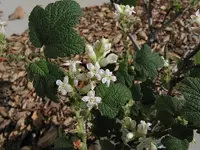
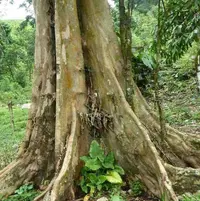
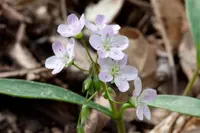
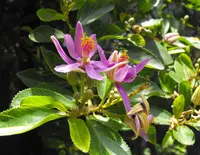
Climbing raisin, Grewia caffra, is a woody climbing shrub grown for its small, starry flowers and decorative berry-like fruits. It tends to twine or sprawl over supports, creating a light, informal screen.

This species occurs naturally in parts of southern Africa, often in woodland or scrub, where it copes with seasonal dry periods and strong sun. Its drought tolerance and moderate growth rate usually make it manageable in home gardens.

Gardeners who care for Climbing Raisin generally find it adaptable if given well-drained soil, regular but not excessive moisture, and a bright, warm position. It suits outdoor planting in mild climates and can be container-grown with support in cooler regions.

Main Plant Requirements

Care Difficulty

Moderate Care

Light Preference

Full Sun

Water Requirements

Moderate Water

Temperature Preference

Warm Climate

Hardiness Zone

9–11

Soil Texture

Sandy, Loamy, Organic-rich

Soil pH

Slightly acidic (6.5–7.0), Neutral (7.0)

Soil Drainage

Well-drained

Fertilization

Minimal (feed rarely)

Get Personalized Care Plan

Scan your plant to receive care tips personalized for your specific plant

Available on iOS and Android

How to Care for the Climbing Raisin

This sun-loving shrub performs best with bright, direct light in frost-free climates.

  • Provide 6–8 hours of sun daily, with morning sun and light afternoon shade in hotter regions to reduce leaf scorch risk.
  • Plant in a position that receives full sun in winter and at least bright partial sun in summer to support flowering and fruiting on Climbing Raisin.
  • In very hot inland areas, protect from harsh west-facing sun with dappled shade or a light shade cloth during peak midday hours.

This plant prefers evenly moist, well-drained soil that dries slightly between waterings.

  • Let the top 3–5 cm of soil dry before watering again, then water deeply so moisture reaches the root zone without leaving the soil waterlogged.
  • Increase watering in active growth and flowering seasons, then reduce frequency in cooler months when Grewia caffra slows down and uses less moisture.
  • Watch leaves for signs: limp, dry, or curling edges suggest underwatering, while yellowing leaves and persistently wet soil suggest poor drainage or overwatering.

This species prefers warm, mild conditions and does not tolerate hard frost.

  • Aim for 65–85°F (18–29°C) for best growth, as these temperatures support steady foliage and flower production.
  • Protect plants when temperatures drop near 30–32°F (-1–0°C), since light frost can damage young shoots and repeated freezing may kill branches.
  • In hot climates, it tolerates brief heat up to about 100°F (38°C) if soil moisture is maintained and roots are insulated with mulch to reduce stress.

This species handles a wide humidity range but grows best in moderately dry air.

  • Aim for 30–50% humidity; average indoor levels suit Climbing Raisin without special equipment.
  • Leaves curling inward or browning at edges may indicate very dry air or combined heat stress.
  • Increase humidity locally by grouping plants, placing trays with water and pebbles nearby, or using a small humidifier in very arid rooms.

This shrub prefers light, well-drained soil that does not stay wet for long.

  • Use a sandy or loamy mix with coarse particles to keep structure open and oxygen around the roots.
  • A practical mix is 50–60% general potting mix, 20–30% coarse sand, and 10–20% perlite or fine bark for drainage.
  • Keep pH slightly acidic to neutral, around 6.0–7.0, which supports nutrient uptake and overall Grewia caffra plant care.
  • Avoid heavy clay, compacted substrates, or mixes rich in water-retentive peat that hold moisture around the roots for many hours.

This species is suitable for container growing, especially in cooler climates or small spaces.

  • Choose a deep, heavy pot to balance the shrub’s branching habit and prevent tipping in wind or on balconies.
  • Select a container material that matches your climate, such as terracotta for drier roots or plastic where water evaporates quickly.
  • Raise the pot slightly on feet or blocks so drainage holes stay clear and excess water escapes quickly after rain or watering.

This shrub benefits from light feeding during the warm growing season but does not need heavy fertilization.

  • Use a balanced, slow-release fertilizer (for example 10-10-10) or thin compost layer on the soil surface in spring for Climbing Raisin.
  • Feed every 6–8 weeks through late spring and summer while growth is active.
  • Apply at 1/2 the label rate for container plants to avoid root burn, and water well afterward.
  • Stop fertilizing in fall and winter when growth slows or stops.

Pruning supports a tidy shape and good flowering in Grewia caffra without needing heavy intervention.

  • Best time is late winter to early spring before strong new growth starts.
  • Remove dead, diseased, crossing, or inward-growing branches with clean, sharp bypass pruners.
  • Shorten overly long shoots to maintain a balanced, open framework that lets in light and air.
  • After flowering, lightly thin crowded tips if needed, avoiding removal of more than 20–25% of the canopy.

This species is most often grown in the ground, but young plants or container specimens may need occasional transplanting.

  • Transplant or move to a larger pot in late winter to early spring, before vigorous growth begins.
  • Look for roots circling the pot, water running straight through, or slowed growth as signs it has outgrown its container.
  • Shift container plants every 2–3 years into a pot 2–5 cm wider, using a free-draining mix and gently loosening circling roots.
  • Reduce stress by watering well before and after transplanting, keeping roots shaded, and avoiding strong sun or wind for 7–10 days.

Grewia caffra is most commonly propagated from semi-ripe cuttings, with seeds as a slower option.

  • Take semi-ripe stem cuttings in late spring to midsummer, 8–12 cm long, from non-flowering shoots.
  • Remove lower leaves, dip the cut end in rooting hormone, and insert into a moist, free-draining mix under high humidity.
  • Provide bright, indirect light and warmth around 70–75°F to encourage rooting over several weeks.
  • Sow fresh seed in spring in a sandy mix, keeping lightly moist and warm; germination may be slow and uneven.

In mild climates this shrub is fairly tolerant but needs help in regions with hard frost or freezing wind.

  • In USDA zones near its hardiness limit, add a 5–8 cm mulch layer around the root zone in late fall, keeping it off the trunk.
  • For young plants, wrap the lower stems with burlap or frost cloth during forecast freezes.
  • Move container-grown plants into a bright, cool, frost-free space when temperatures approach 32°F.

Care Tips

Early framework training

Install a trellis or taut wires early and loosely tie young stems with soft ties, guiding 2–3 main shoots to form a stable framework that will support heavier fruiting later.

Renewal pruning cycle

Every 2–3 years selectively remove 1–3 of the oldest, woodiest stems at the base to encourage vigorous new shoots that flower and fruit more reliably.

Mulch root zone

Apply a 5–8 cm layer of coarse organic mulch around, but not touching, the main stem to keep roots cool, reduce surface compaction, and moderate moisture swings in hot, dry weather.

Fruit load management

If branches bend under the weight of developing fruit, thin out some clusters and add discreet branch ties to the support structure to reduce breakage and improve fruit size and quality when growing Climbing Raisin.

Prevent scale buildup

Inspect stems and leaf midribs monthly for scale insects, and if small colonies appear, wipe them off with a cloth dipped in mild soapy water before populations harden into large, waxy clusters.

Common Pests and Diseases

Scale insects

This pest feeds on stems and leaves, sucking sap and often causing yellowing, leaf drop, and sticky honeydew on Grewia caffra shrubs. Symptoms include sooty mold growth on the honeydew and a generally weakened plant, especially on older, woody branches.

Solution

Prune and discard heavily infested twigs, then wipe or gently scrub remaining scales from stems using a cloth or soft brush dipped in diluted insecticidal soap or horticultural oil. Repeat treatments every 7–10 days until new growth appears clean and improve air movement and light levels around the plant to reduce reinfestation when caring for Climbing Raisin.

Aphids

These insects cluster on tender shoot tips, young leaves, and flower buds, sucking sap and causing leaf curling, distortion, and sticky residue. This pest can attract ants and promote sooty mold on the plant surface.

Solution

Dislodge colonies with a firm stream of water, then treat remaining aphids with insecticidal soap or a light horticultural oil, making sure to cover leaf undersides and shoot tips. Monitor new growth weekly and repeat applications as needed until populations stay low and natural predators such as lady beetles are present.

Spider mites

This pest is more common in hot, dry conditions and causes fine stippling, dull foliage, and in advanced cases thin webbing on leaves and between stems. Symptoms include slow decline and premature leaf drop if not controlled.

Solution

Rinse foliage thoroughly with water, focusing on leaf undersides, and repeat several times over 7–10 days to physically remove mites. If populations persist, apply a miticide or horticultural oil labeled for mites, avoid very dry indoor air or extremely dusty foliage, and maintain moderate humidity to discourage rapid buildup.

Powdery mildew

This disease produces white, powdery patches on leaves and young shoots, which may become distorted or stunted over time. Symptoms include reduced vigor and poor flowering when the infection is severe or persistent.

Solution

Remove and discard affected leaves and shoots to reduce spore levels, then improve light and airflow by careful thinning of crowded stems. If needed, apply a sulfur or potassium bicarbonate fungicide labeled for ornamental shrubs, avoiding overhead watering and dense shade that keep foliage damp for long periods.

Leaf spot

This disease causes discrete brown or purplish spots on leaves, sometimes with yellow halos, which can merge and lead to partial defoliation in stressed plants. Symptoms include more leaf drop in wet, humid or poorly ventilated conditions.

Solution

Collect and discard fallen leaves, prune out the most affected shoots, and water at soil level to keep foliage dry. In cases of repeated outbreaks, apply a copper-based or chlorothalonil fungicide according to label directions and maintain balanced fertilization to support recovery and new healthy foliage.

Interesting Facts

Southern African origins

This species is native to dry woodland and scrub habitats in southern Africa, especially in parts of South Africa, Eswatini, and neighboring regions, where it often grows as a scrambling shrub or small climber on rocky slopes.

Bird‑dispersed drupes

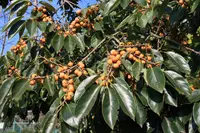
Its small, fleshy drupes are eaten by birds that disperse the seeds, helping maintain plant populations across fragmented, rocky landscapes.

Adapted to drought

Leaves and stems show adaptations to periodic drought, including relatively small, slightly rough leaves that limit water loss while still supporting photosynthesis in hot, seasonally dry climates.

Botan icon

Did you know?

In parts of its native range, this plant often acts as a natural living support for other climbers and lianas, forming complex thickets that create microhabitats for insects, reptiles, and small birds in otherwise open, rocky terrain.

FAQs about Climbing Raisin

Lack of flowers usually comes from insufficient light, heavy pruning at the wrong time, or nutrient imbalance, especially excess nitrogen. Ensure strong sun exposure, avoid cutting new flowering wood, and apply a balanced, low-nitrogen fertilizer sparingly.

Grow Healthy Plants with Botan Care

Keep your plants happy and healthy with plant identification, disease detection, and easy care guidance.

Botan plant care app — identify plants on mobile

Explore More Plants