Ambelania acida Care

About Ambelania acida

Ambelania acida is a tropical evergreen tree from northern South America, valued mainly for its ornamental foliage and attractive, glossy leaves. In nature it forms a small to medium tree with a dense crown and smooth bark, often found in lowland rainforests and along rivers.

The plant prefers warm, humid conditions and consistently moist, well-drained soil, which makes it challenging in cooler or very dry climates. It is not a common houseplant, so practical information on how to care for Ambelania acida is limited, and it is usually grown only by specialists or in botanical collections.

Main Plant Requirements

Care Difficulty

Hard Care

Light Preference

Partial Shade

Water Requirements

Keep Soil Moist

Temperature Preference

Tropical / Frost Sensitive

Hardiness Zone

Unknown

Soil Texture

Loamy, Organic-rich

Soil pH

Acidic (5.5–6.5)

Soil Drainage

Moist but well-drained

Fertilization

Minimal (feed rarely)

Get Personalized Care Plan

Scan your plant to receive care tips personalized for your specific plant

Available on iOS and Android

How to Care for the Ambelania acida

This tropical shrub prefers bright, warm conditions similar to a lightly shaded forest edge.

  • Provide 4–6 hours of bright, indirect light or light dappled shade; brief morning sun is usually tolerated better than harsh afternoon sun.
  • Plant Ambelania acida where it is protected from intense midday sun, which can scorch leaves and cause leaf edge browning or bleaching.
  • In hotter months, increase shade or filtered light; in cooler seasons, allow a bit more direct morning sun to support flowering and compact growth.

Moist, well-drained soil suits this species best, without prolonged drying or waterlogging.

  • Water when the top 3–5 cm of soil feels slightly dry, allowing deeper soil to remain lightly moist but never saturated.
  • Use deep, thorough watering, then let excess drain away; poorly drained sites increase risk of root rot and sour, anaerobic soil conditions.
  • In hotter months, monitor more often for wilting or dull, drooping foliage; in cooler or rainy periods, extend intervals to prevent yellowing leaves and soft stems from overwatering.

This tropical plant performs best in consistently warm, frost-free conditions.

  • Aim for 70–86°F (21–30°C) during active growth, which supports steady foliage development and flowering.
  • Avoid temperatures below 55°F (13°C); brief drops near this level can slow growth, while exposure to 40°F (4°C) or lower can cause leaf damage or dieback.
  • In hot spells above 90°F (32°C), provide extra shade and soil moisture; protect from cold drafts and radiational frost in marginal climates to support stable Ambelania acida care.

This species prefers consistently humid air typical of lowland rainforest climates.

  • Aim for 60–80% humidity; prolonged exposure below 50% often slows growth and causes marginal leaf browning.
  • Dry indoor air leads to curled leaf edges, dull foliage, and stalled new leaves as signs of humidity stress.
  • Increase humidity with grouped plants, a nearby humidifier, or a wide pebble tray kept filled so evaporation surrounds Ambelania acida.

This rainforest tree prefers deep, moist, well‑aerated soil with steady drainage.

  • Use a loose, loamy mix combining roughly 50% organic material (composted bark, leaf mold) with 50% mineral components (coarse sand, perlite).
  • Ensure fast drainage so water drains within seconds, leaving the mix evenly moist but never waterlogged.
  • A slightly acidic pH around 5.5–6.5 supports nutrient uptake and reduces risk of micronutrient lockout.
  • Improve aeration by including chunky bark or coarse perlite and avoid dense clayey mixes that compact and suffocate roots.

This species can be grown in containers when young or kept small with pruning.

  • Choose a deep, heavy pot to counteract the tree’s eventual top‑heavy growth and reduce tipping in wind or accidental knocks.
  • Select a container material that moderates moisture, such as thick-walled terracotta, to prevent extended saturation around the roots.
  • Use a pot with multiple large drainage holes so excess water exits rapidly and does not pool at the container base.

Nutrient needs for Ambelania acida are moderate, especially when grown in containers or poor soils.

  • Use a balanced NPK fertilizer (e.g., 10-10-10) or slow-release granules during the warm growing season.
  • Feed every 6–8 weeks in active growth, skipping applications if foliage looks dark green and vigorous.
  • Dilute liquid fertilizer to 1/2 strength to avoid root burn and salt buildup in the substrate.
  • Stop feeding in cooler months or any semi-dormant period, allowing the plant to rest.

Pruning Ambelania acida is mainly structural and hygienic, aimed at maintaining a healthy canopy.

  • Carry out light pruning at the end of the dry or cool season, just before active growth resumes.
  • Remove dead, diseased, rubbing, or inward-growing branches to improve airflow and light penetration.
  • Shorten overly long shoots to manage size and encourage a balanced, sturdy framework.
  • Use clean, sharp bypass pruners and make cuts just above a healthy bud or lateral branch.

This species is usually grown in the ground, so focus on careful transplanting rather than frequent repotting.

  • Transplant young Ambelania acida trees at the start of the rainy or warm growing season for faster establishment.
  • Look for signs such as roots circling the nursery pot or slowed growth before shifting to a larger hole or container.
  • Move the plant with an intact root ball, disturb roots minimally, and water thoroughly to settle soil and limit shock.
  • Provide shade and consistent moisture for 1–2 weeks after transplanting to reduce stress and support new root growth.

Propagation of Ambelania acida is possible but usually handled by experienced growers, mainly from seed.

  • Collect ripe seeds and sow them fresh in a well-draining, slightly acidic seed mix.
  • Sow in warm conditions around 75–85°F with high humidity and bright, indirect light to support germination.
  • Keep the medium evenly moist, never waterlogged, and use a thin covering of substrate over the seeds.
  • Label batches and be patient, as germination can be slow and uneven, sometimes taking several weeks or longer.

Ambelania acida is a tropical species with low frost tolerance and needs protection in cool climates.

  • Avoid exposure to temperatures below 50°F; freezing conditions can kill young trees and damage mature tissue.
  • Grow Ambelania acida indoor care specimens in containers in colder regions and move them inside before nighttime lows drop.
  • For in-ground plants in marginal climates, apply a 5–8 cm mulch layer around the root zone, keeping it off the trunk.
  • Shelter foliage from cold, drying winds using temporary windbreaks or by planting in a protected microclimate.

Care Tips

Support young stems

Install sturdy stakes or a low trellis when plants are still young, then loosely tie main stems with soft ties to keep the canopy upright and reduce snapping during storms or heavy flowering.

Mulch for root stability

Apply a 5–8 cm layer of coarse organic mulch around the root zone, keeping it 5–10 cm away from the stem, to buffer soil moisture and temperature and protect the shallow feeder roots from heat stress.

Wind and salt protection

In exposed or coastal sites, use windbreak cloth or plant the shrub behind a hedge or structure to limit wind burn and salt spray, which can damage the glossy foliage and reduce flowering.

Regular canopy thinning

Every 1–2 years, selectively remove a few crowded interior branches rather than tipping all shoots, improving airflow and light penetration that helps limit fungal problems when caring for Ambelania acida.

Container rotation routine

For container-grown plants, rotate the pot 90° every 2–3 weeks so all sides receive similar light, which encourages an even crown and reduces leaning or one-sided growth when you grow Ambelania acida in bright sites.

Common Pests and Diseases

Scale insects

This pest feeds on stems and leaves, causing yellowing, leaf drop, and sticky honeydew that can attract sooty mold. Symptoms include small, rounded or oval bumps tightly attached to bark and leaf veins.

Solution

Prune and destroy heavily infested twigs, then gently scrub remaining colonies with a soft brush dipped in a solution of mild soap and water. For larger plants in warm climates, apply a light horticultural oil thoroughly to stems and leaf undersides during mild weather and repeat as needed according to label directions as part of Ambelania acida care instructions.

Mealybugs

These insects hide in leaf axils and along young shoots, sucking sap and weakening the plant. Symptoms include white, cottony clusters and sticky honeydew on leaves and stems.

Solution

Remove visible clusters with a cotton swab dipped in 70% isopropyl alcohol, then wash foliage with a mild soap solution and plenty of clean water. Inspect regularly and repeat spot treatments at 5–7 day intervals until no new insects appear, and improve light and air movement to reduce reinfestation risk.

Leaf spot

This disease produces irregular brown to dark purple spots on leaves, sometimes with a yellow halo, which can merge and cause early leaf drop in humid, shaded conditions. Symptoms include more severe damage on older, crowded foliage with poor air circulation.

Solution

Remove and discard affected leaves and any fallen debris, then thin dense branches slightly to improve airflow and reduce leaf wetness duration. If spotting continues in warm, wet weather, apply a copper-based fungicide labeled for ornamental trees, following label intervals and avoiding spraying during high heat.

Sooty mold

This disease appears as a black, powdery or velvety coating on leaves and stems that grows on honeydew excreted by sap-sucking insects. Symptoms include dull, blackened foliage and reduced photosynthesis, though the fungus does not directly invade plant tissues.

Solution

First control the honeydew-producing insects such as scale or mealybugs, since the mold depends on them. Then wipe or gently wash affected leaves with water and a small amount of mild soap, and prune heavily coated twigs to restore light exposure to the canopy.

Interesting Facts

Amazon basin native

Ambelania acida is a small tree native to lowland, humid forests of the Amazon basin in northern South America, where it typically grows near rivers and in seasonally flooded areas.

Strongly acidic fruit

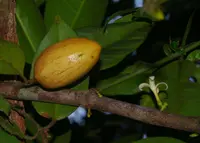
The species produces yellow, oval fruits with notably sour pulp, which has given rise to the specific epithet acida and makes the fruit attractive to some local wildlife and people as a tart flavoring.

Dogbane family member

This species belongs to the Apocynaceae (dogbane) family and shares its characteristic milky latex, a white sap that exudes from damaged tissues and helps seal wounds and deter some herbivores.

FAQs about Ambelania acida

Growth is moderate under warm, humid, frost-free conditions. Young plants establish slowly, then put on more height and branching each year. Poor drainage, cool temperatures, and nutrient-poor soil all slow development and can delay structural maturity.

Grow Healthy Plants with Botan Care

Keep your plants happy and healthy with plant identification, disease detection, and easy care guidance.

Botan plant care app — identify plants on mobile

Explore More Plants